
As AI workloads surge and power grids strain under the weight of digital transformation, the narrative surrounding data centers is shifting from one of consumption to one of contribution. Matilda Bailey, a seasoned specialist in energy infrastructure, provides a unique perspective on how grid-safe models are redefining the relationship between massive facilities and the utilities that power them. By treating data centers as distributed energy resources capable of exporting power, operators can move beyond being passive loads to becoming active pillars of grid stability. The following discussion explores the technical, financial, and social implications of this transition toward a more integrated and resilient energy future.
Data centers are traditionally viewed as massive power consumers. How does transitioning to a grid-safe model change the daily operations of a facility, and what specific control systems must be integrated to allow for this bidirectional flow of electricity?
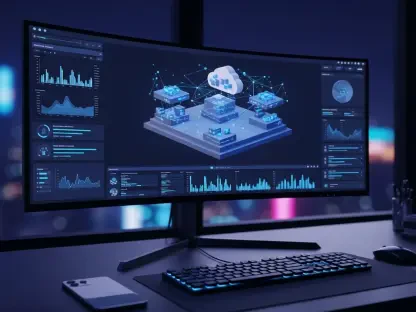
Shifting to a grid-safe model fundamentally alters the mindset of a facility manager from a strategy of isolation to one of active orchestration. To facilitate this bidirectional flow, we must integrate sophisticated energy management software and interconnection controls that act as the facility’s nervous system, detecting grid conditions in real-time. It is no longer just about having backup generators sitting idle in a basement; it is about ensuring hardware and software can communicate with the utility’s protection schemes to inject power safely. When the grid begins to sag under the weight of a heatwave, the control system senses that tension and triggers a transition that turns the facility into a mini-power plant.
Many facilities already possess backup generators or energy storage systems. What are the primary technical hurdles when upgrading these assets for export capability, and how do you ensure compliance with utility interconnection requirements during a high-demand event?
The primary hurdle is that most legacy backup systems were built to be islands, meant only to keep the servers humming during a blackout rather than pushing energy back into a live system. Upgrading these assets requires a significant overhaul of metering and protection hardware to ensure we meet rigorous utility interconnection requirements without causing surges or safety hazards. During high-demand events, the pressure is immense to prove that our behind-the-meter private power plants can sync perfectly with the grid’s frequency. It is a technical dance where every millisecond counts, requiring robust investments in on-site power infrastructure that many operators are now seeing as a practical extension of their original reliability goals.
Exporting power can unlock new revenue streams through ancillary services and capacity payments. Could you break down the financial logic behind these investments and explain how operators balance the costs of hardware upgrades against the long-term gains from grid participation?
The financial logic is quite compelling because it transforms a massive capital expenditure, such as a large-scale battery array, into a proactive revenue generator. By participating in ancillary services or capacity payments, operators receive direct compensation for providing stability during peak demand or unplanned plant outages. We balance the upfront hardware costs by looking at long-term asset utilization; instead of equipment gathering dust until a disaster strikes, it earns its keep every time the grid needs a boost. This secondary income stream helps offset the operational costs of generators and storage systems, making the business case for grid-integrated upgrades much more attractive to stakeholders.
As AI workloads intensify demand on local grids, stability becomes a major concern for utilities and residents alike. In what ways do grid-safe operations mitigate the risk of brownouts, and how does this strategy reshape the industry’s reputation within the communities they serve?
As AI workloads intensify, there is a palpable anxiety in local communities that data centers will pull the lights out from under their neighbors. Grid-safe operations directly address this by mitigating the risk of brownouts; when local demand spikes, the facility can actually feed the grid to keep local schools and homes powered. This strategy is essential for reshaping the industry’s reputation, moving us away from being seen as energy drains toward being recognized as responsible energy stewards. It creates a sense of shared resilience, where the presence of a data center actually makes the local power system more robust rather than more fragile.
Integrating energy management software to detect grid conditions is a vital part of the grid-safe framework. Can you walk us through the step-by-step process of a facility switching from consumption to export during an emergency, and what metrics determine that success?
The process begins with the energy management software constantly monitoring grid voltage and frequency, waiting for the specific signatures of a supply shortfall. Once a critical threshold is reached, the system initiates a coordinated sequence where consumption from the grid is throttled and the on-site energy storage or private power plant ramps up to take the load. If the demand remains high, the facility crosses the threshold from neutral to export, pushing surplus energy back through the interconnection point. We measure success through metrics like response time and the stability of the exported load, ensuring the transition feels invisible to the data center’s primary servers while providing a lifeline to the utility.
What is your forecast for grid-safe data centers?
My forecast is that grid-safe capabilities will become the standard requirement for any new large-scale facility rather than a niche feature for early adopters. We are moving toward an era where digital infrastructure is viewed as a foundational, interactive part of the global power system, bridging the gap between massive consumption and responsible contribution. As power constraints continue to tighten, the ability to act as a stabilizer will be the only way for the industry to maintain its social license to operate and expand in many regions. Ultimately, these facilities will prove that high-performance computing can coexist with, and even enhance, the reliability of the energy systems that everyone depends on.