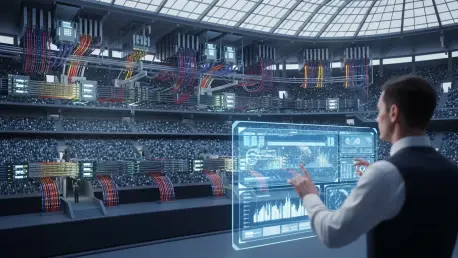

Beneath the pristine grass of the world’s most iconic stadiums, a silent revolution of fiber optics and liquid-cooled servers is currently redefining what it means to attend a live sporting event. While the roar of the crowd remains the soul of the game, the heartbeat of the modern arena is now found in subterranean server rooms humming with unprecedented processing power. This shift represents the final transition of stadiums from passive physical structures into sophisticated, data-driven ecosystems where every movement on the field is translated into a digital pulse. The traditional architectural focus on sightlines and seating capacity has expanded to include the invisible necessities of throughput and low-latency connectivity.
This technological evolution is currently being showcased across North America as the 2026 FIFA World Cup reaches its peak. Venues that once struggled with basic cellular reception are now serving as primary nodes in a continental network of high-performance hardware. For the modern fan, the digital experience is so deeply integrated that the “invisible infrastructure” only becomes apparent in the rare moments when it fails. From biometrics at the gate to real-time augmented reality replays on smartphones, the data center has become the foundation upon which the entire spectator experience is built.
The Silicon in the Basement: Why the Best View in the Stadium Is Now Digital
The modern stadium has outgrown its identity as a mere concrete bowl, morphing into a sentient environment that anticipates the needs of its inhabitants. As high-performance hardware moves underneath the stands, the primary objective is to manage the staggering influx of information generated by tens of thousands of simultaneous users. This digital layer allows for a level of interactivity that was impossible even a few years ago. By shifting the focus from the physical pitch to the digital architecture, venue operators have created a space where the game can be experienced through multiple lenses, ranging from player-perspective cameras to live statistical overlays.
The massive technological overhaul required for the current global soccer tournament has set a new benchmark for what a world-class venue must provide. This is no longer just about providing Wi-Fi; it is about creating a seamless bridge between the physical and virtual worlds. The “invisible infrastructure” works tirelessly to ensure that ticket scans are instantaneous and that security systems can identify anomalies in a crowd of eighty thousand. When the hardware is functioning at its peak, the fan feels entirely unburdened by technology, enjoying a frictionless journey from the parking lot to the final whistle.
Building the Digital Backbone: The Shift Toward Connected Athletics
Traditional networking solutions that once relied on simple copper wiring have been rendered obsolete by the sheer demand for 100,000 simultaneous high-speed connections. The physical requirements of modern stadium architecture now prioritize digital highways over old coaxial cabling. This transition toward high-speed digital infrastructure is a direct response to the “connected fan” trend, where every attendee is effectively a mobile broadcast unit. To accommodate this, engineers have replaced outdated systems with robust fiber-optic networks that can handle the massive North-South and East-West traffic generated within the facility.
In the high-stakes environment of live sports, redundancy is the most critical element of the digital backbone. There are no “do-overs” during a championship final, meaning the network must be designed with multiple layers of fail-safes. This reliability is achieved through diverse path routing and hardware mirroring, ensuring that even a significant equipment failure does not disrupt the flow of data. By building this level of resilience into the architecture, venues can guarantee the continuity of both the fan experience and the essential operational systems that keep the lights on and the gates moving.
The Dual Architecture: Managing General IT and High-Performance Media
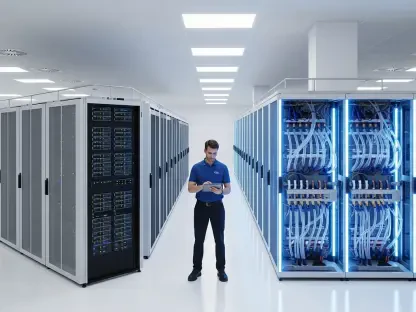
A sophisticated modern venue operates on a dual-architecture model that keeps general IT services strictly separated from high-performance media streams. The general IT data center functions as the administrative brain of the stadium, managing everything from point-of-sale systems at concession stands to back-office logistics and public Wi-Fi. This environment must be agile enough to handle millions of small packets of data without slowing down, ensuring that a fan can buy a jersey or post a photo without any noticeable lag in the system.
In contrast, the media data center is a specialized beast designed for the ultra-low latency demands of modern broadcasting. With global feeds now requiring 8K and 16K resolutions, the bandwidth requirements are astronomical. Maintaining operational integrity requires that these two environments remain isolated; a surge in fan social media usage must never be allowed to threaten the stability of a live television broadcast. Stadiums now manage a jump from 300 gigabytes to over 40 terabytes of data per event, a feat made possible only by the high-density storage and massive compute power located within these on-site facilities.
Intelligence at the Edge: Leveraging AI and Real-Time Analytics
The integration of artificial intelligence at the edge of the network has turned the stadium into an active participant in the sporting narrative. Athletic performance is now monitored through sophisticated player tracking and biomechanical indicators, providing coaches with real-time tactical insights that were once reserved for post-game analysis. This data is processed locally within the stadium’s data center to avoid the latency of the cloud, allowing for instantaneous decision-making on the sidelines. The result is a more precise, data-backed version of competition that pushes the boundaries of human potential.
Beyond the field, operational logistics have been revolutionized by AI-driven analytics that monitor merchandise sales, weather patterns, and concession queues. Safety and security teams utilize real-time heatmaps generated from surveillance data to manage fan movement and prevent dangerous bottlenecks in high-traffic areas. Furthermore, the Media eXchange Layer (MXL) has turned the network into a creative partner, allowing for the automatic extraction of highlights and data-rich graphics. This level of automation ensures that the story of the game is told with unprecedented detail and speed, reaching audiences around the world in milliseconds.
Implementing the Modern Venue Framework: Strategies for Digital Transformation
Future-proofing a stadium requires the adoption of AIOps—Artificial Intelligence for IT Operations—to monitor the health of multi-site venue networks autonomously. This proactive approach allows systems to heal themselves by rerouting traffic or adjusting power levels before a human technician even notices a potential issue. The deployment of Wi-Fi 7 and 6 GHz nodes has become the standard for maintaining connectivity in high-density environments, providing the necessary spectrum to support the latest generation of mobile devices. These technologies ensure that the network remains robust even during the extreme “pressure tests” of world-class tournaments.
Regional redundancy has also become a priority, as seen in models where cloud management connects multiple venues into a single, cohesive network. This strategy allows for shared resources and centralized oversight, reducing the overhead of managing complex infrastructures across different locations. By prioritizing scalability and modularity, venue operators have ensured that their investments will remain relevant as data demands continue to climb. The modern sports venue is no longer a static monument to the past but a dynamic, evolving platform that is constantly learning and improving through the power of its digital core.
As the current season of global competition progressed, the role of the data center became the defining factor in the success of the modern sporting landscape. Engineers and architects successfully integrated high-density computing into the very fabric of the stadium, which allowed for a seamless blend of physical and digital engagement. The implementation of isolated media networks and AI-driven logistics proved that technical reliability was just as important as the talent on the field. Because these systems operated with such precision, the industry moved toward a future where the digital backbone stayed ahead of fan expectations. This transition solidified the stadium as a high-performance platform that managed the complexities of the modern era with quiet efficiency. Moving forward, the focus turned toward refining these AI models and expanding the reach of edge computing to ensure that every seat in the house remained a front-row digital experience.