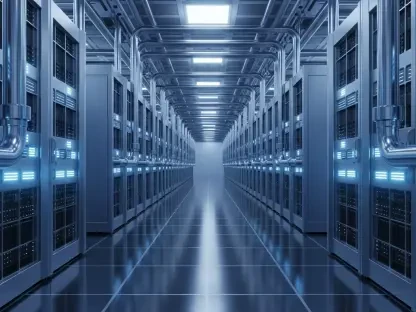

The quiet industrial parks that once housed nondescript data warehouses have suddenly morphed into the most heavily fortified nerve centers of the global economy, serving as the essential foundations for the burgeoning age of artificial intelligence. This shift represents a profound global movement in strategic identity, where facilities that were once viewed as secondary technical assets are now recognized as societal pillars equivalent to power grids and water systems. As nations race to secure their technological futures, these buildings have transitioned from simple storage units for digital information into the literal engines of sovereign capability. The physical footprint of a data center no longer just contains servers; it contains the competitive advantage of entire corporations and the national security interests of governments. This new status necessitates a complete reimagining of how these spaces are guarded, managed, and perceived by the public and private sectors alike.
The primary catalyst for this radical evolution is the explosive growth of Artificial Intelligence, which has fundamentally changed the value proposition of data center hardware. When a single equipment row can host computing power worth more than the building itself, the incentive for sophisticated interference rises exponentially. These facilities have become high-value targets, attracting interest from state-aligned actors and criminal organizations who recognize that disrupting the flow of AI processing can have massive economic and geopolitical consequences. The era of treating data centers as mere real estate is over, replaced by a reality where they are the most critical nodes in a nation’s infrastructure. Consequently, the defense of these sites has moved to the top of the priority list for executive boards and national defense strategists, who now view a physical breach as a catastrophic failure with far-reaching implications.
This transformation has also led to a convergence of threats that effectively blurs the traditional boundaries between physical and digital security. In the current landscape, a compromised door lock or an unauthorized visitor in a server room is not just a facilities issue; it is a massive cybersecurity vulnerability that can bypass the most advanced firewalls. Modern operators are moving away from static security checklists that focused on simple perimeter fencing and basic CCTV. Instead, they are adopting a dynamic defense posture that acknowledges the interconnectedness of all systems. The “New Front Line” of security is no longer at the edge of the network, but at the physical gate of the facility, where the backbone of the modern digital world must be protected against an increasingly diverse array of kinetic and technical risks.
Market Dynamics and the High-Value Asset Landscape
Technological Influences and Shifting Security Trends
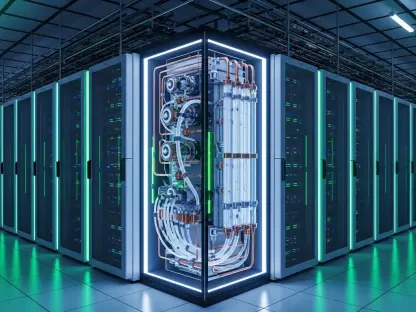
The concentration of value within a modern AI data center has reached levels that were previously unthinkable for commercial real estate. With the deployment of next-generation hardware like Nvidia’s Blackwell platforms, the density of investment in a single equipment row can exceed tens of millions of dollars. This hyper-concentration means that a localized physical incident, such as a targeted theft or a minor fire, can result in financial losses that rival the total value of older facilities. Security professionals are forced to treat these high-density clusters as high-stakes vaults, requiring specialized monitoring and environmental controls that go far beyond standard industry practices. The massive capital expenditure required to outfit these racks has essentially turned the data center floor into a high-security laboratory where every square inch is accounted for and guarded.
Furthermore, the industry is experiencing the definitive end of “security through obscurity,” a tactic where facilities stayed safe by remaining unremarkable and unidentified. Today, data centers are high-profile targets featured in mainstream news and scrutinized by national defense agencies as vital strategic assets. This visibility has changed the threat profile from opportunistic local crime to sophisticated, well-funded operations. As these sites become central to national identity and economic survival, they attract a different class of adversary. Operators must now contend with the fact that their locations are public knowledge, requiring a shift toward more transparent yet robust defensive measures that can withstand the scrutiny of a global audience and the persistence of professional threat actors.
Recent analysis also reveals that human-centric threats and insider risks have overtaken ransomware as the primary concern for modern data center operators. While digital attacks remain a constant background noise, the potential for a person—whether a disgruntled employee, a compromised contractor, or a social engineer—to cause physical damage is now viewed as the ultimate vulnerability. This shift highlights a growing awareness that the most sophisticated software defense can be rendered useless by a single physical interaction. Moreover, the rise of kinetic risk in global conflicts has introduced a “missile defense” mindset to commercial security. The emergence of drone strikes and military-grade threats against commercial sites in various parts of the globe has forced operators to consider defenses against unmanned aerial systems and other airborne risks that were once the sole concern of military installations.
Market Projections and Economic Indicators
The surge in rack power requirements, driven by the intense demands of AI deployments, is providing a clear metric for the increasing importance of physical site integrity. Data indicates that average rack densities have jumped significantly, moving from traditional levels toward a new standard of 27 kW or higher as companies integrate more powerful GPUs. This increase in power consumption is a direct reflection of the value stored within the rack, as higher power correlates with more intense processing capabilities. As 74 percent of operators plan to deploy AI-specific solutions in the near term, the pressure to protect these power-hungry assets is mounting. High-density environments are not only more expensive to build but also more difficult to protect, as they require complex cooling and power distribution systems that represent additional points of vulnerability.
Investment forecasts for the sector show a massive financial commitment toward upgrading physical security measures to meet these modern standards. Approximately 84 percent of data center operators have already begun or completed significant upgrades to their physical protection protocols to align with the AI era. This spending is not merely on hardware but also on integrated software systems that can manage the complexities of a modern facility. The market is also being shaped by the growth of “digital sovereignty,” where state-aligned entities demand that national compute resources be housed in facilities with the highest possible security certifications. This drive to secure national assets is creating a tiered market where the most secure facilities command a significant premium, further incentivizing the adoption of advanced defensive technologies.
The economic reality of the current landscape is that the cost of a security failure has reached a point where it can threaten the viability of a business or the stability of a regional economy. As data centers become the primary repositories for proprietary AI models and sensitive data, the “consequence of loss” calculation has shifted. This has led to a more rigorous vetting process for security vendors and a greater emphasis on long-term resilience rather than short-term cost savings. The financial indicators suggest that the industry is entering a phase of sustained growth in security spending, as the baseline for what constitutes an “acceptable” level of protection continues to rise in response to the escalating value of the assets being guarded.
Navigating Modern Security Obstacles and Complexities
The paradox of the modern data center is that its highly interconnected and redundant systems remain remarkably vulnerable to localized physical catastrophes. Even with N+1 or 2N redundancy in power and networking, a single event like a localized fire or a structural failure can bypass all digital safeguards. The industry has seen instances where physical damage to a specific sector of a facility led to a total loss of data for clients, proving that software-based backups cannot always compensate for the destruction of hardware. This fragility is exacerbated by the trend toward larger, more centralized campuses, where a single incident can potentially impact a massive portion of a company’s total computing capacity. Operators are now focusing on physical segmentation and blast-resistant design to mitigate these localized risks.
Another growing concern is the wireless attack surface, which has expanded significantly with the proliferation of smart sensors and IoT devices within the data center environment. Rogue radios, RF spoofing, and unauthorized transmissions can allow attackers to intercept data or interfere with facility management systems without ever touching a physical cable. Managing the radio frequency spectrum within a high-density AI cluster is becoming a mandatory part of a comprehensive security strategy. This requires specialized equipment to detect and neutralize unauthorized signals, as well as a strict policy regarding the use of wireless devices by staff and visitors. The airwaves are no longer a neutral space but a potential entry point for sophisticated digital-physical attacks that target the very heart of the facility.
Supply chain vulnerabilities also present a major obstacle to maintaining a secure and resilient operational environment. Replenishment delays for critical components like high-voltage transformers, cooling units, and specialized AI servers mean that a security incident causing physical damage can result in prolonged outages. If a facility cannot quickly replace a damaged power distribution unit due to global shortages, its security posture is weakened as it relies on less redundant systems. Strategies for overcoming these delays now include maintaining strategic stockpiles of critical parts and diversifying the vendor base to avoid single points of failure in the logistics chain. The security of the supply chain is now seen as an extension of the facility’s perimeter, requiring rigorous vetting of every component from factory to rack.
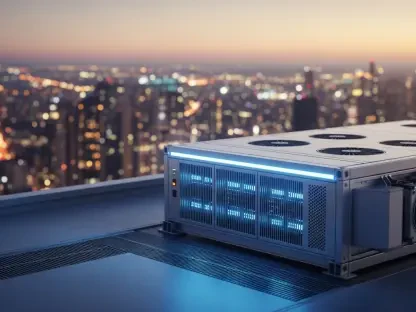
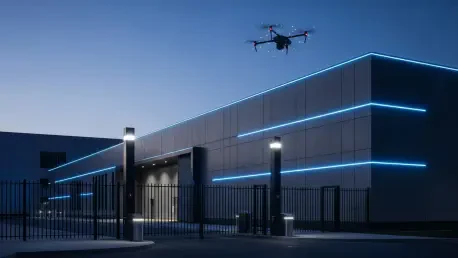
Active detection and behavior baselining are also becoming essential to counter threats directed at a facility’s airspace and rooftop vulnerabilities. Traditional perimeter security often stops at the fence line, but the rise of unmanned aerial systems (UAS) has made the sky above the data center a critical defensive zone. Modern security installations are incorporating radar and acoustic sensors to detect drones, along with automated response protocols to protect sensitive rooftop equipment like chillers and backup generators. By establishing a baseline of normal activity around the site, security systems can more easily identify anomalies that might indicate a reconnaissance mission or a direct attack. This holistic approach to perimeter defense ensures that the facility is protected from all angles, not just those accessible by land.
The Regulatory Landscape and Industry Standards
The regulatory environment is undergoing a major shift as evolving standards force data center operators to move from voluntary guidelines to mandatory physical protection protocols. Governments around the world are recognizing that the digital economy cannot function without secure physical infrastructure, leading to new laws that categorize data centers as critical assets. These regulations often require specific levels of surveillance, access control, and reporting that were previously left to the discretion of the operator. Compliance in the AI era is no longer about checking a box; it is about proving that a facility can withstand a sophisticated physical assault and maintain operations under extreme duress. This regulatory pressure is driving a standardization of security practices across the industry, raising the floor for all participants.
Identity and Access Management (IAM) has also taken on a more central role in physical security, with access logs now treated as a critical compliance control. In many modern facilities, physical access must be reconciled with digital authentication patterns in real time to ensure that the person entering a server room is authorized to be there at that specific moment. This integration prevents “tailgating” and other common social engineering tactics by requiring multi-factor authentication for both digital and physical entry. Rigorous IAM protocols are essential for meeting international safety benchmarks and ensuring that every movement within a high-value area is recorded and auditable. The merging of these two disciplines ensures that the human element of security is managed with the same precision as the technical components.
National security designations are also beginning to impact how data centers are built and operated, particularly those that host government or military AI workloads. Being categorized as “critical infrastructure” brings with it a set of federal oversight requirements and mandatory reporting structures that go beyond standard commercial audits. Operators must participate in national threat-sharing programs and may be required to undergo regular security reviews by state agencies. While these designations provide a higher level of protection and support from the government, they also add a layer of complexity to the operational landscape. For many facilities, this means maintaining a constant state of readiness for inspections and ensuring that all security personnel meet stringent background check requirements.
Vendor vetting and logistics chain security have become increasingly important as operators look to meet higher safety benchmarks and satisfy regulatory audits. It is no longer enough to trust a supplier; every part of the infrastructure must be verified to ensure it has not been tampered with during transit. This involves tracking components through every stage of the supply chain and using secure delivery methods for sensitive hardware. Rigorous audit protocols now extend to the manufacturers themselves, as operators seek to eliminate the risk of hardware-level backdoors or compromised firmware. By securing the entire lifecycle of the equipment, data centers can provide a more robust guarantee of integrity to their clients and regulatory bodies, ensuring that the foundation of the AI economy remains untainted.
Future Outlook: The Evolution of Resilience and Innovation
The industry is moving rapidly toward a Zero Trust physical environment where every person, device, and access point is continuously verified regardless of their location or previous authorizations. This model assumes that the perimeter has already been breached, focusing instead on limiting movement and access within the facility through micro-segmentation. In a Zero Trust data center, a technician’s badge might only work for a specific rack at a specific time, and their actions would be monitored by AI-driven surveillance to ensure they remain within the scope of their work. This granular level of control significantly reduces the risk of insider threats and ensures that even a successful entry into the building does not grant an intruder free rein over the entire infrastructure.
Predictive threat modeling, powered by the very Artificial Intelligence hosted within these facilities, is set to become the standard for advanced surveillance and analytics. By analyzing vast amounts of data from cameras, sensors, and access logs, AI systems can identify subtle patterns that precede a security incident, allowing guards to intervene before a breach occurs. These systems can distinguish between a routine maintenance task and a suspicious gathering of people, or detect the sound of a drone long before it is visible to the human eye. Using AI to protect AI creates a virtuous cycle of security, where the infrastructure becomes more resilient as it learns from the threats it faces. This proactive approach marks a departure from traditional reactive security, moving the focus toward prevention and early detection.
Operational resilience is also being redefined through integrated planning that moves beyond traditional uptime Service Level Agreements (SLAs). In the coming years, the industry will focus more on “survivability”—the ability of a facility to maintain core functions during a major physical attack, a natural disaster, or a total loss of utility support. This holistic definition of resilience includes not just redundant power and cooling, but also the physical hardening of the site and the presence of highly trained security teams capable of managing complex crises. The future of site selection will be dictated by this need for resilience, with operators favoring regions that offer not just cheap power, but also long-term geopolitical stability and proximity to secure utility grids.
As the geography of the data center industry shifts, the relationship between facilities and their local environments will become more integrated and defensive. Next-generation sites will likely be designed with their own microgrids and water recycling systems to reduce their dependence on public infrastructure that might be vulnerable to disruption. These “islands of resilience” will be capable of operating independently for extended periods, providing a stable foundation for the global digital economy even during times of widespread instability. The strategic value of these facilities will continue to grow, making their protection a central theme of the technological landscape for the foreseeable future. This evolution ensures that while the threats may become more sophisticated, the defenses will keep pace, securing the heart of the digital age.
Summary of Findings and Strategic Recommendations
The transition of data centers into the realm of critical infrastructure was a direct consequence of the immense value concentrated within their walls by the artificial intelligence revolution. Analysts found that the “AI Premium”—the massive increase in hardware value and the strategic importance of the workloads—fundamentally altered the consequence of loss for the entire industry. The financial and operational risks associated with a physical breach moved from a localized concern to a global economic threat. It was clear that the high density of modern equipment racks left no room for error, as a single incident could now result in the destruction of tens of millions of dollars in specialized computing assets. This new reality demanded a shift in thinking, moving security from a back-office function to a primary strategic priority for executive leadership.
The essential integration of physical and cyber disciplines emerged as the most critical recommendation for operators looking to secure the new front line. Observations confirmed that the traditional separation of these two fields created dangerous gaps that sophisticated adversaries were eager to exploit. By treating identity management and physical access as a single, unified control plane, forward-thinking organizations were able to significantly reduce their vulnerability to social engineering and insider threats. This unification allowed for real-time reconciliation of digital and physical activities, creating a more comprehensive picture of a facility’s security posture. The findings suggested that the most successful operators were those who elevated security discussions to the board level, ensuring that physical protection received the same investment and scrutiny as cybersecurity.
Building for the new front line required a commitment to a “security-by-design” discipline that prioritized resilience from the very first phase of construction. Industry experts concluded that retrofitting security into an existing facility was often less effective and more expensive than integrating advanced defensive features into the original blueprint. This included everything from blast-resistant structures and hardened rooftops to the installation of sophisticated RF monitoring and drone detection systems. The recommendations focused on the need for a holistic approach to survivability, where the goal was not just to maintain uptime, but to ensure the facility could withstand and recover from a diverse range of physical and technical threats. This proactive stance was identified as the only way to protect the global economic and social stability that now rests on the shoulders of these critical facilities.