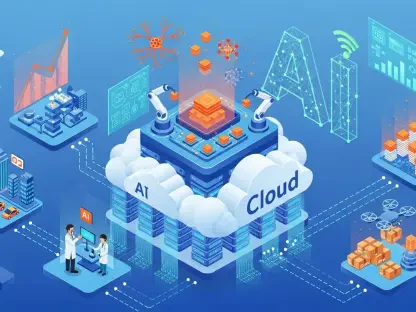

The digital landscape is witnessing a profound transformation as the silent, rigid pillars of telecommunications evolve into dynamic, programmable environments through a strategic alliance between Nokia and Google Cloud. This partnership represents a fundamental shift in how global enterprises and independent software developers interact with the complex machinery of 5G infrastructure, moving away from a world of closed systems toward an open, API-driven ecosystem. By integrating Nokia’s Network as Code platform with Google Cloud’s sophisticated data analytics and Agentic AI, the collaboration effectively bridges the gap between the specialized domain of radio access networks and the fast-paced world of modern software engineering. The objective is to strip away the historical layers of technical debt and proprietary protocols, allowing the network to be treated as a flexible, on-demand resource similar to cloud computing. As mobile networks become increasingly decentralized, the ability to program network behavior in real-time opens the door for a new generation of applications that are inherently aware of their connectivity environment.
Bridging the Gap: The Evolution of Programmable Infrastructure
The telecommunications sector has long struggled with a reputation for being an inaccessible fortress of proprietary hardware and fragmented communication protocols that hindered external innovation. For decades, a software engineer wishing to optimize an application for specific network conditions faced a nearly insurmountable wall of complexity, requiring deep expertise in telco-specific standards like 3GPP. This traditional isolation meant that even as 5G rolled out with promises of ultra-low latency and massive device density, the actual implementation of these features remained locked behind manual configuration processes and operator-specific silos. The introduction of Nokia’s Network as Code platform changes this dynamic by acting as a sophisticated abstraction layer that translates the “language” of the tower and the core into standardized, developer-friendly interfaces. This move effectively democratizes access to the radio layer, allowing developers to invoke complex network functions through simple API calls without needing to understand the underlying physical infrastructure or the intricacies of signal processing.
Building on this foundation, the transition toward a programmable network architecture is not merely a technical upgrade but a strategic necessity for the monetization of modern connectivity. When network functions such as precise location verification or quality-of-service adjustments are exposed as code, they become viable products that can be sold to diverse industries ranging from logistics to immersive entertainment. This shifts the role of the mobile operator from a passive provider of “bit pipes” to an active participant in the software development lifecycle. By utilizing an Agentic AI framework, Nokia and Google Cloud provide a specialized interface where AI agents serve as intermediaries, interpreting complex business requirements and executing them as precise network actions. This approach ensures that a developer building a remote surgery application or an autonomous fleet management system can guarantee specific performance metrics through software alone. The result is a more vibrant ecosystem where the network adapts to the application, rather than the application being limited by the static constraints of the network.
Intelligent Automation: The Exposure and Intelligence Layers
The architecture of this collaboration is meticulously organized into a three-layer framework, starting with the Exposure Layer which functions as the primary gateway for the global developer community. Available through the Google Cloud Marketplace, this layer distills the overwhelming variety of internal telecom functions into a curated set of reusable APIs that follow industry-standard formats. This democratization of 5G capabilities ensures that a function developed for a specific use case in one region can be seamlessly adapted for another, regardless of the specific hardware vendor or operator involved. By removing the need for labor-intensive, manual network configuration, the Exposure Layer allows general software engineers to build “network-aware” tools that were previously the exclusive domain of specialized telecom firms. This shift significantly reduces the time-to-market for innovative services, enabling small-to-medium enterprises to compete in the high-stakes arena of industrial automation and real-time data processing without the burden of massive infrastructure investment.
Directly above the exposure mechanism sits the Intelligence Layer, a sophisticated environment where Google’s Gemini AI models intersect with Nokia’s deep domain expertise in network management. This layer marks a departure from traditional, imperative coding—where every step must be explicitly defined—toward an “intent-based” model that prioritizes the desired outcome over the specific execution path. In this paradigm, a developer might simply state an objective, such as maintaining a specific bit rate for a high-definition broadcast in a crowded stadium, and the AI automatically orchestrates the necessary network configurations to achieve that goal. By automating repetitive tasks and interpreting high-level business logic, the Intelligence Layer minimizes the risk of human error in network management and frees up engineering teams to focus on long-term strategic optimization. This level of automation is essential for managing the sheer scale of modern 5G deployments, where the volume of data and the number of connected devices far exceed the capacity of manual oversight.
Security and Performance: The Interaction Layer and User Experience
Safety and interoperability remain the primary focuses of the Interaction Layer, which governs the “agent-to-agent” communication protocols required for secure network manipulation. As AI agents gain the authority to request changes in network behavior, such as boosting bandwidth for a critical emergency response mission, it is imperative that these actions occur within strictly defined regulatory and security boundaries. This layer provides a robust framework that validates every request against pre-defined policies, ensuring that a boost in performance for one user does not negatively impact the overall integrity of the cell site or violate privacy standards. Such a system is particularly vital in multi-operator environments where traffic may traverse different geographic regions and carrier networks. By providing a secure, automated handshake between business applications and the network core, the Interaction Layer allows for scalable operations that are both agile and resilient against unauthorized or malicious configuration changes.
Beyond the technical backend, the most visible impact of this integration is the significant improvement in the end-user experience through dynamic, context-aware optimization. Mobile networks are no longer static entities; they have become intelligent systems capable of responding to real-time environmental demands. For instance, a cloud-gaming platform can now detect a sudden dip in connection quality and automatically request a low-latency path from the network to prevent lag, all without the user ever noticing a disruption. Furthermore, because operations teams now have access to standardized insights and automated troubleshooting tools, the time required to diagnose and resolve performance bottlenecks has been drastically reduced from hours to seconds. This responsiveness is critical for the success of future technologies like augmented reality overlays and autonomous drone delivery, which depend on unwavering reliability. By making the network an active partner in the digital experience, Nokia and Google Cloud ensure that the infrastructure is always optimized for the specific task at hand.
Strategic Outlook: Cultivating a New Telecom Ecosystem
The synergy between Nokia and Google Cloud creates a unified ecosystem where the mobile network functions with the same ease and accessibility as any other cloud-based service. This evolution does more than just simplify technical workflows; it creates entirely new revenue streams for operators by making their expensive physical infrastructure accessible to the global pool of software innovators. As the barrier to entry for utilizing advanced network features drops, we are likely to see a surge in experimental 5G applications that cater to highly specific industrial and consumer needs. This transition effectively ends the era of the network as a “passive pipe” for data, turning it into a dynamic, intelligent entity that can be rented, programmed, and optimized on the fly. For enterprises, this means the ability to build more personalized and context-aware mobile experiences that can leverage the native intelligence of the network to provide superior security, location accuracy, and data throughput.
Looking ahead, the shift toward Agentic AI as the primary interface for network interaction suggests that the future of telecommunications will be defined by software-defined autonomy rather than manual hardware management. Organizations should begin by identifying high-value use cases where network awareness can provide a competitive advantage, such as in-field asset tracking or mission-critical communication for remote teams. The next logical step is to integrate these programmable network APIs into existing DevOps pipelines, treating connectivity as a variable that can be adjusted just like compute or storage resources. Developers who embrace this intent-based model will be best positioned to lead in a market where the network is an active participant in the application’s success. Ultimately, the successful convergence of AI and telecom infrastructure will be measured by how seamlessly these complex technologies disappear into the background, providing a foundation for a more connected and efficient global society that operates with unprecedented speed and reliability.