
The Dawn of a New Computing Era
The global push to power the artificial intelligence revolution has ignited a construction boom of such monumental scale that its success is now measured not just in petaflops but in entire gigawatts of energy consumption. This insatiable and unprecedented demand for computational power is fueling a historic infrastructure buildout, a pivotal moment that is fundamentally reshaping global technology, investment strategies, and energy policy. The sheer velocity of this expansion is creating a high-stakes race among the world’s largest technology companies, defined by clashing corporate strategies, monumental capital expenditures, and the formidable real-world constraints that threaten to ground digital ambitions.
This transformation is more than just an upgrade; it is the dawn of a new computing era. The decisions made and the infrastructure built now will dictate the trajectory of technological progress for decades to come. At the heart of this shift is a tension between the seemingly limitless potential of AI and the very finite resources of the physical world. Navigating this complex landscape requires a deep understanding of the scale of investment, the unique playbooks of each corporate titan, and the critical bottlenecks—from power grids to supply chains—that are emerging as the ultimate arbiters of growth.
The Anatomy of a Revolution
A Colossal Blueprint Charting the Scale of a 600 Billion Expansion
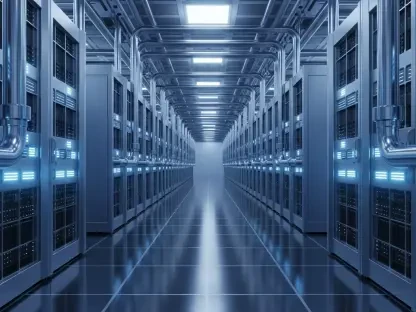
The velocity and magnitude of the current hyperscale data center buildout are staggering, driven almost exclusively by the computational demands of generative AI. Projections from leading market research groups indicate a dramatic acceleration, with capital expenditures from the top operators expected to surpass a colossal $600 billion this year alone. This investment is fueling a construction pipeline of nearly 800 new facilities, a building spree that is on track to double total global hyperscale data center capacity in just over three years—a rate of growth previously thought unimaginable.
This expansion marks a fundamental strategic pivot. In the previous era of cloud computing, the primary goals were redundancy, resilience, and geographic distribution to ensure data sovereignty. While those objectives remain relevant, the overwhelming priority has shifted toward the construction of massive, purpose-built AI superclusters. These next-generation facilities are designed from the ground up to support the immense power and cooling requirements of high-density accelerator racks, state-of-the-art networking, and vast storage systems, creating an entirely new blueprint for digital infrastructure.
Playbooks for Supremacy Decoding Individual Hyperscaler Ambitions
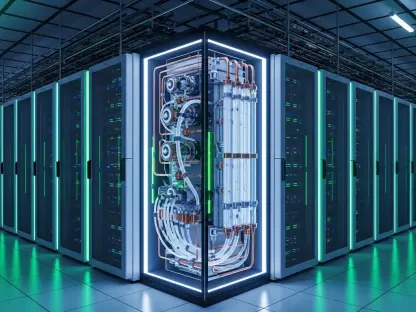
As the race intensifies, each major tech titan is executing a distinct and aggressive strategy to capture the lucrative AI market. Meta, for instance, is pursuing gigawatt-scale projects like its “Hyperion” campus in Louisiana, a monumental joint venture set to command up to 5 GW of power. In contrast, Microsoft is pioneering new data center designs with its “Fairwater” AI facilities, which use innovative closed-loop liquid cooling to eliminate all operational water consumption, directly addressing mounting sustainability concerns.
The competitive differentiators extend beyond physical construction. Several operators, including AWS and Google, are making massive investments in custom silicon, developing their own accelerator chips to optimize performance and reduce reliance on third-party suppliers. Oracle is taking a different tack with its “Stargate I” campus in Texas, a facility engineered specifically to house over 450,000 of the latest-generation NVIDIA GPUs for large-scale customer deployments. These divergent approaches—from custom hardware to novel cooling and energy solutions—highlight the varied bets being placed to achieve supremacy in the AI era.
The Great Bottleneck When Digital Ambition Collides with Physical Reality
Despite the enormous capital being deployed, the assumption of limitless expansion is being challenged by a collision with physical reality. Critical constraints are emerging across the globe, threatening to temper this explosive growth. The primary bottleneck is power, as the industry’s demand strains aging energy grids to their breaking point. This is compounded by severe equipment shortages, with extended lead times for critical components like transformers and high-power switchgear delaying project timelines significantly.
The tangible impact of these hurdles is already being felt. Recent industry reports indicate that dozens of major projects, representing a combined investment of over $160 billion, have been either blocked or substantially delayed due to these physical limitations. Furthermore, energy sector experts are issuing stark warnings about the increasing likelihood of power outages in regions with high concentrations of data centers. These real-world impediments are forcing a strategic pivot across the entire industry, compelling operators to move beyond simply building bigger and faster toward a more calculated and sustainable approach to expansion.
Redefining the Footprint Sustainability Imperatives and the Next Competitive Frontier
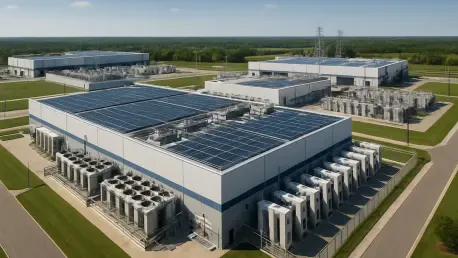
Mounting environmental pressures and intensifying regulatory scrutiny are forcing sustainability to become a central pillar of hyperscale strategy rather than an afterthought. Operators are now in a race to secure renewable energy sources, redesign supply chains for lower carbon footprints, and innovate in cooling and power efficiency. This shift is not purely altruistic; it is also driven by geopolitical factors like data sovereignty laws, which compel companies to build and operate infrastructure within specific national borders, often in regions with strict environmental standards.
This focus on a distributed and sustainable footprint is extending the competitive battleground to the network edge. Industry strategists distinguish between two distinct zones. The “near edge”—comprising regional data centers located closer to population centers—is seeing immediate investment to support low-latency AI inference and model queries. In contrast, the potential of the “far edge,” which includes computing on cell towers, factory floors, and IoT devices, remains more speculative. While its long-term promise is clear, realizing its full potential requires further ecosystem development and the emergence of compelling large-scale use cases.
Strategic Imperatives for an AI Powered World
The core takeaway from the current landscape is clear: the hyperscale industry is in the midst of a historic, AI-driven expansion that is fundamentally constrained by physical and environmental limits. This reality creates a new set of strategic imperatives for all industry stakeholders. The most pressing need is to innovate relentlessly in energy efficiency, developing new cooling technologies, power distribution methods, and software optimizations that can deliver more computational power per watt.
Furthermore, securing robust and resilient supply chains has become paramount. Leaders must forge stronger partnerships with equipment manufacturers, diversify sourcing for critical components, and invest in next-generation manufacturing capabilities to overcome the persistent bottlenecks that delay construction. Finally, designing sustainable infrastructure from the outset is no longer optional. This involves integrating renewable energy sources at the planning stage, pioneering waterless cooling systems, and engaging proactively with local communities and regulators to ensure that digital growth does not come at an untenable environmental or social cost. Navigating the tension between limitless demand and finite resources requires a holistic strategy that balances ambition with responsibility.
The Verdict for 2026 and Beyond
The year 2026 marked a critical turning point where the digital ambitions of the AI era were tested against the unyielding constraints of the physical world. This period was defined by a historic buildout of computational infrastructure, but it was equally defined by the power grid instability, supply chain disruptions, and regulatory hurdles that tempered its velocity. The clash between these forces compelled the industry to mature at an accelerated rate, shifting its focus from sheer scale to strategic efficiency and sustainability.
The long-term implications of this race extended far beyond market leadership in the technology sector. The immense energy demands of AI data centers forced a global reckoning on energy policy, accelerating the transition to renewable sources and prompting new investments in grid modernization. The ultimate winners in this transformative era were not those who simply built the biggest data centers, but those who built the smartest. They pioneered a new paradigm for responsible and powerful computing, demonstrating that technological progress and environmental stewardship could, and must, advance together.