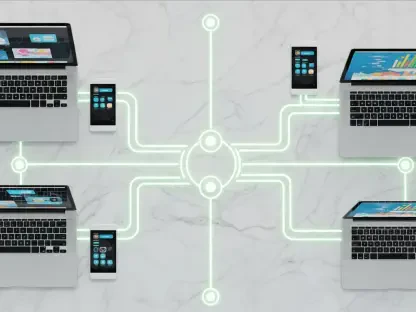

Modern telecommunications networks, despite their sophisticated capabilities, are frequently built upon a fractured operational foundation that severely limits their potential and introduces significant risk. Communications Service Providers (CSPs) navigate a complex landscape of disconnected operational systems, with each platform generating its own unique telemetry, topology, and service data. This separation creates deep-seated information silos, preventing the formation of a single, coherent, and reliable view of the entire network’s status. As network complexity continues to accelerate with the rollout of 5G, edge computing, and IoT services, this “knowledge gap” between what operators can see and what they truly need to know is widening. The industry has reached a critical juncture where the traditional, fragmented approach to network assurance is no longer sustainable, pushing for a transformative new paradigm where Artificial Intelligence may hold the definitive answer.
The High Cost of a Disconnected Network
The lack of synchronization between inventory systems, service models, and alarm engines has a direct and damaging commercial impact that extends far beyond technical inefficiency. In a competitive market where premium enterprise services are contingent on stringent Service Level Agreement (SLA) guarantees, these operational inconsistencies lead directly to an increased Mean Time To Repair (MTTR), widespread confusion during incident response, and a cascade of unnecessary escalations between teams. This inherent unreliability severely undermines a CSP’s ability to commercialize differentiated quality-of-service tiers or confidently offer end-to-end, cross-border services that command higher margins. Ultimately, the inability to provide a unified assurance layer erodes customer trust, stifles revenue growth, and puts providers at a significant disadvantage against more agile, cloud-native competitors who have built their services on a foundation of integrated, automated operations from the outset.
This pervasive problem is significantly compounded by the industry’s continued reliance on manual intervention to bridge the gaps between disparate systems. Highly skilled network engineers are often forced to act as human data correlators, manually sifting through a deluge of tickets, logs, and telemetry from multiple, non-integrated tools to piece together the source of a fault. They must correlate issues based on personal experience and institutional knowledge rather than a shared, systemic logic that is consistent and scalable across the organization. This approach is not only incredibly slow and prone to human error but is also fundamentally unsustainable. As networks become more dynamic, virtualized, and distributed, the operational expenditure (OPEX) associated with this manual, reactive model becomes an ever-growing financial burden, consuming valuable resources that could otherwise be invested in innovation and service development.
A Blueprint for AI-Powered Unification
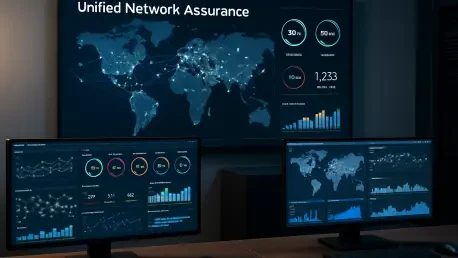
A truly effective solution begins by dismantling these information silos to create a synchronized, real-time view of inventory, topology, and service data. Instead of allowing each monitoring system to operate with its own partial and often conflicting information, an advanced assurance fabric leverages industry-standard frameworks, such as TM Forum-aligned APIs and data models. This approach generates a single, consistent operational context that is accessible to all participating systems and agents. This “single source of truth” is the foundational pillar of modern network assurance, as it effectively eliminates information drift between domains and ensures that observations from one part of the network can be accurately and meaningfully interpreted by another. By establishing this unified contextual layer, CSPs can move away from fragmented troubleshooting toward a holistic and cohesive management strategy where every action is based on complete and reliable data.
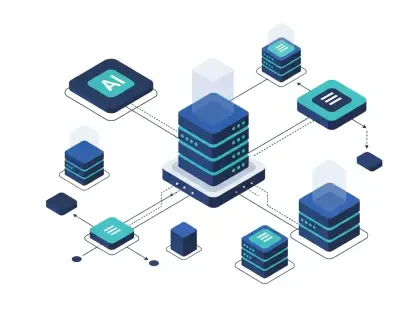
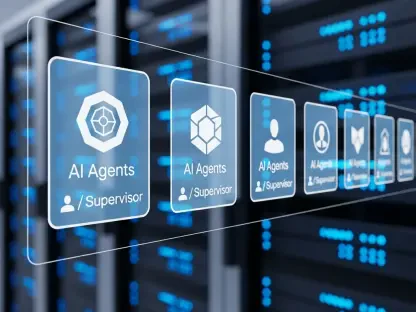
At the heart of this unified framework is an innovative agentic architecture powered by an advanced model context protocol. This architecture employs autonomous software agents that utilize the shared contextual foundation to perform complex diagnostic and remediation tasks. When a fault occurs, these agents are designed to interpret events, exchange logical reasoning with one another, and collaboratively decide on the most appropriate actions. They correlate signals against the complete, end-to-end network topology rather than the isolated views of individual systems. This collaborative reasoning allows them to share early hypotheses, dynamically adjust their understanding as new evidence emerges, and cross-check findings to validate issues before escalating. This process drastically reduces false positives and alarm noise, enabling human teams to focus their attention on genuine, impactful incidents that require their specialized expertise, moving them from reactive firefighters to proactive strategic planners.
Transforming Operations into Opportunities
The behavior of these autonomous agents is governed by a sophisticated layer of intent management, representing a significant evolution from the rigid, pre-scripted playbooks of the past. Under this model, CSPs define high-level business objectives, such as “restore service for enterprise customer X within 15 minutes” or “maintain gold-tier experience for all 5G users.” The AI agents use these objectives as their primary guide for remediation, dynamically adapting their actions to the live network environment and choosing the best course of action to achieve the desired business outcome while remaining aligned with strategic goals. This approach moves the industry closer to the vision of truly autonomous networks, where closed-loop systems can accurately interpret human intent and act with precise, consistent logic to maintain service quality and optimize network performance without constant manual oversight, thereby freeing up valuable human capital.
The implementation of such an AI-driven assurance fabric has yielded significant and measurable improvements, transforming both operational efficiency and commercial viability. Data from real-world project implementations demonstrated a dramatic acceleration in fault correlation and resolution, achieving a 50% faster Mean Time To Repair, a 90% reduction in alarm noise, and a 60% reduction in OPEX for Network Operations Center activities. Beyond these impressive efficiency gains, a unified, cross-CSP assurance layer made entirely new and lucrative commercial models viable. It allowed providers to confidently offer SLA-guaranteed interconnect and cross-border enterprise services, knowing they possessed the capability to trace, diagnose, and resolve issues collaboratively across partner networks using a shared, automated logic. This strategic shift unlocked the potential for premium experience tiers and new revenue streams built upon a foundation of proven, end-to-end reliability.
A New Era of Cross-Domain Resilience
The synergistic combination of agentic AI, a shared contextual fabric, and open industry standards provided a practical and powerful blueprint for the future of network assurance. It demonstrated that this integrated approach could effectively solve one of the most persistent and difficult challenges in telecommunications: fault detection and recovery across fragmented, multi-domain, and multi-provider networks. The achievements from these initiatives signaled a future where cross-domain resilience was no longer a premium feature but a baseline expectation for all high-value services. This fundamental shift in capability paved the way for the widespread adoption of truly autonomous networks, changing the industry conversation from a debate over feasibility to a strategic discussion about the speed and scale of implementation.