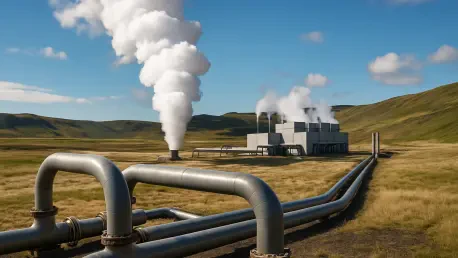

A silent revolution is underway, not in code or algorithms, but deep within the Earth’s crust, as the tech industry confronts the monumental energy appetite of artificial intelligence. This insatiable demand for power, growing at an exponential rate, presents a critical sustainability challenge that could bottleneck the next wave of innovation. As data centers evolve into power-hungry AI factories, the search for a new energy source—one that is both clean and relentlessly reliable—has become paramount.
The Unseen Engine of AI a Thirst for Power Meets the Earths Inner Fire
The meteoric rise of artificial intelligence has created an unprecedented demand for electricity, a reality that threatens to undermine the tech industry’s environmental commitments. Generative AI models and large-scale data processing require immense computational power, translating directly into massive, around-the-clock energy consumption that dwarfs that of traditional data centers. This surge creates an urgent need for sustainable energy solutions that can keep pace with innovation without exacerbating the climate crisis. The industry is quickly realizing that its existing renewable energy strategies, heavily reliant on intermittent sources, may not be sufficient for this new era.
In this high-stakes environment, Google’s pioneering partnership in Nevada emerges as a landmark moment for the future of digital infrastructure. By securing a deal to power its operations with geothermal energy, the company is signaling a strategic pivot toward a source that mirrors the constant operational demands of AI. This move is more than just another corporate green initiative; it represents a tangible blueprint for decoupling technological growth from carbon emissions. It demonstrates a commitment to finding solutions that provide the firm, 24/7 power that AI requires, directly from the planet’s own natural heat.
This article delves into the burgeoning relationship between geothermal energy and the digital age, exploring how tapping into the Earth’s core could resolve one of technology’s most pressing dilemmas. It will examine the innovative financial and regulatory models making these projects viable, the unique advantages of geothermal over other renewables, and the technological advancements poised to unlock its global potential. The central question is whether this ancient source of energy can provide the stable, carbon-free foundation needed to power the next technological revolution.
Forging a New Energy Paradigm in the Digital Age
The Nevada Deal a Blueprint for Powering Tomorrows Data Centers
A landmark collaboration between Google, geothermal developer Ormat Technologies, and utility provider NV Energy is set to redefine how technology giants power their operations. The agreement aims to inject up to 150 megawatts of new, clean geothermal energy directly into the Nevada grid to support Google’s local data centers. This power purchase agreement is not a simple transaction but a strategic investment designed to build new energy capacity where it is consumed, setting a powerful precedent for the entire industry.
At the heart of this deal is the innovative Clean Transition Tariff (CTT), a financial model that could be replicated globally. The CTT allows a large corporate energy user like Google to fund the development of a new clean energy project, with all associated costs allocated directly to them. This structure is crucial because it accelerates the green transition without placing any financial burden on other public ratepayers, making it a politically and economically palatable solution. If approved by Nevada’s Public Utilities Commission, this framework will provide a clear path for other corporations to make similar large-scale investments in green infrastructure.
The project’s future, however, hinges on a critical regulatory decision. The Public Utilities Commission of Nevada is evaluating the proposal, with a final determination expected this year. A favorable ruling would not only greenlight the development of new geothermal plants, with the first slated to come online by 2028, but also validate the CTT as a viable mechanism for future projects. This decision is being watched closely by industry leaders, as it could unlock a wave of corporate-funded clean energy development across the country.
Geothermals Unique Fit Why Constant Power Is King
Unlike solar and wind power, which fluctuate with weather conditions, geothermal energy provides a firm, continuous output, 24 hours a day, seven days a week. This unwavering reliability makes it an ideal match for the relentless, non-stop processing demands of AI workloads and data centers. While intermittent renewables require expensive battery storage or fossil fuel backup to ensure grid stability, geothermal offers baseload power that is both clean and constant, eliminating the need for such compromises.
This inherent stability does more than just power servers; it strengthens the entire local energy grid. By adding a consistent source of carbon-free electricity, geothermal projects help utilities balance the variable output of other renewables, enhancing overall grid reliability for all customers. For tech giants, this means they can meet their ambitious carbon-free energy goals without sacrificing the operational certainty their infrastructure demands, achieving a rare synergy between sustainability and performance.
Despite its advantages, traditional geothermal faces two primary challenges: high upfront capital costs and geographical constraints. Developing a geothermal plant requires significant investment in drilling and exploration to find and tap into natural underground reservoirs of steam and hot water. These ideal geological conditions are not found everywhere, which has historically limited geothermal to a niche role in the global energy mix.
Beyond a Single Deal a Tech Wide Pivot to Deep Earth Energy
The move toward geothermal is not an isolated event but part of an accelerating industry-wide trend. Following Google’s lead, Meta also secured a geothermal agreement in 2024, signaling that the sector’s largest players view deep earth energy as a core part of their power strategy. Meanwhile, burgeoning projects in markets like Indonesia show this is a global shift, as tech companies seek to solve power availability challenges in key regions for digital expansion.
Recognizing this critical need, the U.S. government is taking active steps to facilitate geothermal development. Federal agencies are working to streamline and shorten the often lengthy permitting processes for new projects, with a specific focus on fast-tracking development to support the build-out of AI infrastructure. This governmental support provides a crucial tailwind, reducing friction for developers and encouraging further investment in the sector.
This convergence of corporate demand and government support is rapidly challenging the perception of geothermal as a niche solution. It is increasingly viewed as a strategic asset in the global race for AI dominance, where access to massive, reliable, and clean power is a decisive competitive advantage. Geothermal is no longer on the fringes of the renewable energy conversation; it is becoming a cornerstone of the infrastructure that will power the future.
The Next Frontier Engineering the Future of Geothermal Power
A disruptive technology known as Enhanced Geothermal Systems (EGS) is poised to fundamentally change the landscape of deep earth energy. EGS works by creating man-made reservoirs deep underground, fracturing hot rock and circulating fluid through it to generate steam. This innovation promises to unlock geothermal potential on a global scale, moving far beyond the traditional hotspots where natural reservoirs exist.
With EGS, geothermal could become a viable energy option for nearly any location on Earth. By engineering the necessary conditions, developers would no longer be limited to geologically active regions. This could transform the energy map, allowing data centers and industrial hubs to be co-located with their own dedicated, 24/7 clean power sources, drastically reducing reliance on long-distance transmission and volatile energy markets.
When compared to other next-generation energy sources, such as advanced nuclear or green hydrogen, EGS presents a compelling long-term vision. It leverages proven drilling technologies from the oil and gas industry and taps into a virtually limitless source of heat from the planet’s core. As the world searches for a truly scalable, carbon-free power grid, EGS stands out as a technology with the potential to deliver reliable, baseload energy almost anywhere it is needed.
From Strategy to Action Key Takeaways for Industry Leaders
The core insights from this industry shift are clear: AI’s explosive energy consumption is a critical bottleneck that demands an immediate and scalable solution. Google’s power purchase agreement in Nevada, built on the CTT framework, offers a powerful and repeatable model for other corporations to follow. Above all, it is geothermal’s unparalleled reliability as a firm, carbon-free power source that makes it the most compelling asset in the tech industry’s energy portfolio.
These developments create clear imperatives for both industry and regulators. Tech companies should proactively pursue innovative tariff structures and partnerships with utilities to fund and develop new clean energy capacity. In parallel, utilities and public commissions must create modern regulatory frameworks that can accommodate and encourage these large-scale corporate investments, ensuring that the benefits of grid modernization are shared broadly.
For stakeholders looking to the future, a practical roadmap is emerging. The first step is to evaluate local geological potential and engage with geothermal developers to understand project feasibility. The next is to collaborate with utilities to explore financial models like the CTT that align corporate sustainability goals with public interest. By treating geothermal as a core component of a long-term energy strategy, companies can secure the power they need for growth while leading the transition to a sustainable digital future.
The Verdict Tapping the Planets Core to Fuel the Digital Future
The analysis strongly indicated that geothermal energy is uniquely positioned to solve the critical trilemma facing the AI industry: the need for massive, reliable, and clean power. Its ability to deliver constant, carbon-free energy around the clock directly addressed the shortcomings of other renewables and provided the firm foundation required for the next technological revolution.
It became evident that the success of early initiatives, such as Google’s Nevada project, would likely trigger a fundamental and permanent shift in how the digital world is powered. These pioneering agreements were not just one-off deals but blueprints for a new energy paradigm where technology companies become active partners in building a more resilient and sustainable grid.
The path forward required an acceleration of investment and innovation in geothermal technologies, especially Enhanced Geothermal Systems. By doing so, the industry ensured that the growth of artificial intelligence became a force that advanced human progress without contributing to climate change, securing a future where technological ambition and planetary health were no longer in conflict.