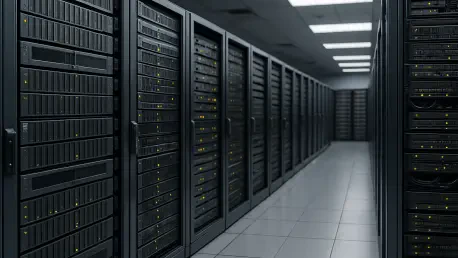

A casual stroll through the cold aisle of a modern data center can present an illusion of pristine order and control, a carefully managed environment where gleaming server racks stand in silent, efficient rows under bright, sterile lighting. This carefully curated image, however, often conceals a far more troubling reality that a simple visual inspection fails to capture. Hidden from view, a microscopic siege is underway as dust, debris, and other contaminants silently accumulate, posing a direct and escalating threat to the very hardware that powers the digital world. This is not a matter of simple housekeeping but a critical component of operational integrity, where the difference between a superficially tidy facility and a truly clean one can be measured in uptime, hardware longevity, and millions of dollars in protected assets.
The stakes associated with data center hygiene have never been higher, transforming what was once considered a low-priority janitorial task into an essential preventative maintenance discipline. With the proliferation of high-density computing and the immense capital investment in artificial intelligence infrastructure, the financial and operational consequences of contamination-related failures have grown exponentially. Understanding the hidden threats, from airborne particulates disrupting airflow to microscopic debris clogging liquid cooling systems, is now fundamental to risk management. A proactive, specialized approach to cleanliness is no longer a luxury but a foundational requirement for ensuring the performance, reliability, and efficiency of any mission-critical facility.
The Deceptive Sheen Uncovering the Grime in Your Mission Critical Facility
The veneer of cleanliness in a data center is often just that—a thin surface layer that masks underlying issues. A routine walkthrough might miss the subtle but telling signs of accumulating grime: a fine, almost imperceptible coating of dust on cabinet tops, nearly invisible cobwebs strung across cable trays in the ceiling plenum, or scuffed floor tiles that suggest a lack of deep cleaning protocols. These seemingly minor imperfections are frequently the first indicators of a systemic neglect that allows more dangerous contaminants to build up in unseen areas, such as under raised floors and within the intricate pathways of server chassis. The real story of a data center’s health is not told by what is immediately visible, but by what is discovered upon closer, more deliberate inspection.
In some cases, the evidence of neglect can be profoundly unsettling and reveal a complete breakdown in facility management. Rich DeBlasi, president of the specialized cleaning firm Spec-Clean, recalls one facility visit where his team discovered dried blood on the exterior of a server cabinet. The fact that the biological hazard had remained for so long that it proved difficult to remove underscores a severe lapse in environmental oversight. While an extreme example, it serves as a stark reminder that if such a visible and unsanitary issue can be ignored, countless other less obvious but more technically perilous contaminants are almost certainly present. This level of inattention creates an environment where equipment failure is not a possibility, but an inevitability.
Beyond Aesthetics Why a Clean Data Center Is a High Performing Data Center
Delaying a thorough data center cleaning is a gamble with expensive consequences, where procrastination directly correlates with increased operational risk. Each quarter that passes allows more dust and debris to accumulate, steadily compromising the performance of mission-critical equipment. These particles, once settled on servers or drawn into ventilation systems, act as an insulating blanket that restricts airflow and impairs thermal management. This forces cooling systems to work harder, leading to increased energy consumption and higher operational costs. Over time, the sustained thermal stress accelerates hardware degradation, shortens equipment lifespans, and ultimately leads to premature failures and costly, unplanned downtime.
A meticulously clean environment is one of the most effective strategies for protecting a facility’s multimillion-dollar hardware investment. By ensuring that air pathways remain unobstructed, organizations can maintain optimal cooling efficiency, which directly translates into lower energy bills and a more sustainable operational footprint. More importantly, a contaminant-free environment is critical for extending the functional life of servers, switches, and storage arrays. It is a proactive measure that mitigates the root causes of many common hardware failures, transforming cleaning from a reactive expense into a strategic investment in asset preservation and business continuity.
Beyond the thermal risks, dust accumulation presents a more insidious threat in the form of electrostatic discharge (ESD). As air moves across surfaces, dust particles can generate and hold a static charge. When these charged particles come into contact with sensitive electronic components, they can discharge, delivering a microscopic jolt of electricity powerful enough to damage or destroy micro-circuitry. ESD events are often silent and invisible, causing latent damage that may not manifest as a complete failure for weeks or months, making it a notoriously difficult issue to diagnose. Regular and proper cleaning neutralizes this threat by removing the charged particles before they can inflict irreparable harm.
The Anatomy of a Truly Clean Data Center
A comprehensive cleaning strategy must extend far beyond the visible surfaces of the data hall floor. The most significant accumulations of hazardous contaminants are typically found in the most neglected zones. Underfloor plenums, which are vital for cold air distribution, often become repositories for construction debris, dust, and discarded materials, all of which can be circulated into the air and drawn into equipment intakes. Similarly, ceiling voids and the intricate networks of overhead cableways serve as settlement points for dust that can be dislodged by vibration or activity. The tops of cabinets and racks are another commonly overlooked area where dust gathers, creating a reservoir of particulate matter ready to become airborne with the slightest disturbance.
The operational demands of artificial intelligence and other high-density workloads have dramatically intensified the need for pristine environmental conditions. The deployment of powerful, expensive, and high-heat-producing Graphics Processing Units (GPUs) has shifted the focus from general cleanliness to microscopic contamination control. These advanced processors operate under extreme thermal loads, making them exceptionally vulnerable to even minor reductions in cooling efficiency caused by dust. The financial justification for rigorous cleaning protocols has become straightforward; the cost of a comprehensive, regularly scheduled cleaning program is insignificant when compared to the potential loss of a single high-performance GPU, which can cost tens of thousands of dollars. Protecting these assets from contamination-induced failure delivers a clear and compelling return on investment.
One of the most critical yet frequently overlooked phases for contamination control is immediately following construction. Newly built data centers or recently expanded halls are often saturated with abrasive and conductive debris like concrete dust, gypsum particles, and metal shavings. If this material is not meticulously removed before IT equipment is installed and powered on, it becomes a permanent threat. Once servers are racked and running, their powerful fans will inevitably draw these microscopic particles deep inside the chassis, where they can cause short circuits, abrade components, and clog heat sinks. A thorough, pre-operational deep clean is not an optional finishing touch but a mandatory step to ensure the long-term health and reliability of the facility.
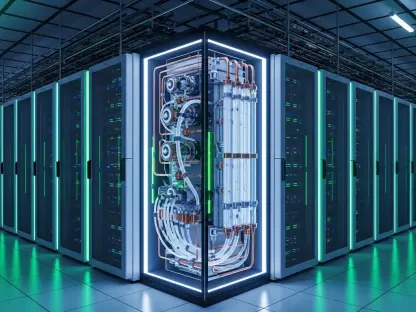
Furthermore, the growing adoption of liquid cooling technologies has introduced an entirely new dimension to data center hygiene: fluid cleanliness. In direct-to-chip cooling systems, coolant flows through micro-channels within cold plates, some of which have capillary diameters as fine as a human hair. The presence of even microscopic particulate in the cooling fluid can lead to blockages, which immediately chokes off the flow of coolant and can cause a chip to overheat and fail in under a minute. The high temperatures associated with AI workloads also accelerate the degradation of coolant fluids like glycol over time, reducing their thermal transfer properties. This necessitates a vigilant program of fluid monitoring, filtration, and periodic replacement to prevent catastrophic thermal events and ensure the stability of these advanced cooling loops.
Voices from the Field Expert Insights on Contamination Control
Industry veterans consistently observe a disconnect between the awareness of cleanliness and the willingness to act. “Delays in data center cleaning often stem from prioritizing urgent tasks and allocating resources elsewhere,” stated Rich DeBlasi. He emphasized that the most hazardous grime accumulates where it is least visible. “The most neglected parts of the data center are underfloor, cableways, ceiling plenums, the tops of cabinets and racks, but you often find plenty of dirt, dust, and grime on floor surfaces, walls, and cabinet surfaces.” This oversight allows contaminants to build up to a point where they actively threaten operations, turning a preventable issue into an emergency.
The rise of AI is forcing a necessary evolution in maintenance philosophies. Jon deRidder, vice president of technical solutions at Promera Solutions, has witnessed a significant shift in the market. “Too often, folks are reactive when it comes to maintaining proper cleanliness conditions, and they let the data center environment degrade to a point that cleaning becomes restorative vs. a simple maintenance task performed on a schedule,” he explained. However, clients investing heavily in GPUs are driving a change toward proactive care. For these organizations, a few thousand dollars for regular cleaning is a negligible price to pay to protect a multi-million dollar investment, reframing hygiene as a critical component of asset management.
With the advent of liquid cooling, the focus on cleanliness extends into the very fluids that keep high-performance chips from overheating. “The presence of particulate can quickly lead to clogging and a drop in the cooling level,” warned Ryan Jarvis, head of global services at Vertiv. “In less than a minute, the entire system overheats, and the chip can fail.” His guiding principle is unambiguous: “Start your cooling loops clean and ensure they stay clean.” This requires meticulous processes for purging, filling, and continuously monitoring fluid quality, as degradation can happen rapidly under the intense thermal loads of modern processors.
These expert opinions are strongly supported by established industry standards that provide a technical framework for contamination control. Guidelines such as ISO 14644-1, which defines air cleanliness classes for cleanrooms and controlled environments, and ASHRAE TC 9.9’s recommendations on gaseous and particulate contamination, offer data-driven benchmarks for operators. Adherence to these standards is not merely about following best practices; it is about implementing a scientifically validated approach to mitigating risk and ensuring that the data center environment is optimized for the sensitive electronic equipment it houses.
From Inspection to Action A Practical Guide to Data Center Hygiene
Facility managers should begin by conducting their own “white glove” assessment to gain an unfiltered view of their environment’s true condition. This hands-on inspection involves more than a simple visual scan. Using a clean, white cloth or glove, physically wipe the tops of several server cabinets and the backs of servers to reveal the actual level of dust accumulation. The assessment must also include opening up the subfloor to inspect the plenum for debris and checking overhead cable trays. Finally, a check of the air filters in cooling units will provide a direct indication of the volume of airborne particulate being captured—and what might be getting through. This simple diagnostic provides undeniable evidence of cleaning effectiveness, or the lack thereof.
This evidence should prompt a critical review of current cleaning strategies. A common mistake is assigning cleaning duties to technical staff, whose primary focus and expertise lie elsewhere, inevitably leading to the task being rushed or overlooked. Another frequent pitfall is relying on standard janitorial services that are unprepared for the unique demands of a mission-critical environment. These services often use conventional cleaning tools and chemicals that can introduce new risks, such as vacuums that generate static electricity, cotton mops that leave behind lint fibers, or cleaning agents that leave a conductive residue. Specialized knowledge and equipment are non-negotiable prerequisites for cleaning a data center safely and effectively.
Implementing a professional cleaning protocol begins with selecting the right partner. It is crucial to hire a dedicated data center cleaning specialist whose entire business reputation rests on their performance in these sensitive environments, rather than a generalist firm that offers it as a secondary service. An effective protocol also requires establishing a proper cleaning frequency. An annual deep clean is often insufficient; moving to a quarterly or even monthly schedule can dramatically reduce the cumulative buildup of contaminants and minimize long-term maintenance costs. Finally, the protocol must address the specific needs of different surfaces. This includes using anti-static finishers on vinyl composition tile (VCT), employing neutralizing solutions on ESD floors to eliminate static buildup, and using specialized HEPA-filtered vacuums on concrete to capture fine particulate without making it airborne.
The journey toward a truly clean data center was one of shifting perspectives, where maintenance evolved from a janitorial chore into a cornerstone of operational resilience. By looking beyond the deceptive sheen of superficially clean surfaces, managers uncovered the hidden threats posed by microscopic dust, post-construction debris, and even impurities within liquid cooling systems. This deeper understanding revealed that a clean environment was not about aesthetics but was fundamentally linked to equipment performance, energy efficiency, and the protection of massive capital investments.
Ultimately, the most successful operators were those who adopted a proactive and specialized approach to environmental control. They moved away from reactive, restorative cleaning and embraced regular, preventative maintenance performed by experts equipped with the right tools and knowledge. The insights from industry leaders, validated by established standards, provided a clear roadmap for action. By implementing rigorous inspection protocols and formalizing their cleaning strategies, these organizations successfully safeguarded their critical infrastructure, ensuring that their data centers were not only clean in appearance but fortified against the silent threats that could compromise their mission.