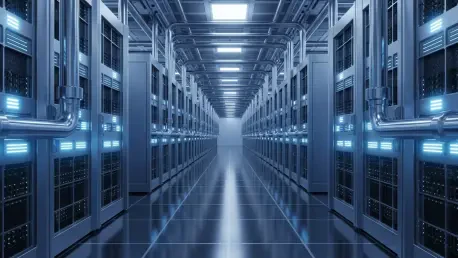

The global race for artificial intelligence supremacy has officially moved from the realm of software code to the brutal reality of physical infrastructure where the availability of power and silicon dictates who leads and who follows. This shift reached its zenith today as Meta finalized a massive $27 billion partnership with Nebius Group, a deal that effectively redraws the map of the global compute market. Rather than relying solely on its internal data center expansions, Meta is securing a massive, decade-long pipeline of specialized hardware to ensure its future AI models are never throttled by a lack of raw processing power.
This agreement represents a critical “nut graph” moment for the industry, signaling that the most powerful tech companies no longer view infrastructure as a utility but as a strategic asset that must be hoarded years in advance. The $27 billion commitment serves as a hedge against the volatility of the GPU market and the rising difficulty of building high-density facilities. As foundation models like Llama evolve into more complex, persistent agents, the requirement for dedicated, high-performance environments has made traditional cloud setups insufficient for the next generation of digital intelligence.
The High-Stakes Gamble on Silicon and Power
What happens when the world’s most ambitious social media giant decides that its existing massive data centers simply aren’t enough to survive the AI arms race? Meta has answered that question with a staggering $27 billion commitment to Nebius Group, a deal that signals a shift from short-term hardware acquisition to a decade-long siege strategy for compute dominance. This isn’t just a purchase order; it is a fundamental realignment of how the world’s most powerful tech companies secure the physical foundations of their digital empires. The sheer scale of the investment suggests that the limit for AI growth is no longer the creativity of developers, but the physical constraints of the electrical grid and the availability of specialized server racks.
The decision to outsource such a critical component of its future reflects a calculated risk regarding the speed of technological evolution. By partnering with a specialized provider, Meta acknowledges that building at the frontier of AI requires a level of agility that even the largest hyperscalers struggle to maintain in-house. This strategy ensures that while Meta continues to innovate on its software stack, the underlying physical infrastructure is being built and managed by a partner whose sole focus is the optimization of high-density AI clusters. It is a transition from a “build-it-all” mentality to a “secure-it-first” philosophy that defines the current competitive landscape.
Why the “Neocloud” is Redefining the AI Landscape
The traditional hierarchy of cloud computing is being upended by an insatiable hunger for specialized processing power that traditional providers struggle to satisfy. As Meta pushes deeper into generative AI and autonomous agents with its Llama models, the bottleneck is no longer just code, but the availability of high-density, liquid-cooled environments capable of running next-generation silicon. This agreement validates the rise of “neocloud” providers—nimble, AI-focused firms that are becoming the essential backbone for hyperscalers who realize they cannot build fast enough on their own. These providers are not just offering server space; they are offering bespoke environments specifically tuned for the thermal and electrical profiles of modern GPUs.
This shift toward specialized cloud environments indicates a fragmentation of the infrastructure market, where general-purpose data centers are increasingly seen as outdated for high-end AI training. The neocloud model thrives on its ability to bypass the legacy architecture that often slows down larger, more established cloud giants. For a company like Meta, working with a neocloud partner allows for the rapid deployment of specialized clusters that can be integrated into their global network without the years of lead time required for traditional greenfield data center projects. This creates a multi-layered infrastructure strategy that combines internal stability with external agility.
Inside the $27 Billion Strategic Alliance
The financial architecture of the deal is as complex as the hardware it supports, featuring a two-tier commitment that balances immediate needs with future security. A dedicated $12 billion will be funneled into direct infrastructure spending, ensuring that a specific volume of compute is brought online according to a strict timeline. However, the true weight of the deal lies in the $15 billion “backstop” arrangement. This innovative financial structure guarantees that Meta has the first right of refusal on future capacity, essentially allowing Nebius to build with the confidence that their most advanced racks will never sit idle, while Meta avoids the risk of being outbid by competitors during periods of silicon scarcity.
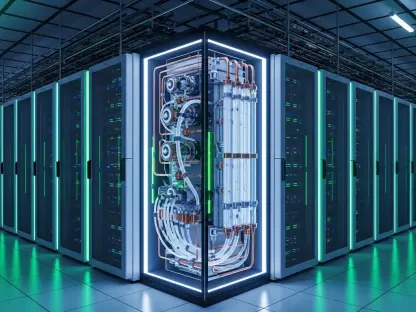
At the heart of this alliance is a bold bet on Nvidia’s Vera Rubin architecture, a platform that promises to push the boundaries of what is possible in large-scale model training. By skipping past current generation bottlenecks and securing this late-2020s tech stack today, Meta is positioning itself to be among the first to deploy the massive clusters required for agentic AI. These clusters will utilize a revolutionary 100kW rack design, necessitating a total overhaul of cooling and power delivery systems. The transition to liquid-cooled environments is no longer an experimental luxury but a core requirement for supporting the extreme thermal loads generated by the Rubin-era superclusters that will soon define the global compute standard.
Industry Perspectives and Market Validation
Expert analysis from Moor Insights & Strategy suggests that this deal marks a turning point in how the market values specialized infrastructure providers. Matt Kimball noted that this agreement separates Nebius from other startups by proving that the neocloud business model is a permanent fixture of the enterprise landscape rather than a temporary bubble. The deal provides a level of market validation that is rare in the high-cap tech sector, demonstrating that specialized firms can successfully compete for the business of the world’s largest companies by offering technical capabilities that the traditional giants simply cannot replicate at scale.
This “buy now or lose out” mentality has become the dominant strategy for industry leaders who recognize that being compute-constrained is the greatest threat to their market position. The power dynamics of the tech industry are shifting, as specialized cloud providers gain significant leverage over traditional tech giants by controlling the niche environments required for AI supercomputing. As the hardware becomes more difficult to house and cool, the companies that own the specialized real estate and the power contracts are becoming the new gatekeepers of innovation. This deal serves as a roadmap for other hyperscalers looking to diversify their supply chains in an environment where demand consistently outstrips supply.
Strategies for Navigating the Future of AI Infrastructure
The massive scale of the Meta-Nebius deal provided a template for how organizations managed the volatility of the GPU market and the transition to high-density computing. Companies realized that securing long-term capacity through backstop agreements was the only way to hedge against future silicon shortages and power grid limitations. The focus shifted from acquiring hardware to architecting the environments that could actually support it, with a specific emphasis on liquid-cooled facilities capable of handling 100kW+ rack configurations. This transition allowed for the deployment of more dense superclusters, reducing the physical footprint of data centers while exponentially increasing their processing capabilities.
Furthermore, the industry moved toward diversifying the supply chain to ensure a multi-layered approach to compute resilience. Hyperscalers stopped relying solely on their internal infrastructure teams and began forming deep partnerships with specialized providers who could offer geographic and technical diversity. This strategic shift was essential for supporting the sustained inference needs of autonomous, persistent AI systems that required 24/7 reliability across global markets. The industry eventually adopted a standardized framework for agentic AI infrastructure, ensuring that the physical layer of the internet was as resilient and adaptable as the software it hosted, ultimately securing the foundations for the next decade of digital progress.