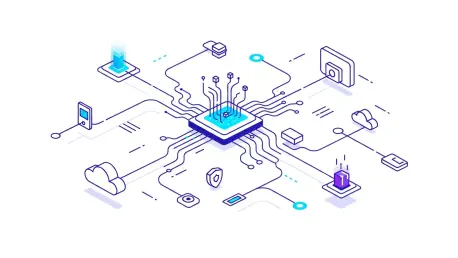

The transition from centralized corporate campuses to a completely fragmented digital environment has fundamentally rewritten the rules of enterprise cybersecurity for every modern organization. For decades, the logic of defense relied on the physical walls of the office, where firewalls and internal monitoring systems could easily contain and inspect every packet moving through the local area network. This architecture thrived when applications lived in private data centers and employees sat behind desks in major metropolitan hubs. However, the current reality of 2026 demonstrates that the network is no longer a destination but a continuous service that follows the individual user wherever they choose to log in. Whether a professional is accessing proprietary code from a home office or a field technician is querying a database from a remote site, the traditional perimeter has effectively vanished. This decentralization creates a scenario where every laptop and smartphone acts as its own hub.
The Evolution: Cloud-Native Infrastructure and the Infinite Edge
The migration toward Software-as-a-Service and cloud-native workloads has fundamentally altered the path that data travels across the internet. In the legacy era, traffic was forced through a centralized inspection point, which served as a massive gateway between the internal network and the outside world. This hub-and-spoke model was efficient when the majority of assets were hosted on-premises, but it now creates crippling bottlenecks as users bypass corporate data centers to reach cloud applications directly. Today, the infrastructure is defined by an infinite edge, where the boundaries of the network have essentially dissolved into the fabric of the global internet. Because critical data now resides in diverse cloud environments rather than localized servers, the old method of backhauling traffic to a central headquarters is not only inefficient but also detrimental to the overall security posture of the enterprise. This shift necessitates a security model that operates at the source.
While the concept of Secure Access Service Edge was developed to address these specific cloud-era challenges, early iterations of the technology often fell short of their promises. These initial SASE architectures frequently relied on outdated assumptions, essentially moving the centralized data center model to a handful of geographically distant cloud points. When a user connects from a location that is far from these specific points of presence, they experience significant latency and degraded performance, which undermines the purpose of a modern digital experience. A truly evolved design avoids these traps by distributing security functions closer to the user and the application, ensuring that inspection happens in real-time without the need for unnecessary detours. By moving away from these centralized cloud chokepoints, organizations can achieve a level of agility that matches the speed of current business operations. This architectural shift marks the end of geographic bias.
Performance Demands: Balancing Speed with Robust Security
In a world where sub-second response times are expected, latency is no longer just a technical inconvenience but a genuine security liability. When security protocols introduce friction or noticeably slow down a user’s workflow, employees are statistically much more likely to seek out workarounds to maintain their daily productivity levels. This behavior leads to the proliferation of shadow IT, where unsanctioned applications and insecure personal accounts are used to bypass official corporate channels that are deemed too slow or restrictive. For a security framework to be effective, it must remain invisible to the end user, providing a seamless experience that does not interfere with the tasks at hand. Effective protection in 2026 relies on the ability to inspect traffic and enforce policies at the speed of the local connection. By ensuring that security is a transparent layer of the network fabric, organizations reduce the incentive for users to circumvent protections, closing visibility gaps.
The transition to a borderless network has also necessitated a move from location-based trust to a model of continuous, identity-centric verification. Historically, being physically present inside an office served as a reliable proxy for safety, but in the current distributed landscape, a user’s physical coordinates provide no inherent security value. The modern approach focuses instead on the identity of the person or machine attempting to connect, evaluating the health of the device and the specific context of the request in real-time. This ensures that every connection is treated as untrusted until it has been dynamically verified through multiple vectors. By applying these checks continuously throughout a session rather than just at the initial login, security teams can effectively prevent lateral movement by malicious actors. Even if credentials are compromised, the lack of a persistent trust state ensures that an attacker cannot easily navigate from an endpoint to core systems.
Implementation Strategy: Simplified Management for Growing Teams
Mid-market organizations often face the most significant hurdles when deploying sophisticated security architectures, as they frequently manage complex requirements with limited IT resources. For these companies, the complexity of a security solution can be as much of a threat as the cyberattacks themselves, as difficult-to-manage tools are often misconfigured or entirely underutilized. A modern SASE implementation must prioritize simplicity and ease of operation, allowing small teams of generalists to maintain a robust security posture without the need for deep specialization in every specific sub-discipline. By consolidating diverse functions such as firewalling, secure web gateways, and zero-trust access into a single management interface, organizations can drastically reduce the technical overhead required for daily maintenance. This streamlined approach allows IT staff to focus on strategic initiatives rather than spending their time troubleshooting fragmented or incompatible products.
When evaluating the effectiveness of a security model, the primary focus must remain on where policy enforcement actually occurs within the data stream. A truly distributed architecture ensures that enforcement is localized at the edge, whether that means at the user endpoint or at a local cloud-based service point. This proximity ensures that security decisions are made based on the most current context while maintaining the high-performance levels required for modern applications like video conferencing and real-time collaboration. Successful implementations favor designs that offer low-latency performance alongside context-aware access, ensuring that the security framework directly aligns with the realities of how work is performed today. By selecting solutions that emphasize visibility across the entire distributed footprint, enterprises can gain a comprehensive view of their security health. This unified perspective is critical for identifying threats and responding with speed.
Strategic Directions: Moving Toward a More Resilient Infrastructure
The strategic shift toward a more resilient and decentralized security architecture required a fundamental reimagining of the relationship between the user and the corporate network. IT leaders focused on removing the legacy dependencies that tied security to physical locations, instead building a framework that prioritized the mobility and flexibility of the workforce. By integrating automation and machine learning into the security stack, organizations gained the ability to detect and neutralize threats in milliseconds, often before a human analyst was even aware of the incident. This proactive stance allowed businesses to scale their operations globally without increasing the risk profile of their digital assets. The emphasis was placed on creating a self-healing network that could adapt to changes in the threat landscape while maintaining a consistent level of protection across all geographic regions. This transition represented a major milestone in the quest for a truly borderless enterprise.
Moving forward, the focus turned to the refinement of identity-based policies and the deepening of integration between security and productivity tools. Organizations that successfully navigated this transition found that their security investments acted as an accelerator for digital transformation rather than a hindrance. By securing the distributed edge, companies were able to adopt new technologies and business models with greater confidence, knowing that their core assets remained protected regardless of the underlying network environment. The actionable next step for any modern enterprise involved a thorough audit of existing traffic flows to identify and eliminate the remaining centralized bottlenecks. Transitioning to a model that emphasized local enforcement and continuous verification ensured that security remained a dynamic and responsive component of the business. Ultimately, the evolution of network security was about embracing a mindset that values agility and visibility.