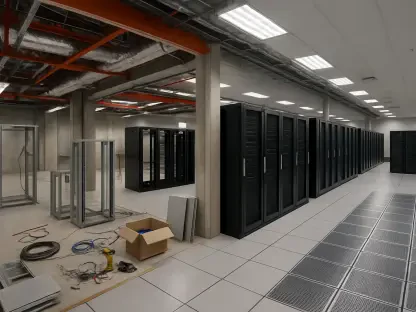

The vast, unseen infrastructure powering the global AI revolution is placing an unprecedented and potentially unsustainable strain on America’s aging electrical grids, forcing states to confront a critical question of who should bear the escalating cost. In response, New York has launched a pioneering initiative designed to make the largest energy consumers directly accountable for the power surge they create, a move that could reshape energy policy nationwide.
The Unseen Energy Cost of the AI Revolution
The rapid expansion of artificial intelligence and cloud computing comes with a hidden but immense energy price tag. Every search query, streaming video, and AI model training session relies on massive data centers, which are multiplying at an astonishing rate. These facilities operate around the clock and consume electricity on a scale comparable to small cities, creating a surge in demand that existing power infrastructure was never designed to handle.
This digital boom raises a central economic and logistical question: who should foot the bill for the grid upgrades and new power generation required to support this growth? For years, the costs have been socialized, spread across all ratepayers. However, as the energy demands of data centers skyrocket, this model is becoming increasingly untenable, placing a disproportionate financial burden on residential customers and small businesses who see their utility bills climb.
A National Power Struggle as Digital Growth Hits Physical Limits
New York’s challenge is a microcosm of a national trend. Across the United States, the voracious energy appetite of data-intensive technologies is colliding with the physical limits of an aging electrical grid. This tension is particularly evident in the PJM Interconnection, the grid operator for 13 states and the District of Columbia, which is also home to the world’s largest data center hub. The region is experiencing soaring grid costs as it struggles to keep pace with demand, a clear case study of how digital expansion can strain public resources.
The nationwide strain is forcing a reckoning among regulators and utility providers. Without significant intervention, the continued growth of the digital economy threatens to destabilize power grids and drive energy costs even higher for the average American. This situation has prompted federal bodies like the Federal Energy Regulatory Commission (FERC) to issue new guidelines aimed at managing the integration of large power consumers, signaling a shift in how the country approaches grid management and cost allocation.
New York’s Plan to Unplug the Data Center Subsidy
In a direct response to this challenge, Governor Kathy Hochul has introduced the “Energize NY Development” policy, a landmark initiative aimed at shifting infrastructure costs from the public to the large-scale corporate users driving the demand. The policy is a cornerstone of the governor’s affordability agenda, designed to protect New Yorkers from shouldering the financial burden of a rapidly expanding industry.
The mechanism at the heart of the policy is straightforward yet transformative. New large-scale, high-density energy users like data centers must now either generate their own power on-site or pay a premium rate that reflects the true cost of their consumption on the public grid. However, the policy includes a crucial economic benefit exemption: facilities that create a substantial number of jobs or provide significant economic investment in the state can avoid these higher energy costs, incentivizing developments that offer a broader public benefit.
A Potential Blueprint for an Overloaded Nation
New York’s proactive stance is not occurring in a vacuum. It aligns with a broader national conversation on grid stability and fair energy pricing, echoing recent actions at the federal level. By requiring high-demand users to internalize the cost of their energy footprint, the state is creating a market-based solution that encourages both energy efficiency and responsible development.
This approach has positioned the “Energize NY Development” initiative as a potential model for other states grappling with similar pressures. As data center construction continues to surge across the country, policymakers from Virginia to Oregon are watching closely. New York’s policy provides a tangible blueprint for how to balance the economic benefits of technological growth with the urgent need to maintain an affordable and reliable power supply for all residents.
Powering the Future Beyond Just Shifting Costs
New York’s strategy extends well beyond demand-side management and cost-shifting. State leaders recognize that addressing the energy crunch requires a comprehensive approach that also aggressively expands the power supply. A key element of this plan is a new, ambitious goal to add 5 GW of nuclear power capacity, providing a clean, reliable, and constant source of electricity to meet future needs.
Furthermore, the state is actively working to tackle critical infrastructure bottlenecks that have historically slowed development. New measures are being implemented to streamline and accelerate the interconnection process, making it easier for new power generation facilities to connect to the grid. By combining a policy that manages demand with a robust strategy to increase supply, New York developed a holistic framework for powering its future. This dual approach ensured the state could support technological innovation without sacrificing grid stability or consumer affordability.