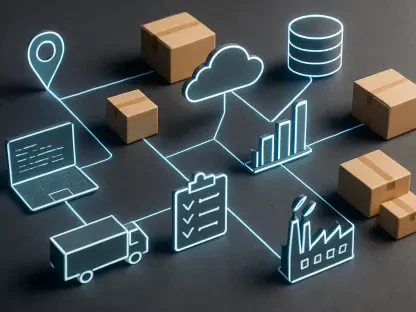

The global network of commerce, once seen as a testament to human ingenuity and efficiency, now operates in an environment of perpetual volatility where disruptions are no longer isolated shocks but overlapping, reinforcing crises. Modern supply chains are simultaneously buffeted by extreme weather events, geopolitical friction, persistent labor shortages, and ever-present cyber risks, creating a level of complexity that strains every link from initial sourcing to final delivery. While the advancements of Industry 4.0, including cloud platforms, the Internet of Things (IoT), and artificial intelligence, have delivered significant progress in visibility and automation, these essential systems are reaching their operational limits. The sheer intricacy of today’s logistics challenges now exceeds the capacity of classical computing to model and manage real-world conditions effectively, signaling an urgent need for a more powerful approach. In response, quantum technologies are emerging not as a distant theoretical concept but as a strategic solution that offers tangible ways to strengthen resilience and unlock new efficiencies, with early implementations already delivering measurable impact.
1. Why Classical Systems Are Under Strain
The fundamental architecture of modern supply chains is one of profound interconnection, where a single decision regarding routing, inventory levels, or production capacity can trigger a cascade of consequences across numerous locations and timelines. These intricate links are frequently non-linear and exhibit extreme sensitivity to even minor changes, making them incredibly difficult to manage. Traditional computing systems have historically dealt with this complexity by simplifying it; they reduce constraints, place caps on uncertainty, and analyze only a limited set of possible scenarios to arrive at a solution quickly. While this methodology has been sufficient for managing predictable, low-level complexity, it falters when faced with the kind of structural disruptions that have become commonplace. When several core assumptions break down simultaneously, the digital model no longer mirrors reality, forcing companies to resort to manual overrides, costly expedited shipments, and constant, reactive re-planning. These short-term fixes may stabilize operations momentarily, but they fail to address the underlying weakness: the inability to institutionalize rapid, systemic reconfiguration. Classical systems simply lack the computational depth required to analyze and optimize for multifaceted, fast-changing scenarios where thousands of variables are in flux at once.
2. How Quantum Differs from Classical Computing
Classical computers, the engines of our current digital world, process information using a binary system of bits, where each bit represents either a zero or a one. These machines excel at performing routine calculations, running enterprise resource planning (ERP) systems, and analyzing large but structured datasets. However, when confronted with highly complex optimization problems—such as calculating the most efficient routes for thousands of delivery vehicles under dynamic weather and traffic conditions—their methods begin to show strain. To avoid the impossible task of a brute-force search through every conceivable option, they rely on clever shortcuts and simplification heuristics. Even with immense processing power and parallel computing, these systems inevitably hit a wall as the number of possibilities grows exponentially. Quantum computing, in contrast, embarks on a fundamentally different path. Instead of merely accelerating the same linear process, it harnesses the principles of quantum mechanics to explore a vast landscape of potential solutions simultaneously. It operates using quantum bits, or “qubits,” which can exist in a state of superposition—representing zero, one, or both at the same time. Furthermore, it leverages entanglement, a phenomenon where qubits become linked and their fates intertwined, and interference, which helps amplify the probability of finding the correct answer while canceling out incorrect ones. This unique capability allows quantum systems to tackle problems defined by a web of complexity and interdependencies that would overwhelm even the most powerful classical supercomputers.
3. Where Quantum Creates Value Across the Supply Chain
The most immediate and compelling opportunities for quantum technologies lie within the domains of logistics and supply chain networks, which are governed by a dense matrix of constraints including transport modes, capacity limits, labor availability, and regulatory hurdles. Quantum computing directly addresses these challenges by enabling a more holistic approach to optimization. While classical methods typically break down large logistics problems into smaller, manageable parts, quantum optimization can simultaneously consider routing, capacity allocation, and inventory scheduling across the entire network. This allows for the design of more resilient supply chain networks and more accurate demand forecasting by analyzing datasets with complex interdependencies that conventional models cannot capture. In warehouse operations, quantum-enhanced simulations can optimize labor allocation and cargo loading by accounting for countless constraints at once. Although most quantum computers are still in their early stages, hybrid approaches that combine classical and quantum processing are already delivering tangible value to logistics organizations today.
Beyond computation, quantum technologies offer revolutionary advancements in sensing and security that are critical for modern supply chains. Quantum sensors, capable of measuring physical properties with unprecedented precision, can transform quality control and asset tracking. For example, they can enable real-time monitoring of a product’s condition, detecting spoilage or damage far earlier than current methods, which is invaluable for temperature-sensitive goods and hazardous materials. In parallel, as supply chains become increasingly digitized, the security of their data becomes a paramount operational requirement. The rise of cryptographically relevant quantum computers (CRQCs) poses a future threat to the public key encryption systems that protect everything from supplier contracts to inventory data. To mitigate this risk, leaders must adopt quantum-safe methods, including post-quantum cryptography (PQC), which is resistant to attacks from both classical and quantum computers, and quantum key distribution (QKD), which provides a secure method for exchanging cryptographic keys. Early adoption of these security measures is essential for ensuring long-term trust and stability across global trade networks.
4. How Supply Chain Leaders Can Prepare for Quantum Technology Adoption
Navigating the transition to a quantum-ready future requires a deliberate and strategic approach from supply chain leaders, focusing on building capabilities while managing risks. The first step is to assess relevance by identifying high-impact use cases where quantum could offer a significant advantage, such as in complex logistics optimization, dynamic inventory allocation, or advanced quality assurance. While a full-scale transformation may be a longer-term goal, current quantum-inspired algorithms and hybrid solutions can already streamline operations and provide immediate value. Next, leaders should initiate pilot programs by experimenting with cloud-based Quantum-as-a-Service (QaaS) platforms. These platforms offer a low-risk, low-cost entry point for gaining hands-on experience, exploring potential applications, and understanding the technology’s true capabilities and limitations. It is crucial to set realistic expectations for these pilot projects, focusing on measurable outcomes that align with clear business goals to ensure that experimentation leads to actionable operational insights rather than isolated technical exercises.
Building organizational readiness is equally critical and involves a multi-pronged effort. This includes investing in talent development to cultivate quantum literacy across both technical and business teams, which supports better decision-making and more effective translation of results into operations. Forging strategic partnerships with technology providers, research institutions, and industry peers can help de-risk development and accelerate learning. Furthermore, leaders should actively collaborate on standards by engaging with industry consortia and public-sector initiatives to shape the interoperability frameworks necessary for integrating quantum technologies into existing enterprise ecosystems. Finally, security must be a top priority. This involves inventorying all cryptographic assets across both operational and information technology systems, creating a migration plan toward PQC for systems with long lifecycles, and adopting a strategy of “crypto-agility” that allows for the easy adaptation of algorithms and protocols as the technological landscape evolves.
The Strategic Advantage of Early Adoption
As quantum technologies transitioned from theoretical constructs to practical applications, the supply chain leaders who acted decisively secured a formidable leadership position. They recognized the unique window of opportunity to build a competitive advantage before the market became fully established. The democratization of access through QaaS platforms enabled firms of all sizes to experiment and develop critical expertise without prohibitive upfront investment. These early adopters actively shaped industry standards, influenced policy, and created governance models that favored their operational strengths. By building readiness ahead of the curve, they cultivated and attracted the best talent, positioning their organizations as pioneers in a new quantum-powered economy. Their proactive efforts ensured they were best positioned to translate the immense potential of quantum technologies into sustained performance improvements and a lasting competitive edge in the global marketplace.