
The scale of the financial penalty reflects the extensive impact on Singapore’s digital economy, specifically affecting the functionality of mobile payments and transport applications. When a modern metropolitan area loses connectivity for nearly three days, the consequences ripple far beyond missed calls, touching every facet of commercial life. The Infocomm Media Development Authority (IMDA) took decisive action against Singtel following a massive disruption in March that left 720,000 customers unable to access critical services. This event was particularly disruptive because it paralyzed food delivery logistics and ride-hailing services, highlighting how deeply integrated cellular data has become. This penalty represents the second million-dollar fine levied against the provider in a short window, following a similar sanction for a fixed voice service outage in late 2024. This recurring trend has sparked a debate regarding the resilience of essential networks in an increasingly cashless and connected society.
Infrastructure Failures and Operational Lapses
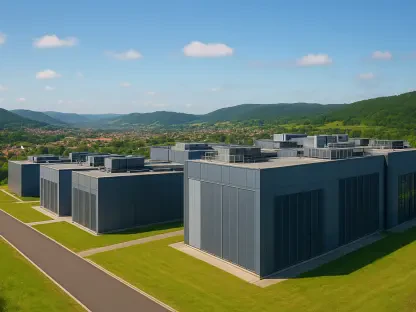
Detailed investigations into the March outage revealed that the root cause was not a sophisticated cyberattack or a natural disaster, but rather a series of entirely avoidable internal errors at a key Singtel exchange. A chiller system failure led to a rapid spike in ambient temperature, causing sensitive network equipment to overheat and trigger emergency shutdowns. The breakdown was traced back to a specific maintenance error made by a third-party vendor who failed to reopen a manual water valve after completing routine servicing. While the vendor’s mistake provided the initial spark, the IMDA highlighted that Singtel’s own lack of active monitoring systems meant the issue went undetected until the hardware began failing. This gap in oversight proved critical, as the cooling system was a single point of failure that should have been under constant surveillance. The incident underscores the inherent risks associated with manual maintenance procedures in high-stakes environments.
Compounding the initial hardware failure were several systemic technical flaws that prevented Singtel’s backup protocols from functioning as intended during the crisis. When the provider attempted to redirect heavy 5G data traffic to an alternative exchange on March 18 and 19, the surge in volume exposed a pre-existing software bug that had remained dormant in the system architecture. Furthermore, the network’s packet optimizer had been previously disabled, a configuration oversight that significantly hindered the backup system’s ability to process the redirected load. Instead of providing a seamless transition for affected users, the secondary infrastructure buckled under the pressure, resulting in persistent connectivity issues for a large portion of the subscriber base. These layers of technical mismanagement demonstrated a failure to conduct rigorous stress tests on contingency routes. The inability of the backup exchange to handle the diverted traffic turned a manageable localized outage into a long disruption.
Regulatory Accountability and Financial Consequences
In its final ruling, the IMDA emphasized that the service disruption was entirely preventable had the telecommunications giant adhered to stricter operational standards and due diligence frameworks. The regulator’s decision to impose a $1 million fine served as a clear message that critical infrastructure providers must maintain robust monitoring of their essential systems. This specific penalty was calibrated by weighing the severity of the impact against the provider’s subsequent cooperation and its proactive measures to compensate those affected. Notably, the company distributed $8 million in goodwill rebates to its subscribers, an effort that the IMDA acknowledged when determining the final fine amount. However, this incident is part of a troubling historical pattern for the nation’s largest telco, which has faced significant regulatory scrutiny over the years. Memories of a record $6 million fine following a fire at the Bukit Panjang exchange in 2014 remain fresh, suggesting that operational consistency requires focus.
Moving forward, the telecommunications industry must prioritize the modernization of physical facility management alongside digital network upgrades to ensure national stability. Singtel initiated comprehensive remediation measures, including the implementation of more sophisticated monitoring for cooling systems and the enforcement of stricter vendor protocols during onsite maintenance. To prevent future occurrences, technical teams moved toward automating water valve triggers and integrating artificial intelligence to predict equipment failure before it reaches a critical threshold. These steps were essential for restoring public trust and safeguarding the digital economy from similar vulnerabilities. Industry leaders sought to establish more rigorous, periodic stress testing of backup exchanges to confirm they can handle full-scale traffic redirection without software conflicts. By moving away from reactive fixes and toward a culture of predictive maintenance, the sector aimed to fortify the essential services that millions of citizens rely upon daily.