
The convergence of physical manufacturing and digital intelligence has reached a critical milestone as SUSE announces its strategic acquisition of Losant, a Move that fundamentally alters the landscape of the Industrial Internet of Things. For years, the enterprise open-source market has focused heavily on the cloud and traditional data centers, but the necessity of real-time processing at the extreme edge has forced a significant evolution in corporate strategy. By integrating Losant’s sophisticated platform, SUSE is transitioning from a foundational infrastructure provider to a comprehensive, full-stack leader capable of managing the “Tiny Edge,” where software interacts directly with high-value physical machinery. This acquisition is not merely an expansion of a product portfolio; it represents a vision where container orchestration, secure Linux distributions, and low-code application enablement form a singular, cohesive ecosystem. As industrial environments become increasingly data-dense, the ability to manage everything from a massive server cluster to a single vibration sensor on a factory floor through one unified interface becomes a competitive necessity rather than a luxury.
Bridging the Gap Between Operational and Information Technology
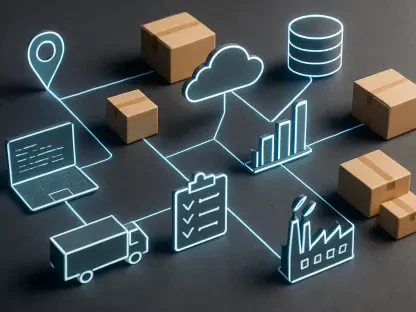
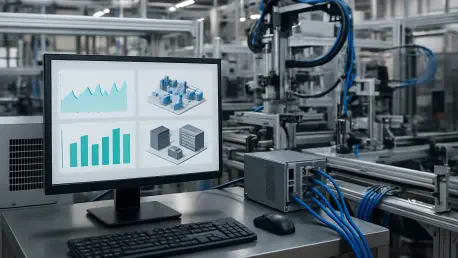
The historical divide between the factory floor and the executive suite has long been a primary bottleneck for industrial innovation, often resulting in isolated data pools that hinder rapid decision-making. Operational Technology (OT) teams have traditionally prioritized uptime and physical safety using specialized, often proprietary systems, while Information Technology (IT) departments focused on data security, scalability, and integration with broader business logic. This acquisition directly addresses these silos by merging Losant’s intuitive, low-code development environment with SUSE’s hardened enterprise Linux and Kubernetes management tools. By doing so, organizations can finally establish a bidirectional flow of information that connects physical hardware directly to digital enterprise resource planning systems. This synergy enables “actionable intelligence,” where the massive volumes of telemetry generated by industrial sensors are processed locally for immediate intervention. Instead of sending raw data to a distant cloud for analysis, the integrated platform allows for instantaneous adjustments to machine parameters, significantly reducing latency and improving overall equipment effectiveness.
Furthermore, this integration facilitates a profound shift toward transparency and agility within asset-intensive industries like manufacturing, energy, and logistics. For too long, these sectors have been tethered to closed-source, vendor-locked solutions that make it difficult to pivot in response to changing market demands or supply chain disruptions. The combination of Losant and SUSE provides a pathway for these companies to modernize their legacy operations without the burden of proprietary constraints. This transition is essential for any enterprise looking to move away from rigid, legacy architectures toward a more modular and transparent infrastructure. By harmonizing the language of the machine shop with the language of the data center, the platform ensures that real-time insights are no longer trapped within a single department. This creates a more responsive operational landscape where maintenance schedules can be adjusted dynamically based on actual wear and tear, and production lines can be reconfigured with minimal downtime, ensuring that the entire organization moves at the speed of digital business.
The Evolution Toward AI-Powered Industrial Edges
The industrial landscape is currently navigating a period of intense technological transformation where traditional IoT endpoints are evolving into highly sophisticated, AI-driven nodes. This maturation is being accelerated by the falling costs of high-speed connectivity and a widespread cycle of hardware refreshing across the global industrial sector. In this new paradigm, the edge is no longer just a collection point for data; it has become the primary execution layer for high-performance intelligence and complex machine learning models. SUSE’s strategy explicitly targets this evolution by embedding artificial intelligence directly into the edge stack, which allows machines to interact semi-autonomously with their surroundings. This shift is vital for high-stakes applications such as predicting catastrophic equipment failures before they occur, automating complex maintenance routines without human intervention, and conducting high-speed quality control checks directly on the assembly line. By moving the “brain” of the operation closer to the physical device, companies can achieve a level of precision and speed that was previously impossible with centralized processing.
Building on this technological foundation, the incorporation of AI at the edge allows for a more resilient and scalable industrial architecture that can function even in environments with intermittent connectivity. As industrial control systems move away from simple digital oversight toward these AI-orchestrated operations, the need for a stable and secure underlying platform becomes paramount. The combined capabilities of Losant and SUSE ensure that AI models can be deployed, monitored, and updated across thousands of distributed nodes with the same ease as a centralized cloud application. This capability is particularly transformative for industries such as smart mining or offshore energy production, where local intelligence is required to manage complex safety protocols and optimize resource extraction in real time. By providing the tools to manage these semi-autonomous systems, the platform empowers engineers to move beyond reactive monitoring and toward a proactive, intelligent operation where the machines themselves can identify inefficiencies and suggest optimizations, thereby driving a new era of industrial productivity and technological sophistication.
Commitment to Open Source and Standardized Interoperability
Losant brings to the SUSE portfolio a highly regarded visual workflow engine and customizable dashboards that have consistently earned recognition from leading industry analysts for their ease of use and depth of functionality. In a move that remains strictly aligned with its core organizational philosophy, SUSE has pledged to transition the Losant technology into the open-source domain to foster global collaboration and rapid innovation. This initiative is specifically designed to accelerate the standardization of interfaces across the industrial sector, ensuring that different hardware and software components can communicate seamlessly regardless of their manufacturer. By removing the financial and technical barriers associated with proprietary software, SUSE is effectively leading the creation of an open toolkit that prevents vendor lock-in. This approach allows enterprises to build upon a stable, community-vetted foundation while still having the flexibility to customize their solutions to meet unique operational requirements. Such a commitment to openness is crucial for the long-term health of the industrial ecosystem.
The drive toward interoperability is further strengthened by SUSE’s increased involvement in international standardization bodies and collaborative industry groups. By open-sourcing a platform as capable as Losant, the company encourages a “tide that lifts all boats,” where developers from around the world can contribute to a common set of drivers, protocols, and security frameworks. This collective innovation is particularly important in the context of the Industrial Internet of Things, where fragmented standards have historically hampered the adoption of new technologies. When interfaces are standardized, the cost of integration drops, and the speed of deployment increases, allowing organizations to focus their resources on creating unique value rather than solving basic connectivity problems. This strategy positions the combined platform as the “connective tissue” of the modern factory, enabling a diverse array of sensors, controllers, and enterprise applications to work in concert. Consequently, businesses can benefit from a more vibrant marketplace of compatible tools and services, ensuring that their industrial infrastructure remains future-proof and adaptable.
Realizing Tangible Benefits for Enterprise Customers
For organizations currently navigating the complexities of digital transformation, the integration of Losant into the SUSE Edge portfolio offers a series of immediate and practical advantages. One of the most significant benefits is the dramatic reduction in “time to value” afforded by Losant’s low-code visual engine, which allows non-specialized staff to design and deploy complex IoT applications without writing thousands of lines of custom code. This democratization of application development means that the people closest to the industrial process—the plant managers and mechanical engineers—can directly participate in the creation of the digital tools they use daily. Furthermore, the unified view of both the underlying IT infrastructure and the real-time operational data provides an unprecedented level of awareness. Companies can now track everything from the health of a single temperature sensor in a remote facility to the overall efficiency of a global supply chain within a single pane of glass. This holistic visibility is critical for identifying hidden bottlenecks and optimizing resource allocation across the entire enterprise.
In addition to operational efficiency, the move toward a standards-aligned, open-source architecture provides a robust framework for long-term risk mitigation. Enterprises that rely on a single vendor for their entire industrial stack often find themselves vulnerable to price hikes, discontinued support, or a lack of innovation. By utilizing a platform built on open principles, companies retain control over their technological destiny, ensuring that they can migrate, extend, or modify their systems as their business needs evolve. This architectural freedom is complemented by the ability to deploy AI models in a secure and controlled manner at the edge, where they can have the most direct impact on physical outcomes. Whether it is reducing energy consumption in a data center or improving the precision of a robotic arm, the combined platform provides the stability and security required for high-stakes industrial applications. Ultimately, this approach empowers enterprise customers to build a more resilient, efficient, and forward-looking operation that is capable of thriving in an increasingly competitive and data-driven global market.
Future Outlook for Industrial Automation and Scalable AI
As the edge continues to solidify its position as the primary layer where the physical and digital worlds converge, the strategic importance of a unified automation platform cannot be overstated. Organizations should begin by auditing their current industrial silos and identifying the specific points where data latency or proprietary bottlenecks are currently hindering performance. The next logical step involves transitioning toward a hybrid AI architecture that leverages local processing for time-critical tasks while utilizing the cloud for long-term trend analysis and large-scale model training. By adopting an open-source foundation now, companies can ensure that they are prepared for the next wave of autonomous machine communication and decentralized intelligence. It is no longer enough to simply collect data; the future belongs to those who can orchestrate that data in real time to drive autonomous physical actions. This acquisition provides the blueprint for that transition, offering a scalable and intelligent framework that can grow alongside the increasing complexity of modern industrial demands.
Looking ahead, the focus for industrial leaders shifted toward the integration of sustainability and digital sovereignty into their core operational strategies. The ability to manage power-efficient “Tiny Edge” devices through a secure, enterprise-grade platform allows for the creation of smarter, greener infrastructure that consumes fewer resources while producing higher yields. Decision-makers should prioritize the adoption of standardized interfaces and interoperable toolkits to avoid the costly mistakes of the previous generation’s fragmented IoT implementations. By fostering a collaborative environment where IT and OT teams work in tandem on a shared open-source stack, enterprises can unlock new levels of innovation in sectors ranging from healthcare to heavy manufacturing. The ultimate takeaway from this market shift is that the barrier between software and machinery has effectively disappeared. Those who embrace this convergence by implementing a full-stack, AI-ready edge infrastructure will be the ones who define the next decade of industrial excellence, turning complex machine telemetry into a permanent competitive advantage.