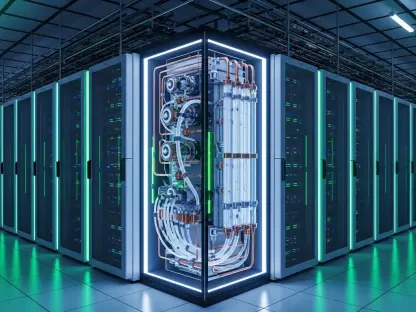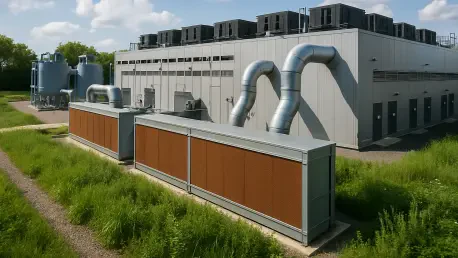

Picture a world where every click, stream, and cloud upload silently siphons away a precious resource—water. Data centers, the unseen engines of the digital age, consume staggering amounts of this vital liquid to cool their power-hungry servers, often drawing from the same municipal supplies that sustain entire communities. This hidden cost of technology raises a pressing question: can the industry keep pace with demand without drying up local reserves? As data centers multiply to support an ever-connected society, the urgency to find sustainable cooling solutions has never been greater.
This issue matters because data centers are not just tech hubs; they are resource giants impacting millions of lives. With many facilities guzzling up to 95% of their water from municipal systems, the strain on public infrastructure is undeniable, leading to shortages and skyrocketing costs in some regions. Beyond immediate community effects, this dependency threatens the long-term viability of an industry critical to global economies. Exploring alternative water sources for cooling isn’t merely a trend—it’s a necessity to balance operational needs with environmental and social responsibility.
Why Data Centers’ Water Use Is a Growing Concern
The sheer scale of water consumption by data centers is staggering. A single facility can use millions of gallons annually, rivaling the usage of small towns. This demand stems from the need to cool servers that generate immense heat while processing endless streams of data. As digital services expand, so does the energy required, pushing cooling systems to rely heavily on water-intensive methods like evaporative cooling. The result is a quiet crisis unfolding in regions already grappling with water scarcity.
Compounding this challenge is the rapid growth of the industry. With more businesses shifting to cloud-based solutions and consumers embracing streaming platforms, new data centers are cropping up at an unprecedented rate. This boom, while a boon for technology, places immense pressure on local resources, often in areas least equipped to handle it. The clash between technological progress and finite water supplies sets the stage for innovation, as operators face mounting calls to rethink their cooling strategies.
The Strain of Data Centers on Municipal Water Systems
Municipal water systems bear the brunt of this digital thirst, supplying nearly all the water used for cooling in most facilities. This heavy reliance creates a domino effect: as data centers tap into public reserves, communities face tighter water restrictions and higher utility bills. In some cases, local governments struggle to maintain infrastructure under the added load, leading to tensions between tech giants and residents who feel their needs are sidelined.
Moreover, the issue isn’t just about volume but timing. During droughts or peak demand periods, data centers often continue drawing water at full capacity, exacerbating shortages. In regions where groundwater levels are already dropping, this practice risks long-term depletion of aquifers. The intersection of technology and resource scarcity reveals a critical need for solutions that lessen the burden on public systems while ensuring operational continuity for these vital facilities.
Exploring Alternative Water Sources for Cooling
Thankfully, the industry isn’t standing still. Data centers are beginning to look beyond municipal supplies, experimenting with a range of alternative water sources tailored to their geographic and logistical contexts. From natural bodies of water to reclaimed options, these approaches aim to reduce environmental impact while maintaining the efficiency needed to keep servers running smoothly. Each solution carries its own set of advantages and hurdles, but collectively, they signal a shift toward sustainability.
This exploration is driven by necessity as much as innovation. Operators recognize that continued reliance on public water isn’t just unsustainable—it’s a public relations liability in water-stressed areas. By tapping into rivers, oceans, and even wastewater, data centers are redefining how they manage cooling needs. The journey to adopt these alternatives, however, requires overcoming technical barriers and navigating regulatory landscapes to ensure both feasibility and ecological balance.
Voices from the Industry: Insights and Real-World Examples
Industry leaders are increasingly vocal about the need for change, providing both data and anecdotes that underscore the urgency. A striking example comes from a facility in Iowa, where water usage reportedly matches that of an entire state’s residential consumption. Such figures, shared by water management experts, highlight the scale of impact and fuel debates on how to prioritize resource allocation in tech-heavy regions.
On the brighter side, some companies are already paving the way with tangible solutions. A coastal data center operated by a major tech firm has successfully integrated seawater cooling, cutting municipal water use by a significant margin despite challenges like corrosion control. “The transition wasn’t easy, but it’s a blueprint for others,” noted a project manager involved in the initiative. These real-world cases, paired with ongoing research into underwater data storage, illustrate that sustainable cooling isn’t a distant dream but a practical reality within reach.
Practical Strategies for Adopting Water Alternatives
Transitioning to alternative water sources demands a clear roadmap for data center operators. The first step involves a thorough assessment of location-specific factors, such as proximity to rivers or access to treated wastewater. Investing in infrastructure—whether it’s filtration systems for seawater or separate pipelines for graywater capture—forms the backbone of this shift. While upfront costs can be steep, the long-term savings and community goodwill often justify the expenditure.
Collaboration also plays a pivotal role. Partnering with local water agencies to repurpose treated wastewater not only reduces strain on municipal systems but also fosters trust with surrounding areas. Additionally, operators must weigh the operational trade-offs, ensuring that alternative sources don’t compromise cooling efficiency or server performance. By blending multiple water options based on regional availability, facilities can create a resilient and sustainable cooling framework that adapts to future demands.
In reflecting on this journey, it became clear that the push for sustainable cooling in data centers had gained unstoppable momentum. The industry had started to pivot away from over-reliance on municipal supplies, embracing alternatives like seawater and wastewater with cautious optimism. Looking back, the strides made in infrastructure investment and agency partnerships stood out as turning points. The path forward was paved with actionable steps—assessing local resources, scaling innovative pilots, and advocating for policies that supported water-smart technology. As challenges persisted, the resolve to harmonize digital growth with environmental stewardship remained a guiding light for what lay ahead.