
The technological landscape of 2025 is not being defined by a single groundbreaking invention, but rather by the powerful and accelerating convergence of several transformative forces that are weaving themselves into the very fabric of our global society. The once-separate domains of Artificial Intelligence, quantum computing, advanced connectivity, and decentralized systems are now intersecting and amplifying one another, creating a synergistic effect that fundamentally reshapes entire industries, economies, and social structures. This rapid evolution is not happening in a vacuum; it is being guided and constrained by the overarching and non-negotiable imperatives of sustainability, robust cybersecurity, and responsible ethical governance. These trends have moved beyond their isolated developmental silos, and their combined force is forging a new paradigm of innovation. This intricate interplay presents both unprecedented opportunities for progress and significant challenges that will require careful navigation in the years immediately ahead. The true story of our era is how these streams of innovation are merging into a single, powerful river of change, carrying us toward a future that is more integrated, intelligent, and complex than ever before.
The Unstoppable Force of Intelligent Systems
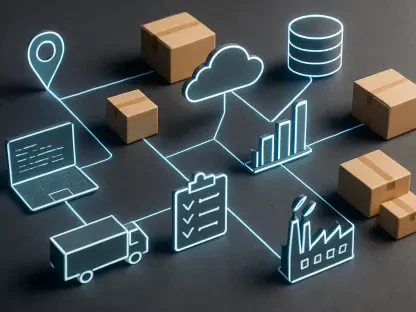
Artificial Intelligence has firmly established itself as the most dominant and pervasive force on the technological frontier, having evolved far beyond simple automation tools to become a core driver of economic value and industry-wide disruption. The latest advancements in machine learning algorithms are empowering businesses to process and analyze immense datasets with unparalleled speed and accuracy, enabling a new class of real-time, data-driven decision-making that was previously the realm of science fiction. This deep integration of AI into the core operations of enterprises across sectors, from finance to healthcare, is on a clear trajectory to generate trillions of dollars in global economic value. This financial impact is fueled by innovations such as highly sophisticated predictive analytics that can anticipate market shifts, optimize supply chains with minute precision, and operate complex autonomous systems like self-driving vehicles and automated logistics networks. The technology is no longer an auxiliary tool but has become a central nervous system for modern commerce and industry, fundamentally altering how organizations operate, compete, and create value in a rapidly changing world.
The ongoing evolution of AI is marked by a significant and consequential leap from task-specific automation to the emergence of sophisticated “agentic systems.” These advanced intelligent agents are engineered to execute highly complex, multi-step tasks with a remarkable degree of autonomy, capable of functions like strategic planning, complex negotiation, and dynamic problem-solving without the need for constant human intervention. This progression is being dramatically amplified by the latest generation of generative AI models, which are not only multilingual but are also being seamlessly integrated with the vast and growing network of Internet of Things (IoT) devices. This fusion dramatically expands their applicability in globalized markets and creates tangible innovations, particularly in fields like healthcare where AI-powered diagnostic tools are revolutionizing patient care. However, this rapid proliferation is not without its critical challenges. Paramount among these are ethical concerns, as AI systems can inadvertently perpetuate and amplify existing societal biases embedded in their training data. Furthermore, the environmental sustainability of AI is a growing issue, as the massive data centers required to power these advanced computational models are incredibly resource-intensive, demanding enormous amounts of energy and igniting a crucial conversation about the need for more sustainable development practices.
The Green Imperative in Technological Innovation
Sustainability has decisively transitioned from a peripheral corporate social responsibility metric to a central and defining pillar of modern technological innovation. The global technology industry is facing increasing pressure from regulators, investors, and consumers to systematically re-evaluate and minimize its environmental footprint, a shift that is catalyzing a powerful wave of green technology development. This movement is largely focused on reducing carbon emissions through a dual-pronged approach: engineering more energy-efficient computing hardware and architectures, and aggressively integrating renewable energy sources into the operational infrastructure of data centers and manufacturing facilities. AI itself is being leveraged as a critical tool in this crucial endeavor, employed to meticulously optimize energy consumption across a wide array of applications, from the dynamic management of smart electrical grids to the streamlining of complex manufacturing processes that significantly reduce material waste. This profound pivot toward environmental responsibility is no longer merely a response to regulatory mandates; it has become a significant competitive differentiator, as environmentally conscious practices are increasingly influencing both consumer purchasing decisions and long-term investment strategies.
This green imperative is sparking a host of tangible and transformative innovations across the tech ecosystem, including the pioneering use of bio-based and biodegradable materials for electronics and hardware components, which aims to mitigate the growing problem of e-waste. Concurrently, the design and implementation of decentralized renewable energy systems are gaining significant traction, helping to reduce the widespread reliance on fossil fuels. These advancements are poised to fundamentally reshape global supply chains, making them more resilient, transparent, and sustainable. For instance, rapid progress in 3D printing technologies utilizing sustainable filaments is enabling the creation of localized micro-factories. These facilities can produce goods on-demand, a model that drastically cuts down on both material waste and the carbon emissions associated with long-distance transportation. These efforts are part of a broader, industry-wide movement toward establishing circular economies, where the lifecycle of products is deliberately extended and resources are continuously reused rather than being discarded. While challenges such as high initial investment costs and remaining technological hurdles persist, collaborative partnerships between agile, innovative startups and established corporations are proving instrumental in accelerating progress.
Building the Future’s Infrastructure
Quantum computing represents not just an incremental improvement but a complete paradigm shift, promising an exponential leap in computational power that will dwarf the capabilities of even the most advanced classical supercomputers of today. As of 2025, significant breakthroughs in the development of sophisticated quantum algorithms are beginning to unlock practical solutions to extraordinarily complex problems that have long been considered intractable. These challenges span critical fields such as drug discovery, where quantum simulations can model molecular interactions with perfect accuracy; advanced materials science, enabling the design of novel substances with unprecedented properties; and complex financial modeling, allowing for risk analysis of a complexity far beyond current capabilities. While the technology is still in its early stages of maturity, the strategic integration of quantum systems with existing classical computing stacks is gaining considerable momentum. Industry projections suggest that hybrid quantum-classical systems will become increasingly commonplace by 2026, enabling businesses to run complex simulations that were previously impossible. However, the path to widespread quantum adoption is fraught with formidable technical obstacles, including the necessity for cryogenic cooling systems, the development of robust error-correction mechanisms, and the need for substantial infrastructure investments to make the technology accessible beyond specialized research laboratories.
Simultaneously, the ongoing revolution in global connectivity, spearheaded by the widespread rollout of 5G networks, is serving as a critical foundational enabler for nearly every other major technology trend. The ultra-high-speed, low-latency, and highly reliable connectivity provided by 5G technology is absolutely essential to support a new generation of mission-critical applications, including real-time remote surgery, immersive augmented reality experiences, and the complex vehicle-to-everything communication required for fully autonomous transportation. This dramatically enhanced network capability is also fueling the explosive growth of mobile edge computing, a paradigm where data processing occurs much closer to the end-user rather than in centralized data centers, enabling near-instantaneous response times. Looking further ahead, intensive research and development into 6G technology promises even greater speeds, lower latency, and seamless integration with next-generation satellite networks. This future convergence holds the profound potential to finally bridge the persistent digital divide by providing ubiquitous, high-speed internet access to rural, remote, and historically underserved regions across the globe, fostering greater digital equity and unlocking new economic opportunities for all.
A Decentralized and Secure Digital World
Maturing far beyond its origins in cryptocurrency, blockchain technology is now finding truly impactful applications in a variety of enterprise and industrial contexts. The technology’s core, immutable features of transparency, security, and decentralization are being harnessed to fundamentally enhance global supply chain visibility, create secure and portable digital identity systems, and automate complex multi-party agreements through the use of self-executing smart contracts. This broader trend toward decentralization is powerfully complemented by the rapid rise of edge computing, an architectural approach that shifts data processing and analysis from centralized cloud servers to locations physically closer to where the data is actually generated. This synergy dramatically reduces latency and enables the kind of real-time responsiveness that is vital for demanding technologies such as the Internet of Things, smart city infrastructure, and autonomous vehicle navigation. The combination of edge computing with AI is creating a new generation of intelligent devices that can operate with greater independence, efficiency, and enhanced privacy, processing sensitive information locally without sending it to the cloud.
This hyper-interconnected world, however, creates a vastly expanded and more complex digital attack surface, making cybersecurity a non-negotiable and foundational element of all technological innovation. The sophistication of cyber threats, including AI-powered attacks and advanced, persistent ransomware, is increasing at an alarming rate, demanding more proactive, intelligent, and adaptive defense strategies. In response, the industry is investing heavily in AI-driven cybersecurity tools that utilize machine learning to detect and respond to network anomalies and potential threats in real time. Security paradigms like zero-trust architecture, which operates on the stringent principle of “never trust, always verify” for every access request, are becoming the new standard for protecting critical digital infrastructure. The ultimate challenge lies in striking the right balance between implementing robust security measures and maintaining operational usability. These technological shifts are also profoundly impacting the global workforce by automating routine tasks, which consequently necessitates a massive, coordinated focus on comprehensive reskilling and upskilling programs to prepare workers for the jobs of the future. Navigating this new era successfully demands the parallel evolution of robust ethical and regulatory frameworks to ensure that the immense benefits of technological progress are ultimately distributed both equitably and responsibly across society.