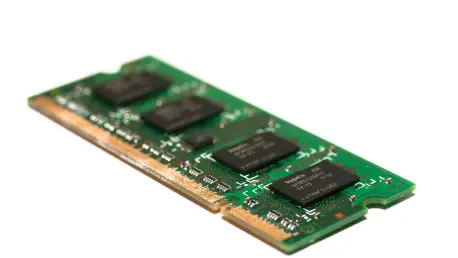

A profound and disruptive memory shortage has become a defining characteristic of the 2026 technology landscape, creating a system-wide “crunch” that is fundamentally altering the trajectory of artificial intelligence development and deployment. This is not a temporary market fluctuation but a significant dislocation, where the soaring costs and scarcity of Dynamic Random-Access Memory (DRAM) are forcing a strategic retreat from the cloud-centric model that has dominated AI for the past decade. As the industry confronts the hard limits of resource availability, an unexpected but powerful trend has accelerated: the migration of AI workloads to the edge. This shift, born from necessity, is championing a new architectural paradigm centered on efficiency, specialized models, and the inherent resilience of on-device intelligence.
The Anatomy of a Market in Crisis
A Strategic Pivot with Unintended Consequences
The core of the current memory crisis stems from a calculated strategic pivot by the world’s leading memory manufacturers, who have reallocated a substantial portion of their production capacity toward high-margin components. Specifically, the focus has shifted to DDR5 and High-Bandwidth Memory (HBM), which are the essential fuel for the massive computational engines inside hyperscale data centers running large-scale AI models. While a sound business decision for memory makers, this reallocation has created a severe supply bottleneck for other types of memory modules, setting off a cascade of disruptive effects across the entire technology ecosystem. The economic impact has been both immediate and stark, with memory costs surging to levels three to four times higher than those observed in the third quarter of 2025. This volatility has shattered budgets, altered the economic feasibility of countless AI projects, and left even the largest cloud providers scrambling for resources, reportedly receiving only about 70% of their requested memory volumes.
A Tale of Two Memories
A critical nuance of this shortage is its non-uniform nature, creating a bifurcated market with wildly different conditions. The most severe price increases and longest procurement lead times are concentrated in high-capacity DRAM modules, the very components in direct competition with the voracious demands of cloud infrastructure. Their pricing now reflects this intense rivalry, making them a high-risk, high-cost proposition for system designers. In stark contrast, lower-capacity modules, particularly those in the 1-2 GB range, have remained largely unaffected by the market turbulence. Their availability is stable, and their pricing has not experienced the same inflationary pressures, effectively turning them into a safe harbor in a volatile economic sea. This disparity has become a powerful forcing function, creating a clear incentive for engineers to design systems that can operate efficiently within these lower-capacity, more accessible memory footprints, thereby insulating their projects from the most extreme market pressures.
Reshaping AI for a Resource-Constrained World
The New Efficiency-First Imperative
In response to the DRAM crisis, an “efficiency-first” approach to system design has rapidly evolved from a best practice into a strategic imperative for survival. Architectural designs predicated on an abundance of cheap memory are now seen as carrying unacceptable financial and logistical risks, from extreme cost volatility to unpredictable supply chain disruptions. The new reality demands engineering systems to operate effectively within tighter memory constraints, typically 1-2 GB, which allows development teams to sidestep the most severe market pressures. This grants them a newfound degree of control over their bill of materials and production timelines, a significant competitive advantage when resource abundance can no longer be assumed. For certain classes of AI workloads, especially in classical and computer vision tasks, the most definitive solution has been to eliminate the dependency on external memory altogether. Specialized AI accelerators capable of keeping the entire inference pipeline on-chip offer a path to dramatic cost savings and significant improvements in power efficiency and system reliability.
Moving Generative AI to the Edge
While not all AI can function without external memory, the crisis is profoundly influencing the deployment of even the most memory-intensive applications, such as Generative AI. The prevailing market constraints are creating a powerful argument for moving GenAI inference workloads away from the centralized cloud and closer to the end-user at the edge. The logic behind this migration is compelling. Running GenAI on edge devices encourages the use of smaller, more domain-specific models instead of the massive, general-purpose models that are typical of cloud environments. This strategic downsizing of models has a direct and positive impact on hardware requirements. Smaller models naturally require less memory, which allows system designers to utilize the readily available and far more cost-effective 1-2 GB modules. This directly mitigates the financial and supply chain risks associated with high-capacity memory while simultaneously improving power efficiency—a critical factor for battery-powered or thermally constrained edge devices.
The Inexorable Pull of On-Device Intelligence
The Mandate of User Expectation
The case for moving AI to the edge has traditionally been built on the foundational pillars of enhanced privacy and low latency. However, a new and arguably more powerful driver has cemented this trend: user expectation. Both consumers and enterprise users now expect GenAI-powered features—such as real-time transcription, audio enhancement, and on-the-fly translation—to be instantly available, seamless, and completely independent of network connectivity. Any startup delay or reliance on a network connection is increasingly perceived as a failure of the user experience. This expectation has been sharpened by the demonstrated fragility of cloud-centric infrastructure. Recent high-profile outages at major cloud providers served as a stark reminder of the risks associated with a single point of dependency. When these networks experienced disruptions, countless AI-driven features across a wide range of applications failed simultaneously, highlighting the inherent vulnerability of a cloud-only model. The most resilient solution is a hybrid architecture that keeps essential AI capabilities local, ensuring core functionalities remain operational even during network outages.
The Small Model Revolution
A crucial technological breakthrough enabling this new paradigm has been the emergence of a new class of highly efficient Small Language Models (SLMs) and compact Vision Language Models (VLMs). Until recently, generative AI was almost exclusively the domain of massive, cloud-based models that required immense computational resources. Now, a new generation of models demonstrates that impressive performance, including reliable instruction following and tool use, can be achieved with a fraction of the parameters. This evolution signifies a fundamental insight: many valuable GenAI tasks do not require brute-force scale. Instead, they benefit from well-defined problem domains, optimized inference pathways, and efficient processing. For hardware development teams, the benefits of this shift are profound. It dismantles the historical “memory tax” associated with AI, drastically lowering system costs and reducing supply-chain risk. This architectural philosophy—designing for efficiency rather than excess—aligns perfectly with the core ethos of edge computing, proving that compact models often deliver faster, more private, and more consistent results.
Lessons from the Great Memory Recalibration
The DRAM shortage that defined 2026 served as a powerful lesson in technological resilience and strategic adaptation. It became clear that the most robust and future-proof AI systems were those designed around constraints, not those predicated on an assumption of limitless resources. The crisis compelled engineering teams across the industry to re-evaluate long-held beliefs about model size, memory baselines, and what constituted “good enough” performance for an expanding array of common AI tasks. The key takeaway was that domain-specific intelligence often outperformed brute-force scale, especially in environments where consistency, privacy, and low power consumption were paramount. Edge AI was perfectly positioned to meet this moment, as its inherent memory profile aligned with the DRAM capacities that remained accessible and affordable. As organizations moved forward, the strategic investment in leaner model design, hardware acceleration, and hybrid deployment models became the new blueprint for delivering powerful and dependable AI experiences without being held hostage by a volatile memory market.