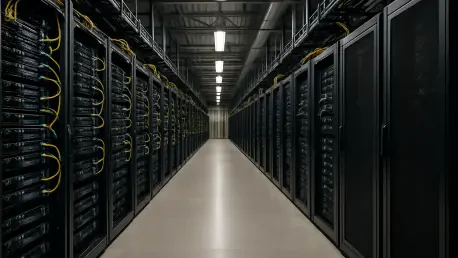

In the quiet fields of central Indiana, a technological titan is making a statement so profound its reverberations are being felt across the entire artificial intelligence landscape. Meta’s groundbreaking $10 billion, 1-gigawatt data center campus in Lebanon, Indiana, establishes a new benchmark for scale, single-handedly redefining the physical requirements for competing in the next era of digital innovation. The sheer size of this investment demonstrates that the AI arms race is no longer just about algorithms and silicon; it is about securing colossal amounts of power and space.
This facility is far more than just another piece of infrastructure. It serves as a definitive declaration on the immense resource demands of next-generation artificial intelligence. The project’s strategic purpose, its significant economic ripple effects across the region, and its pioneering role in shaping the future of sustainable AI development all point toward a new reality where digital dominance is built on a foundation of unprecedented physical assets.
Deconstructing the Gigawatt Gambit What’s Really Powering Meta’s AI Ambitions
The Insatiable Appetite of AI Why Gigawatt-Scale Infrastructure Is the New Bare Minimum
The technical drivers behind Meta’s Indiana project reveal a fundamental shift in computing needs. Advanced AI workloads, particularly those for training large-scale models and deploying complex applications, demand a completely new class of data center. These modern facilities must offer significantly higher bandwidth, exceptionally low latency, and enhanced reliability to function effectively. The move toward gigawatt-scale campuses is a direct response to this escalating need for raw computational power.
Meta’s own justifications for this expansion highlight the necessity of massive, flexible campuses that can adapt to the evolving demands of future AI systems. While some industry analysts debate the merits of centralized versus decentralized computing power, this project shows Meta is betting heavily on the former. The company’s strategy suggests that concentrating resources in a few hyper-scale hubs provides the efficiency and control required to maintain a competitive edge in AI development and deployment.
From Silicon Valley to the Crossroads of America The Socio-Economic Blueprint of an AI Megaproject
The project’s immediate economic impact on Boone County is substantial, with projections including the creation of over 4,000 construction jobs and approximately 300 permanent operational roles. This influx of activity represents a significant boost for the local economy, injecting capital and opportunity into a rural community. The development serves as a modern blueprint for how high-tech investment can reshape regional economic landscapes.
Beyond direct job creation, Meta is implementing a community engagement strategy focused on long-term integration. This involves partnerships with local organizations to establish workforce development programs and support critical infrastructure investments. However, hosting a high-tech giant also presents challenges. The long-term success of this partnership will depend on carefully balancing the immense economic benefits against the potential strains on local resources, from housing to public services.
The Green Paradox Reconciling AI’s Energy Thirst with Sustainable Innovation
In a move to address the environmental concerns associated with such a large-scale project, Meta has pledged to power the Indiana facility with 100% clean energy. This commitment is coupled with the implementation of advanced closed-loop liquid cooling technology, a system designed to significantly improve energy and water efficiency compared to traditional cooling methods. This approach directly confronts the growing concern over AI’s massive energy footprint.
This initiative challenges the common assumption that exponential AI growth must be inherently unsustainable. By integrating green technologies from the ground up, hyper-scale projects like this one can pioneer new standards for efficiency across the industry. The critical question, however, remains the feasibility and scalability of these green solutions as the global demand for AI-driven compute power continues to soar unabated.
A Nationwide Network of Neurons Placing the Indiana Hub in Meta’s Grand Infrastructure Strategy
The Lebanon campus is not an isolated investment but a key node in a coordinated national strategy. It joins a growing list of major expansion projects in states like Texas, Wisconsin, and Louisiana, revealing a deliberate effort to build a resilient, geographically distributed network of computational power. This network is designed to support Meta’s vast ecosystem of products and services while mitigating risks associated with concentrating infrastructure in a single region.
Underpinning this entire expansion is a sophisticated long-term energy plan. Recent agreements for up to 6.6 GW of nuclear capacity demonstrate the company’s foresight in securing the massive power sources required to fuel its AI roadmap for years to come. This distributed-yet-interconnected infrastructure provides Meta with a formidable competitive advantage, enabling the rapid development and deployment of proprietary AI technologies at a scale few others can match.
Navigating the New AI Landscape Strategic Imperatives for a Compute-Heavy Future
The core takeaway from Meta’s investment is clear: leadership in artificial intelligence is now inextricably linked to the ability to build, secure, and power gigawatt-scale infrastructure. The era of software-only dominance is giving way to a new paradigm where physical assets and energy strategy are paramount. This shift requires a fundamental reevaluation of what it means to be an AI powerhouse.
For tech leaders and investors, this signals a need to assess a company’s AI readiness not just by its algorithms but by its data center footprint and long-term energy contracts. A robust infrastructure strategy is no longer a supporting element but a primary indicator of future success. Consequently, regional economic development agencies must also adapt. To attract the next wave of high-tech investment, they must rethink their value proposition, focusing on their capacity to provide abundant clean energy and a skilled workforce prepared for advanced data center operations.
The $10 Billion Echo How Indiana’s Fields Will Shape the Future of Artificial Intelligence
Projects like Meta’s in Indiana are bellwethers for the next era of technological development, where physical infrastructure increasingly dictates digital dominance. This investment transforms a plot of land into a critical hub for global AI, illustrating that the future of the internet is being built not just in code, but in concrete and steel.
This trend highlights the ongoing tension between AI’s exponential growth, its immense energy consumption, and the global imperative for sustainability. The success of this new technological wave will depend on the industry’s ability to resolve this paradox. Ultimately, the future of AI is not an abstract concept; it is a physical reality taking shape in communities around the world. The challenge for all industry stakeholders is to collaborate on building this powerful future responsibly, starting quite literally from the ground up.