
The global economy is currently undergoing a structural transformation so profound that it rivals the introduction of the steam engine or the internet. At the heart of this shift is Nscale, a powerhouse that recently shattered financial records with a $2 billion Series C funding round, pushing its valuation to a staggering $14.6 billion. This influx of capital represents the largest equity raise in European history, signaling that the “neocloud”—a new breed of cloud provider built specifically for artificial intelligence—is no longer a niche concept but the fundamental foundation of modern industry.
While traditional technology giants have historically provided general-purpose computing, the current landscape demands something more specialized. Nscale has positioned itself as the answer to this demand by focusing exclusively on the intensive requirements of high-performance AI compute. This massive investment demonstrates a global consensus among financiers and technologists alike: the ability to process vast amounts of data at lightning speed is the most valuable commodity of the new decade.
From Blockchain to AI: The Evolution of Nscale
The journey to the top of the AI food chain began with a tactical pivot that few companies could have executed with such precision. Originally emerging as a spinout from Arkon Energy, a firm deeply rooted in the energy-intensive world of crypto-mining, Nscale inherited a unique understanding of large-scale power management and hardware cooling. By early 2024, the leadership recognized that the infrastructure used to mine digital assets could be radically re-engineered to serve the burgeoning field of generative AI.
This transition was not merely a change in branding but a total overhaul of the company’s strategic DNA. Recognizing that hardware availability would become a primary bottleneck, the firm secured early and aggressive backing from industry titans like Nvidia and Lenovo. These relationships provided Nscale with a “first-mover” advantage, ensuring that as the world faced a global GPU shortage, the company remained one of the few entities capable of delivering high-end compute power to developers and researchers without delay.
Strategic Milestones and Infrastructure Dominance
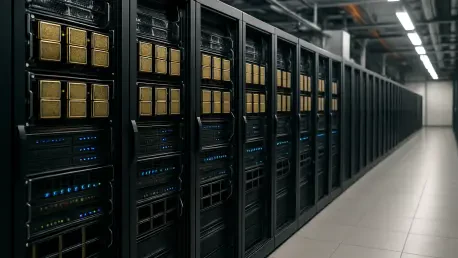
Nscale’s rise to dominance is defined by its “full-stack” philosophy, which integrates every layer of the technology chain. Unlike competitors that simply rent space in third-party facilities, this organization builds and manages its own physical data centers while simultaneously developing the proprietary cloud software needed to run them. This vertical integration allows for a level of optimization and cost-efficiency that traditional providers struggle to match, especially when dealing with the thermal and electrical demands of modern AI clusters.
Furthermore, the company has utilized its massive capital reserves to forge partnerships that act as a “moat” against competitors. By controlling the environment from the concrete floor to the software interface, they provide a seamless experience for enterprises that require absolute reliability. This strategy has turned a once-small spinout into a global infrastructure sovereign, capable of dictating the pace of innovation across the entire AI ecosystem.
Global GPU Deployment and the OpenAI Collaboration
The scale of Nscale’s operations is perhaps best illustrated by its monumental $15 billion initiative aimed at deploying 300,000 GPUs across the globe. This project, conducted in close coordination with OpenAI and Nvidia, is designed to provide the sheer horsepower necessary for training the next generation of large language models. By distributing this compute capacity across different regions, the partnership ensures that AI development is not centralized in a single geographic location, fostering a more resilient global network.
The $14 Billion Microsoft Alliance
In another significant move, Nscale expanded its footprint through a $14 billion alliance with Microsoft. This collaboration was designed to bolster enterprise AI capabilities by blending Nscale’s raw GPU-as-a-Service power with Microsoft’s vast suite of business applications. This partnership bridges the gap between deep-tech infrastructure and the corporate boardroom, allowing traditional businesses to tap into high-end AI resources without having to build their own hardware stacks from scratch.
Physical Expansion and “Stargate” Facilities
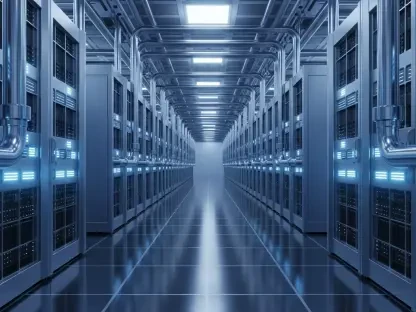
To house this unprecedented amount of hardware, the company has embarked on an aggressive building spree, highlighted by an $865 million data center in North Carolina. Beyond North America, the launch of a Norway-based AI center—branded under the “Stargate” initiative in collaboration with OpenAI—utilizes the region’s natural cooling and renewable energy resources. These facilities are not just warehouses for servers; they are the high-tech temples of the fourth industrial revolution.
The Neocloud Advantage: Outpacing Traditional Hyperscalers
The emergence of the “neocloud” model represents a direct challenge to the legacy dominance of providers like AWS, Google Cloud, and Azure. While those platforms offer a broad “everything for everyone” approach, Nscale’s GPU-as-a-Service (GPUaaS) is built for speed and specific AI workloads. This specialization means that researchers can spin up massive clusters in minutes rather than weeks, bypassing the bureaucratic and technical layers often found in older cloud environments.
Moreover, the shift toward hybrid cloud strategies among modern enterprises has worked in Nscale’s favor. Many organizations now prefer to keep their general operations on traditional clouds while moving their heavy-duty AI training to specialized providers. This “best-of-both-worlds” approach allows for maximum performance without sacrificing the familiarity of existing enterprise software ecosystems, further cementing the neocloud’s role as a necessary companion to traditional tech.
Global Footprint and the Current State of Operations
At this moment, Nscale’s operations span the most critical economic corridors of North America, Europe, and Asia. The latest capital injection is being utilized to secure the most advanced GPU systems available, ensuring the company stays ahead of the rapid hardware depreciation cycle. By maintaining a diverse geographic presence, they can offer “sovereign compute” solutions to nations that are wary of hosting their most sensitive AI data beyond their own borders.
The stability of this rapid expansion is underpinned by the involvement of sophisticated institutional investors like Citadel and Jane Street. These firms provide more than just money; they bring a level of financial rigor and market intelligence that helps Nscale navigate the volatile waters of the high-tech hardware market. This institutional backing ensures that the company remains a stable partner for the world’s largest governments and corporations.
Reflection and Broader Impacts
Reflection
The capital-intensive nature of the neocloud model is both its greatest strength and its most significant vulnerability. While Nscale has successfully raised billions to build its empire, the ongoing challenge lies in the maintenance and cooling of physical infrastructure at an unprecedented scale. Operating hundreds of thousands of high-heat GPUs requires a mastery of thermodynamics and energy procurement that most software-focused companies simply do not possess.
Broader Impact
Looking at the bigger picture, Nscale is essentially fueling the “fourth industrial revolution” by making high-end compute accessible to more than just a handful of Silicon Valley giants. By providing the backbone for global AI accessibility, the company is helping to democratize the tools needed for breakthroughs in medicine, climate science, and engineering. The implications for sovereign compute are equally vast, as nations look to Nscale to help them build their own independent AI capabilities.
Conclusion: The Essential Backbone of the AI Economy
Nscale’s strategic focus and massive scaling efforts successfully transformed the company into the primary architect of the AI infrastructure era. By anticipating the hardware demands of the late 2020s and securing the necessary partnerships early on, the organization managed to outmaneuver much larger, older competitors. These achievements highlighted a fundamental shift in the tech industry, where the physical layer of the cloud became just as innovative and valuable as the algorithms running on top of it.
For those looking to understand the future of the digital economy, the next steps involve closely monitoring how these massive GPU clusters are integrated into everyday enterprise workflows. Decision-makers should evaluate their current cloud strategies to determine if a transition to specialized “neocloud” providers could offer the performance gains required for next-level AI implementation. As the demand for compute continues to skyrocket, Nscale’s role as the essential backbone of the technological world will only become more pronounced.