
Canada’s immense and often rugged geography has long presented a formidable challenge to maintaining consistent digital connectivity, creating a significant barrier for industries operating far from urban centers. A groundbreaking development from Terrestar Solutions Inc., the nation’s only domestically controlled mobile satellite service operator, promises to permanently alter this landscape with the launch of a new Hybrid IoT connectivity service. This innovation is not merely an incremental improvement; it represents a fundamental shift in how satellite communications operate. By building the service on an open, standards-based platform, it breaks from the industry’s long-standing tradition of proprietary, closed systems. This new platform, the first of its kind to be Canadian-controlled, leverages the 3GPP non-terrestrial network (NTN) standards, enabling a device to switch automatically and seamlessly between terrestrial cellular networks and satellite links. The result is truly uninterrupted connectivity, a crucial enabler for businesses and communities across every corner of the country, from bustling southern cities to the most isolated northern territories.
A Paradigm Shift for Satellite Communications
The introduction of this hybrid platform signals a significant evolution in the satellite communications sector, challenging the established norms that have governed the industry for decades. By championing an open architecture, this initiative aims to democratize access and spur innovation in ways previously hindered by proprietary constraints. This strategic move not only enhances technological capabilities but also reinforces Canada’s digital autonomy on a global stage.
Embracing Open Standards over Proprietary Systems
The satellite industry has historically been characterized by closed, proprietary ecosystems where a single provider controls the entire technology stack, from the satellite to the end-user device. This model has frequently led to limited user choice, higher operational costs, and a slower pace of innovation, as users were locked into a specific vendor’s hardware and software. Terrestar’s new Hybrid IoT service directly confronts this legacy by adopting an open architecture based on international 3GPP NTN standards. This alignment with the global cellular industry fosters a new era of interoperability and competition. André Tremblay, the Executive Chairman of Terrestar, drew a compelling parallel to the transformation of the mobile telecom industry, where the shift to open standards turned basic communication devices into the powerful, versatile smartphones that are now ubiquitous. This move is poised to unlock a similar wave of innovation for satellite-connected devices, creating a more dynamic and responsive market.
The long-term benefits of an open, standards-based approach extend far beyond immediate cost savings or increased device choice. This model cultivates a vibrant ecosystem where third-party developers and hardware manufacturers can create new applications and solutions without being tethered to a single proprietary platform. It encourages healthy competition among service providers, which in turn drives down prices and improves service quality for all users. By breaking down the walled gardens that have defined the satellite industry, this initiative paves the way for a more collaborative and forward-thinking technological landscape. This structural change is essential for realizing the full potential of the Internet of Things, allowing for the integration of diverse devices and systems into a cohesive, interoperable network that can scale to meet the evolving demands of Canadian industries and consumers alike, ensuring that technological advancement is not stifled by restrictive business models.
Bolstering National Sovereignty and Resilience
The strategic importance of a domestically controlled satellite communication network cannot be overstated, particularly for a nation with Canada’s expansive geography and resource-based economy. For years, the country has relied heavily on dominant foreign satellite operators to provide connectivity in remote areas, creating a dependency that carries inherent risks to national economic security and public safety. The launch of this Hybrid IoT service, which is delivered over Canadian-licensed S-band spectrum and operated entirely from within Canada, marks a decisive step toward greater national sovereignty in the critical domain of telecommunications. This ensures that essential connectivity for key industries and emergency services remains under Canadian control, reinforcing the nation’s ability to manage its own digital infrastructure without external reliance. This move strengthens national resilience, providing a secure and reliable communications backbone that is less susceptible to foreign geopolitical or commercial pressures.
Furthermore, the establishment of a Canadian-operated hybrid network directly addresses the growing concerns around data sovereignty. As industries increasingly rely on data-driven insights for monitoring, automation, and safety, ensuring that this sensitive information is managed within national borders becomes paramount. By keeping critical communications and data traffic within a domestic framework, this service provides an added layer of security and compliance for sectors such as energy, mining, and transportation. This control is vital not only for protecting commercial interests but also for ensuring the integrity of critical infrastructure monitoring and public safety networks. In essence, this technological advancement is also a strategic national asset, providing the secure, resilient, and sovereign connectivity required to support Canada’s economic ambitions and safeguard its national interests in an increasingly interconnected and unpredictable world.
Driving Economic Growth and Future Innovation
By providing a reliable and ubiquitous connectivity solution, this new Hybrid IoT service is set to unlock significant economic potential across Canada’s key industrial sectors. It also serves as a critical technological foundation, paving the way for the next generation of satellite communication services that will further bridge the digital divide and foster innovation across the country.
Empowering Canada’s Core Industries
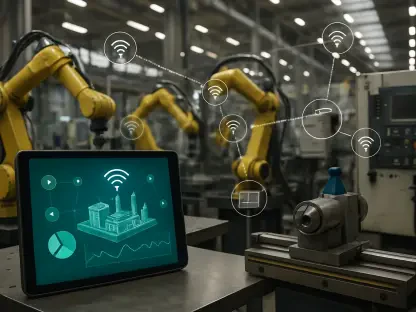
Canada’s most vital industries, including energy, critical minerals, forestry, and transportation, frequently operate in remote and challenging environments where reliable connectivity has been a persistent obstacle to modernization. The new Hybrid IoT platform is specifically designed to address this gap, providing the continuous, uninterrupted connectivity required to fully realize the benefits of digital transformation. For the energy sector, this means the ability to implement real-time monitoring of pipelines and remote facilities, enhancing safety and operational efficiency. In forestry and mining, it enables precise asset tracking of heavy machinery and vehicles across vast territories, optimizing logistics and reducing downtime. For transportation networks that traverse remote corridors, it ensures constant communication links for fleet management and safety systems. By eliminating connectivity blackouts, the service empowers these sectors to deploy sophisticated IoT solutions that drive productivity, improve safety protocols, and reduce their environmental footprint.
The real-world impact of this technology was validated through an extensive 32-week field trial with LUBEX, an industrial lubricant specialist operating in the Abitibi-Témiscamingue region of Quebec, an area notorious for its connectivity challenges. Using Terrestar’s SIM-powered solution, LUBEX was able to continuously monitor its equipment and lubricant levels even in locations completely devoid of cellular service. The results were immediate and tangible. The company reported a significant reduction in nonessential service trips, leading to lower operating costs and reduced fuel consumption. More importantly, the constant data flow enabled a shift from reactive repairs to more effective preventive and condition-based maintenance schedules, maximizing equipment uptime and longevity. Michel Lepitre, President of LUBEX, lauded the technology as a “genuine game changer” for their operations, a testament to the platform’s ability to deliver concrete business value in Canada’s most demanding industrial settings.
Paving the Way for Direct to Device Connectivity
The successful commercial deployment of this standards-based Hybrid IoT service represents more than just a solution for today’s industrial needs; it is a crucial foundational step toward the future of ubiquitous personal connectivity. This launch serves as a real-world validation of the essential components required for direct-to-device (D2D) satellite services, which promise to connect standard smartphones and other consumer devices directly to satellites without the need for specialized hardware. By successfully integrating a standards-based satellite and cellular network for commercial use, the initiative has proven the viability of the core network architecture, the effective utilization of S-band spectrum, and the necessary ecosystem partnerships between satellite operators, mobile network operators, and device manufacturers. This groundwork is critical for overcoming the technical and logistical hurdles associated with D2D technology, positioning Canada at the forefront of this emerging field.
This successful deployment ultimately created a clear roadmap for extending satellite connectivity beyond industrial applications to the general public. The ability to send a text message, make an emergency call, or access low-bandwidth data from a standard smartphone anywhere in the country, regardless of cellular coverage, represented a monumental leap in public safety and personal convenience. This technological progression demonstrated that the same architecture powering industrial IoT could be scaled to close the final connectivity gaps for consumers, outdoor enthusiasts, and first responders in remote and rural areas. The launch of the Hybrid IoT service therefore marked a pivotal moment, one that not only solved immediate industrial challenges but also laid the essential groundwork for a future where no Canadian would be truly out of reach.