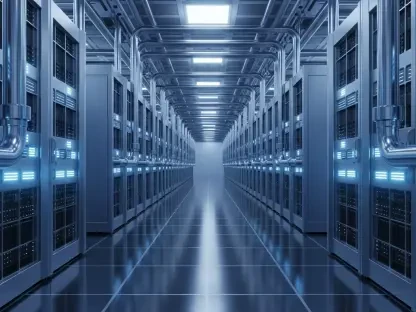

The continent’s ambitious drive to become a global artificial intelligence powerhouse is colliding head-on with the finite and increasingly strained capacity of its energy infrastructure, creating a pivotal moment that will define its digital sovereignty for decades to come. Europe’s data center sector, the very engine of this technological revolution, stands at a critical juncture where the insatiable power demands of AI are testing the limits of grid stability and regulatory frameworks. The outcome of this high-stakes scenario will determine whether Europe can sustain its AI ambitions or if they will be short-circuited by a looming energy bottleneck.
Europe’s High-Stakes Gamble on an AI-Powered Future
The European data center market is currently navigating a decisive phase of its evolution, marked by a complex interplay of surging demand, significant infrastructural constraints, and an evolving regulatory landscape. These facilities are no longer just passive warehouses for data; they are the active, power-hungry backbone essential for training and deploying the complex AI models that promise to reshape industries. The continent’s digital future is inextricably linked to the health and expansion of this critical infrastructure.
This dynamic landscape has long been dominated by the primary FLAP-D hubs of Frankfurt, London, Amsterdam, Paris, and Dublin. However, the intense concentration of development in these areas has led to power capacity constraints and regulatory hurdles, prompting a strategic shift. Consequently, emerging secondary markets are gaining prominence as operators seek regions with greater power availability, favorable government support, and access to renewable energy sources, fundamentally redrawing the map of Europe’s digital infrastructure.
The AI Tsunami Tracing the Trends and Tides of Change
Redefining the Data Center AI’s Impact on Design and Geography
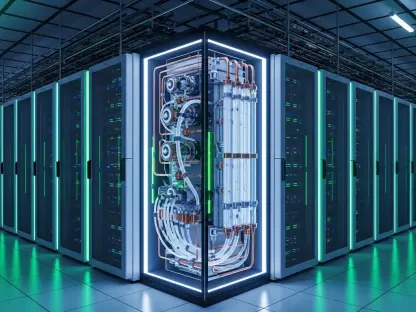
The infrastructure required to support high-density, compute-intensive AI workloads is accelerating a profound transformation in facility development. This is most evident in the dramatic increase in power requirements at the rack level, with densities soaring from a traditional 8-12 kW to as high as 80 kW for specialized AI clusters. This escalation in power density is compelling operators to move beyond conventional air cooling and rapidly adopt more sophisticated liquid and hybrid cooling architectures to manage the intense heat generated by advanced hardware.
Furthermore, the specific nature of AI workloads is creating a geographical bifurcation in development strategies. Large-scale AI training models, which are computationally intensive but less sensitive to latency, are driving demand toward regions with abundant and affordable renewable energy sources. In contrast, AI inference applications, which require low-latency responses for real-time services like autonomous vehicles and smart city management, are concentrating new capacity in and around major metropolitan areas to be closer to end-users, ensuring swift and efficient performance.
By the Numbers Projecting Europe’s Explosive Power Demand
The scale of the challenge is starkly illustrated by market projections, which forecast a staggering 17% compound annual growth rate in IT power demand across Europe through 2031. This unprecedented surge is not just a theoretical concern; it is placing immense pressure on national energy systems today. A significant 67% of European data center operators now cite access to power as their foremost operational hurdle, a clear indicator that energy availability has eclipsed other traditional constraints.
This explosive growth in demand is expected to trigger a wave of new development, with a forward-looking forecast projecting a cumulative investment of €176 billion between 2026 and 2031. However, realizing this potential is contingent on overcoming the very power limitations that now define the market. The sheer volume of investment underscores the industry’s commitment, but it also highlights the urgent need for parallel investments in grid modernization and energy generation to support this expansion.
The Great Power Bottleneck Confronting the Energy Crisis
Power availability has unequivocally emerged as the single greatest limiting factor for data center growth in Europe. The challenges are multifaceted, including widespread grid congestion in established hubs, excessively long timelines for securing new power connections that can stretch for years, and complex, often slow, permitting processes that stifle rapid development. This reality is forcing a fundamental change in how expansion is planned and executed across the continent.
This energy-first constraint signifies a crucial evolution in the data center growth model, which has historically been driven by capital deployment and real estate availability. Today, the model is increasingly shaped by strategic energy infrastructure planning, grid capacity, and national policies. This paradigm shift is compelling operators to become more sophisticated energy consumers and planners, working in closer concert with utility providers and regulators to find viable pathways for sustainable growth. The strategic move toward decentralization into secondary markets with greater power capacity is a direct and logical consequence of this new reality.
Navigating the Green Gauntlet Sustainability Meets Regulation
Despite the significant energy challenges, the European data center industry continues to make demonstrable progress in sustainability. An estimated 90% of the electricity consumed by data centers in Europe is now sourced from renewables. Moreover, 70% of operators report that they already meet a standard of at least 75% renewable or hourly carbon-free energy, indicating a proactive approach to decarbonization that often outpaces regulatory mandates.
The industry is also making significant strides in water conservation, with over half of operators reporting that they have already achieved their 2030 Water Usage Effectiveness targets. This progress is commendable, but it also exists within a complex regulatory environment. The need for closer coordination between policymakers and industry leaders is paramount to ensure that regulations support, rather than hinder, the deployment of sustainable and efficient digital infrastructure, particularly as it relates to grid stability and integration.
Beyond the Gridlock Pathways to a Powered Future
In response to constraints in primary markets, emerging hubs like Finland are becoming strategic alternatives, offering robust digital infrastructure and a wealth of renewable energy. The planned DayOne data center in Nurmijärvi exemplifies this trend, leveraging the region’s unique advantages to attract cutting-edge AI developments. This geographical diversification is a key strategy for mitigating risk and unlocking new growth potential across the continent.
To enhance resilience and efficiency, operators are also deploying advanced monitoring and automation systems, including digital twins, full-stack telemetry, and workload-optimization tools. These technologies provide granular visibility into operations, allowing for more precise energy management. Looking ahead, the future role of data centers is evolving from passive energy consumers to active participants in ensuring a stable, renewable-heavy grid. Through smart grid integration and new energy storage solutions, these facilities can help balance supply and demand, turning a major challenge into a systemic opportunity.
A Call for Collaboration Forging Europe’s Digital Destiny
The analysis of the European data center sector revealed a landscape at a crossroads, balancing immense growth opportunities driven by AI with fundamental structural limitations in its energy infrastructure. The continent’s ability to capitalize on the coming €176 billion investment wave depended entirely on its capacity to resolve this core tension. The path forward required a new level of strategic collaboration that went beyond traditional industry boundaries.
Ultimately, preventing power shortages from derailing Europe’s AI ambitions necessitated a coordinated strategy involving policymakers, transmission and distribution system operators, regional authorities, and the data center industry itself. The complex relationship between data centers and the grid highlighted the need for a collaborative, rather than purely regulatory, approach. By working together to integrate digital infrastructure more effectively into a variable, renewable-heavy energy system, Europe had the chance to secure its digital destiny through resilient and forward-thinking energy planning.