
Matilda Bailey is a distinguished networking specialist whose expertise sits at the intersection of fiber-optic expansion and next-generation cellular solutions. With a career dedicated to tracking the rapid evolution of high-capacity infrastructure, she provides a nuanced perspective on how digital corridors are being reshaped to meet the voracious demands of cloud computing and artificial intelligence. Her deep understanding of the Texas market makes her an essential voice in the conversation regarding the shift of the world’s technological gravity toward the Southern United States.
In this discussion, we explore the technical and strategic motivations behind the massive fiber expansions in the South Dallas and Austin-to-Bastrop corridors, the operational hurdles of a market projected to double in capacity within twelve months, and the critical role of 400G and 800G backbones in maintaining low-latency transport for hyperscalers. We also examine how a relaxed regulatory environment acts as a catalyst for innovation and why localized, state-specific infrastructure strategies are proving to be a formidable match for national competitors.
Texas is seeing massive fiber route expansions in the South Dallas corridor and the Austin-to-Bastrop area. Why are these specific rural and suburban zones becoming the new hubs for high-capacity connectivity, and what technical requirements do AI-driven data centers demand from this infrastructure?
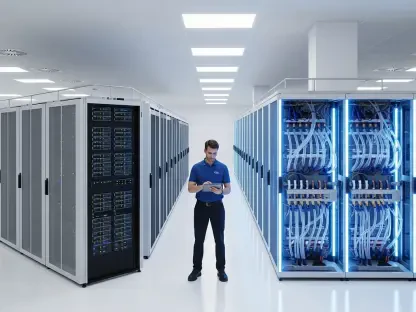
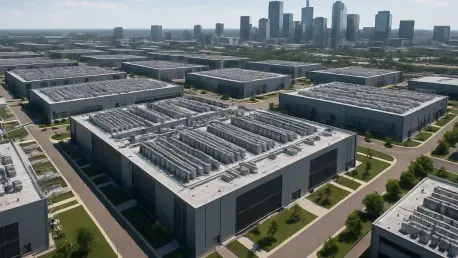
The shift toward South Dallas and the Austin-to-Bastrop corridor is a direct response to the massive land and power requirements that legacy urban hubs can no longer satisfy. In areas like Wilmer, Red Oak, and Midlothian, we are seeing hyperscalers like Google commit $600 million because they need hundreds of acres to house the specialized hardware required for AI processing. These AI-driven facilities demand a level of density that is unprecedented, necessitating high-count conduits to handle the immense flow of data between the edge and primary carrier hubs. When a company like Stack Infrastructure builds a 220 MW flagship campus in Lancaster, they aren’t just looking for space; they are looking for a fiber foundation that can support the rapid-fire computations inherent to machine learning. The technical requirement here is a combination of sheer volume and physical diversity in routing to ensure that these multi-million dollar investments never experience a second of isolation.
With projections suggesting Texas could surpass Northern Virginia as the world’s largest data center market by 2030, how is the current construction surge in Dallas-Fort Worth shifting the industry landscape?
The surge in Dallas-Fort Worth is fundamentally reordering the global data center hierarchy, with the market currently hosting approximately 190 facilities as of late 2025. What we are witnessing is an industrial-scale scaling effort, where colocation space is expected to double by the end of this year, supported by over 425 MW of preleased capacity. This rapid growth creates a high-pressure environment where the step-by-step requirements—from securing land to laying high-density fiber—must happen in a compressed timeline that would be impossible in more restricted markets. The operational challenge is managing this “gold rush” while ensuring the electrical and cooling infrastructure can keep pace with the 650 MW projects currently being filed by players like QTS Realty Trust. It is a shift from niche tech hubs to a massive, statewide industrial engine that rivals the long-standing dominance of the Ashburn, Virginia, corridor.
High-count conduits and 400G wavelength services on 800G backbones are becoming essential for low-latency transport. How do these hardware investments change the way hyperscalers manage massive data loads, and what specific performance benchmarks should operators prioritize?
Investing in a statewide 800G backbone with 400G wavelength services is like replacing a two-lane road with a twenty-lane superhighway; it completely removes the congestion bottlenecks that previously plagued inter-market data transfers. For hyperscalers, this means they can distribute massive data loads across different physical campuses without a perceptible increase in latency, which is the ultimate performance benchmark in the AI era. Operators must prioritize “on-net” building connectivity and low-latency transport speeds that allow for real-time synchronization between 3,000 different buildings and over 80 third-party data centers. By utilizing high-count conduits, providers can offer the physical density required to scale up as AI models grow more complex, ensuring that the network backbone doesn’t become the weakest link in the chain. These benchmarks aren’t just about speed; they are about the reliability and the “frictionless” movement of petabytes of information.
Land availability, energy access, and a relaxed regulatory framework are creating a “perfect storm” for rapid development. How does this regulatory environment specifically accelerate the speed of innovation, and what practical trade-offs do companies face?
The relaxed regulatory framework in Texas acts as a massive accelerator because it reduces the “red tape” wait times that typically stall large-scale infrastructure projects in other regions. When you combine this administrative ease with vast land availability and ready access to energy, you get a “perfect storm” that allows a project to go from a blueprint to a functional data center in a fraction of the time. However, the trade-off for this speed of deployment is the immense pressure it puts on local resources and the potential for a “build-first, optimize-later” mentality. Companies must balance the desire to be first to market with the long-term necessity of building sustainable, resilient systems that can withstand the unique environmental and power grid pressures of the region. Speed is a competitive advantage, but it requires a sophisticated local partner to ensure that quality isn’t sacrificed for the sake of a quick ribbon-cutting.
Local providers with dense metro networks are increasingly competing against national players with broader footprints. What are the practical advantages of a state-specific infrastructure strategy, and how do localized connections impact reliability?
The primary advantage of a state-specific strategy is the sheer density and intimacy of the network; a local provider often has significantly more “fiber miles”—in some cases over 300,000—concentrated within the state compared to a national player. This localized focus allows for deeper penetration into specific growth zones, such as the Austin-to-Bastrop corridor, where they can connect directly to the “front door” of dozens of third-party data centers. For an end-user, this means fewer “hops” between their data and the core network, which directly translates to higher reliability and faster response times. While national players offer breadth, the local specialist offers a “high-resolution” network that understands the specific geography and localized technical requirements of the Texas market, making them indispensable for companies that need deep, regional integration rather than a thin national spread.
What is your forecast for the Texas data center market?
My forecast is that Texas will not only meet but likely exceed the 2030 projections to become the global epicenter of data processing, driven by the sheer momentum of the Central Texas and Dallas-Fort Worth corridors. We are looking at a future where the Austin market, already valued at 1.54 GW in 2025, becomes a primary engine for AI innovation, while the South Dallas area evolves into the world’s most dense concentration of hyperscale facilities. As fiber providers continue to deploy 800G backbones across the state, the physical infrastructure will become so robust that the geographical distance between Texas cities will be virtually irrelevant for data transport. We are entering an era where “Texas-sized” applies to our digital bandwidth just as much as our physical landscape, making the state the undisputed backbone of the global AI economy.