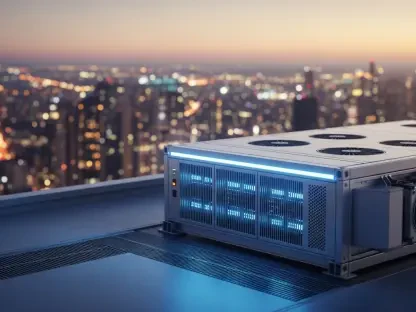

The humming rows of servers that once defined the modern data center have undergone a radical transformation, evolving into high-performance engines that require an entirely new architectural philosophy to survive. While the global conversation often lingers on the ethereal capabilities of generative models and neural networks, a far more grounded and gritty revolution is occurring within the physical structures that house these technologies. Visionary women are currently standing at the helm of this metamorphosis, steering the industry through a period where digital demands are outstripping traditional physical limits. These leaders are not merely reacting to technical bottlenecks; they are fundamentally redefining the intersection of heavy industry, advanced cooling, and community-centric urban planning.
The High-Stakes Transformation of Digital Architecture
The rapid ascent of artificial intelligence has effectively turned the traditional enterprise data center into an artifact of a simpler technological era. In the current landscape, these facilities function as the equivalent of a high-performance jet engine forced into the frame of a standard commuter vehicle. The hardware required to process trillions of parameters generates heat and consumes power at rates that were nearly unthinkable just a few years ago. This shift has forced a total reconsideration of how space is utilized, how electricity is distributed, and how heat is rejected into the environment.
Leading this charge is a group of innovators who recognize that the digital world cannot exist without a sustainable and resilient physical foundation. The challenge is no longer just about adding more servers to a room; it is about re-engineering the very DNA of industrial construction and thermal management. By focusing on the structural integrity and operational fluidity of these sites, these pioneers ensure that the global AI infrastructure remains robust enough to support societal progress without compromising the stability of the power grids or local environments upon which we all rely.
Moving from Standard Enterprise to AI-Scale Workloads
For several decades, the design of data centers followed a predictable and largely linear path of gradual density increases. Standard enterprise racks typically operated at modest levels, manageable through traditional air-conditioning and basic airflow management. However, the current AI revolution has completely shattered those growth curves. Modern clusters, dominated by graphics processing units and specialized accelerators, now demand power and cooling capabilities that exceed legacy designs by a factor of ten. This creates an immediate crisis for existing facilities that were never intended to handle such concentrated thermal loads.
The transition to AI-scale workloads requires a delicate balancing act between the urgent need for massive computing capacity and the long-term necessity of operational sustainability. Engineers must now navigate the complexities of providing stable, high-density power while ensuring that the infrastructure does not deplete local water supplies or overwhelm regional energy markets. This shift has turned data center management into a discipline of extreme engineering, where the margins for error are razor-thin and the requirement for innovative thinking has never been higher.
Critical Pillars of Next-Generation Infrastructure
The industry is currently moving away from the binary choice between traditional air cooling and specialized liquid cooling, opting instead for modular, hybrid systems that provide much-needed flexibility. Nancy Novak has been a vocal proponent of this “stepwise” transition, advocating for platforms that allow operators to integrate liquid cooling via direct-to-chip plates or liquid distribution units into their existing air-cooled footprints. This approach prevents the premature obsolescence of multi-million dollar assets while preparing the facility to handle rack densities that now regularly exceed 50 kilowatts. By making infrastructure adaptable, these leaders ensure that the rapid evolution of silicon technology does not leave a trail of “stranded” capacity behind it.
Sustainability has also moved from the periphery to the very center of design constraints, particularly regarding the stewardship of water resources. Modern cooling platforms are increasingly utilizing closed-loop designs to eliminate the need for constant water consumption, a move that prevents data centers from competing with local municipalities for this vital resource. This engineering shift ensures that high-density computing can thrive even in water-stressed regions, proving that technical performance and environmental responsibility are essentially two sides of the same coin. Furthermore, the industrialization of construction, championed by experts like Amy Marks, is moving the industry away from “bespoke” on-site building toward a “kit-of-parts” manufacturing model. By fabricating up to 80% of components in controlled factory environments, the industry achieves faster deployment times, repeatable quality, and significant reductions in the carbon footprint of the construction process itself.
Strategic Insights from Industry Pioneers
The current drive toward AI-ready infrastructure is being guided by research and firsthand leadership experiences that emphasize long-term viability over short-term expansion. Experts like Helen Munro have pointed out that the physical location of data centers is shifting away from congested metropolitan hubs, such as London, toward regional tech corridors. This strategic siting allows operators to tap into underutilized power grids and support local technology ecosystems, ensuring that the digital backbone is distributed more resiliently across the landscape. This geographic diversification is essential for maintaining the uptime required by critical AI applications while reducing the burden on aging urban infrastructure.
These pioneers advocate for a philosophy of being “good custodians” of infrastructure, which involves adapting existing assets to meet new demands rather than purely relying on resource-intensive new builds. By focusing on the lifecycle of the facility and the impact it has on its surroundings, these leaders are setting a new standard for the industry. They recognize that the long-term success of the digital economy depends on the industry’s ability to remain invisible and non-disruptive to the public, even as the scale of the technology grows exponentially. This requires a sophisticated understanding of both the micro-details of thermal engineering and the macro-trends of global energy policy.
Strategies for Building a Sustainable AI Ecosystem
To remain viable in the long term, data center operators must evolve from being passive energy consumers into active and beneficial community partners. This evolution involves securing a “social license” to operate by investing in microgrids and ensuring that the facility provides a net benefit to the local area. Operators are beginning to adopt a “give before taking” philosophy, which might include providing excess heat to local district heating systems or building out electrical infrastructure that strengthens the regional grid. Such initiatives build essential public trust and ensure that these massive industrial sites are welcomed as permanent fixtures in the community landscape.
Organizations are also encouraged to adopt a standardized, prefabricated design framework that allows for “plug-and-play” upgrades as technology advances. By utilizing modular components, a facility can transition from air-cooled enterprise workloads to liquid-cooled AI clusters without requiring a complete and costly structural overhaul. This strategy drastically reduces embodied carbon and ensures that the facility remains technologically relevant for decades to come. Additionally, close collaboration with utility providers is becoming a requirement for success. By exploring on-site renewable energy generation and sophisticated energy storage solutions, data center operators transformed their facilities into stabilizing assets that can provide power back to the grid during peak demand, essentially turning a massive energy user into a critical tool for grid resilience.
The industry effectively bridged the gap between raw computing power and environmental stewardship through these concerted efforts. Leaders across the sector implemented hybrid cooling models that significantly decreased the reliance on local water supplies while maintaining the high thermal efficiency required for advanced silicon. At the same time, the widespread adoption of modular construction techniques allowed for the rapid deployment of capacity without the traditional waste associated with on-site building. These innovators successfully integrated high-density infrastructure into regional corridors, which distributed the electrical load more evenly and supported the growth of local tech ecosystems. By prioritizing the social license to operate and working in tandem with utility providers, the sector established a blueprint for a future where massive digital growth coincided with a healthier, more resilient physical world. All stakeholders remained committed to the idea that the backbone of the intelligence era had to be as sustainable as it was powerful.