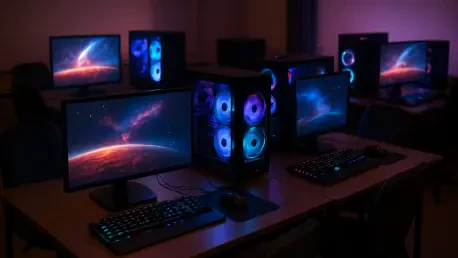

The digital age promised unparalleled connection, yet for many, it has fostered a profound sense of isolation, turning shared online experiences into solitary activities performed in separate rooms. A Prairie Village-based startup is challenging this paradox by resurrecting a beloved social ritual from gaming’s past. LAN Party, founded in 2022 by brothers Ryan and Evan Hesse, is building a virtual 3D communication platform designed to capture the communal magic of old-school “local area network” parties. By creating shared digital spaces where friends can feel as if they are gaming side-by-side in the same living room, the company is tapping into a powerful well of nostalgia. However, its ambitions stretch far beyond the gaming community, aiming to leverage this technology to create a new kind of digital venue for large-scale corporate and community events, positioning itself as a key innovator to watch in the evolving landscape of virtual interaction.
From Nostalgic Roots to Proven Engagement
The foundational concept of LAN Party is a direct response to the impersonal nature of modern online multiplayer environments. It seeks to digitize the tangible, energetic experience of gamers physically gathering their computers in one location for a weekend of shared play. This approach addresses a significant pain point for a generation that grew up with gaming as a profoundly social, in-person activity. According to founder and CEO Ryan Hesse, the platform’s purpose is to make online interactions feel more personal and substantive, recreating the camaraderie and spontaneous moments that are often lost in conventional voice-chat lobbies. The platform achieves this by providing customizable virtual rooms, such as digital basements or living rooms, where users can see and interact with each other’s avatars, creating a persistent sense of shared presence that goes far beyond a simple friends list. It is this focus on tangible social connection that forms the core of its appeal and initial success.
This powerful concept quickly found its footing in the market, demonstrating significant validation following a mid-2025 open beta launch on the popular gaming platform Steam. The application garnered an impressive 50,000 downloads, but the more telling metric was its extraordinary user engagement. The average playtime per user was recorded at a remarkable six hours, a figure that far surpasses typical engagement levels on the platform and indicates a high degree of user satisfaction and retention. Even more critically, a dedicated core user base emerged, with approximately 10 percent of all users logging over 20 hours of activity. These statistics provided clear evidence that the product was not just a novelty but was proving to be “sticky.” Users were not merely trying the application; they were integrating it into their regular social and gaming routines. This strong initial traction served as a crucial proof-of-concept, validating the company’s core hypothesis that there was a substantial, untapped demand for a more immersive and personal form of online interaction.
Pivoting Toward a New Digital Frontier
The journey to this point was not without its challenges, and the company’s ability to adapt has been a key factor in its growth. Early user reviews were negative, a hurdle the team overcame by focusing intently on improving the user experience. Ryan Hesse acknowledged his deep familiarity with the product made it difficult to see its complexities from a fresh perspective, a common pitfall for founders. In response, the team undertook a significant redesign to simplify the user interface and make the platform’s features more intuitive and transparent. This successful pivot directly resulted in a shift from negative to positive reviews, freeing the founders to concentrate on strategic expansion. This growth is also reflected in the team, which now consists of four full-time employees. In a testament to its commitment to community-driven development, one of these hires was a former “super-user” brought on as a quality assurance analyst, ensuring that the voice of the most dedicated users is integrated directly into the development cycle.
With a dedicated user base and a refined product, LAN Party is now executing a long-term strategy that is far more expansive than its gaming origins suggest. The founders envision the platform not just as an application, but as a form of “social architecture”—a versatile digital infrastructure capable of hosting large-scale virtual gatherings. The 2026 roadmap centers on the 1.0 public release, which will include a mobile companion app for on-the-go management of virtual rooms and communications. The ultimate goal, however, is to serve as a comprehensive digital venue for events that traditionally require immense physical logistics and significant financial investment. The company is actively targeting corporate clients, universities, and large fan communities as potential customers, aiming to provide a powerful and cost-effective alternative for hosting everything from trade shows to alumni weekends in a compelling virtual environment.
The Blueprint for a New Era of Virtual Gatherings
The company’s evolution revealed a business model that increasingly resembled that of a digital-venue provider. Its core technology was positioned to host virtual industry expos, large-scale gaming tournaments, and even massive fan watch parties for sporting events. The key value proposition presented to this emerging enterprise market was a massive reduction in both organizational complexity and cost. Hesse described the offering as providing “a fraction of the work, a fraction of the cost” when compared to organizing an equivalent in-person event, a compelling argument for businesses and organizations seeking to expand their reach without expanding their budgets. While the platform was slated to remain on Steam to cater to its foundational gamer audience, the company’s plans for expansion included direct downloads, compatibility with Linux and macOS, and eventual console integration. This multi-platform strategy was essential to reaching a wider, non-gaming market and realizing its ambition to fundamentally change how communities and corporations hosted major events in an increasingly digital world.