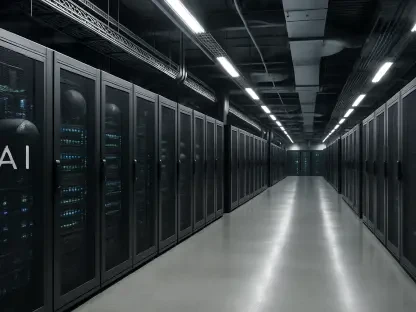

The shift toward autonomous agentic systems is fundamentally altering how modern enterprises manage their underlying digital infrastructure during the current operational cycle of 2026. Organizations are now moving rapidly beyond basic large language models to deploy sophisticated agents capable of executing complex workflows, which places an unprecedented strain on legacy network architectures. To address this demand, a unified platform approach has emerged that integrates networking, security, and observability into a single, cohesive ecosystem designed for high performance. This strategy ensures that data moving across the enterprise remains both accessible and protected, providing the high-speed connectivity required for real-time autonomous decision-making. By consolidating these formerly disparate functions, businesses can effectively eliminate technical silos that previously hindered the deployment of production-ready intelligence. The current infrastructure must prioritize data sovereignty and strict security protocols to maintain trust while simultaneously handling the massive throughput required for these advanced computational tasks. Such a transition requires a fundamental rethink of how traffic flows from the data center to the cloud-native edge.
Optimization of network traffic has become a primary focal point for ensuring that expensive hardware, such as high-end GPUs, does not sit idle due to persistent data bottlenecks. The industry is currently witnessing a massive push toward converged Ethernet solutions and Routed PON technology to ensure that high-performance computing reaches the network edge without latency issues. This expansion of infrastructure is significantly bolstered by the integration of cloud-native networking tools, such as the Cisco Nexus One, which utilizes technology from the Isovalent acquisition to bridge the gap between traditional data centers and modern cloud environments. Furthermore, the collaborative development of the Secure AI Factory with partners like NVIDIA provides a modular architecture that allows enterprises to deploy pre-validated stacks. This approach reduces the complexity of building AI-ready environments, offering a curated path toward scalability that was previously difficult to achieve. By focusing on the efficiency of north-south traffic, organizations can maximize their technological return on investment while preparing for even more intensive data demands.
The Infrastructure Blueprint: Optimizing Traffic for High-Performance Computing
The move toward automated security was further solidified through the deployment of the Cyber Vision Site Manager and deeper integrations with Splunk for industrial operations. These tools allowed for the automation of multi-site security in operational technology environments, effectively shielding critical infrastructure from evolving threats. In the retail sector, intelligence was successfully pushed to the edge to facilitate more responsive shopper experiences that relied on real-time data processing. Beyond the technical implementation, a commitment to localized impact was maintained through initiatives like the 40 Communities journey, which prioritized listening to local needs to drive social change. To succeed in this era, leaders prioritized the modernization of their switching fabrics and the adoption of zero-trust frameworks across all connected devices. Organizations that embraced these unified platforms achieved greater agility and were better positioned to scale their autonomous capabilities. Future strategies centered on continuous observability to maintain system health and security across increasingly complex global networks.
Achieving long-term success in the agentic era necessitated a shift from reactive troubleshooting to proactive infrastructure management. Decision-makers recognized that the integration of observability and security was not merely a technical upgrade but a foundational requirement for maintaining the integrity of autonomous workflows. By implementing modular architectures, businesses gained the flexibility to adapt to new computational requirements without overhauling their entire core network. The focus remained on creating a seamless flow of data that could support the heavy demands of industrial and retail AI applications alike. Furthermore, the emphasis on local community engagement proved that technological advancement must be accompanied by a focus on social responsibility to be truly effective. Moving forward, the industry prioritized the development of self-healing networks that could automatically adjust to traffic spikes and security anomalies. This holistic approach ensured that the digital foundation remained resilient enough to support the next generation of intelligent agents while fostering a secure and inclusive environment for global users.