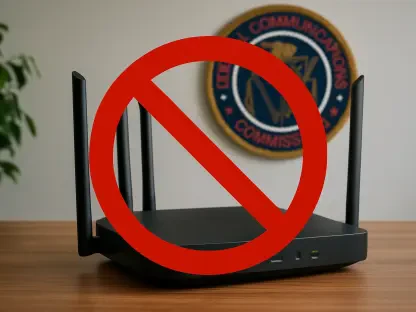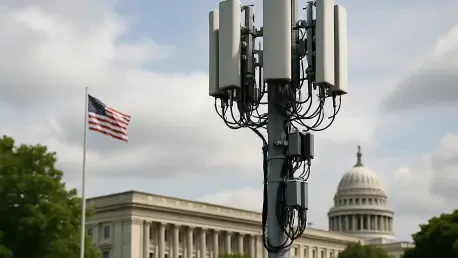

A concerted federal initiative is now underway to dramatically accelerate the nationwide deployment of 5G and future wireless networks, creating a significant shift in power away from local communities. This aggressive campaign, advanced through both legislative and regulatory actions, seeks to systematically curtail the traditional authority of state and local governments to oversee the placement of essential wireless infrastructure. The central objective is to centralize control at the federal level, prioritizing the speed of technological rollout over local concerns related to health, safety, and the environment. This policy reframes wireless coverage not as a utility to be integrated thoughtfully into a community, but as a non-negotiable component of national infrastructure that must be deployed with minimal local interference, setting the stage for a nationwide conflict between federal ambition and community self-determination.
The Legislative Attack on Local Oversight
The primary legislative instrument in this federal strategy is H.R. 2289, a bill titled the “Proportional Reviews for Broadband Deployment Act,” which aims to amend existing law to exempt a vast number of wireless facility upgrades from crucial federal review processes. Championed as a necessary measure to eliminate bureaucratic delays and cut red tape, the legislation effectively creates a streamlined path for the telecommunications industry by sidelining the environmental and historical preservation oversight that has long served as a cornerstone of responsible infrastructure development. This bill is designed to fundamentally alter the balance of power, giving federal priorities precedence over local land-use planning and community preservation efforts. By targeting foundational protection laws, the act seeks to remove what proponents see as obstacles, but what critics view as essential safeguards for public welfare and cultural heritage.
Specifically, H.R. 2289 is engineered to weaken the influence of two landmark protection statutes. It reclassifies wireless facility requests so they are no longer designated as a “major Federal action” under the National Environmental Policy Act (NEPA), a change that effectively eliminates the requirement for comprehensive environmental impact studies for thousands of new and upgraded cell towers. In a parallel maneuver, the bill ensures these same requests are not classified as an “undertaking” under the National Historic Preservation Act, thereby removing the mandatory reviews intended to protect historical and cultural sites from potential harm or destruction. Critics, including advocacy groups like the Children’s Health Defense and legal experts such as attorney Odette Wilkens, have decried this legislation as an unprecedented power grab that strips communities of their ability to control the placement of cell towers and protect their residents from potential risks.
The FCC’s Regulatory Offensive
Operating in tandem with the legislative efforts in Congress, the Federal Communications Commission (FCC) has unveiled its own sweeping set of proposed rules designed to systematically dismantle local control over wireless infrastructure. As part of its “Build America Agenda,” the FCC is pushing to preempt nearly all state and local regulations that it unilaterally deems an “effective prohibition” of 5G services. This broad and aggressive regulatory campaign specifically targets local zoning ordinances, aesthetic standards, and established permitting timelines, reframing these long-standing municipal tools as unacceptable impediments to national technological progress. The FCC’s core argument is that such local rules must be overridden to facilitate the rapid and dense deployment of next-generation networks, establishing a new paradigm where federal authority supersedes community-level decision-making on matters of local land use and public safety.
The FCC’s proposal introduces a formidable tool for the wireless industry: an automatic approval provision. Under this new rule, if a local government fails to approve or deny a tower application within a 150-day “shot clock,” the application would be “deemed granted” by default, stripping municipalities of their authority through inaction. This provision places immense pressure on often under-resourced local governments, forcing them into a rushed review process where a failure to meet the strict deadline results in a complete loss of control. Furthermore, the rule aims to nullify local aesthetic standards, preventing communities from requiring that towers be concealed or designed to blend with their surrounding environment. This erosion of local power extends to caps on fees that municipalities can charge for inspections and compliance, a move that would shift the financial burden for oversight from private carriers directly onto local taxpayers.
The Real-World Consequences for Communities
While the federal government has consistently framed this initiative as a purely economic and technological imperative, a growing number of advocacy groups are highlighting a wide range of documented risks that are being systematically marginalized. The rapid and dense proliferation of cell towers, which are often being placed just feet from homes, schools, and parks, raises serious public health questions that local governments are increasingly being blocked from addressing. A primary concern revolves around the long-term health impacts of sustained exposure to radiofrequency radiation, with many scientific studies suggesting that children are especially vulnerable to potential effects. Tellingly, some major wireless companies, such as Crown Castle, even acknowledge potential radiation-related liabilities and litigation risks in their own mandatory filings to shareholders, a quiet admission of a risk that is publicly downplayed.
Beyond the health concerns, the physical dangers posed by this accelerated deployment are significant and immediate. These include the inherent risks associated with tower fall zones in densely populated areas, the potential for falling ice and debris in colder climates, and the recognized fire hazards caused by complex electrical equipment malfunctions. These towers also introduce new environmental threats, such as the potential for soil and groundwater contamination from aging batteries and other hazardous electronic components. This federal push for deregulation also inflicts tangible harm on the character and value of local communities. The placement of monolithic towers can permanently alter neighborhood landscapes with minimal public input, creating a visual blight that disrupts a community’s unique aesthetic identity and sense of place. Numerous studies have also demonstrated that homes located in close proximity to cell towers can suffer significant and lasting declines in property value, imposing a direct financial loss on residents who have no meaningful say in the matter.
The Global Agenda Behind the Push
This profound domestic policy shift did not arise in isolation; it aligned closely with a broader and more ambitious international technology agenda that was gaining momentum. The concerted drive for ubiquitous 5G and 6G connectivity was presented by influential global bodies as the essential foundation for large-scale systemic transformations. International organizations, including the United Nations and its partners, viewed these advanced networks as the critical backbone for implementing ambitious programs like Agenda 2030 and its 17 Sustainable Development Goals. This infrastructure was seen as the key enabler for a host of interconnected technologies, such as smart cities, remote medical services, and massive machine-to-machine communications, all of which required seamless, high-speed connectivity to function on a global scale. This reframed the debate from one of local control to one of global progress.
From this broader perspective, the World Economic Forum (WEF), a key partner of the UN, viewed these advanced mobile networks as the indispensable infrastructure for what it termed the “Fourth Industrial Revolution.” This agenda explicitly sought to merge the physical, digital, and biological worlds, creating a deeply integrated global society. Consequently, the federal push for 5G and 6G was understood not merely as a communications upgrade but as a necessary prerequisite for establishing a new model of global governance. This model promised unprecedented reach into national economies, governmental functions, and the daily lives of citizens worldwide. The domestic policy to override local authority, therefore, became a critical early step in building the physical infrastructure required for a far more interconnected and centrally managed global system, raising concerns that extended well beyond the initial disputes over local zoning.