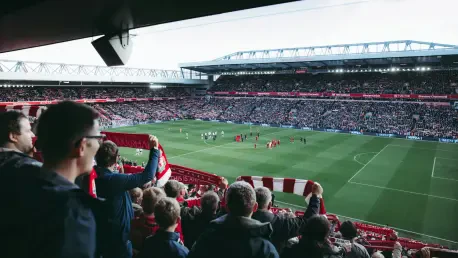

The familiar frustration of a stalled upload bar in a roaring stadium, trying to share a once-in-a-lifetime moment with the world, highlights a profound shift in how we experience live events. Today’s attendees are no longer passive observers but active broadcasters, generating a colossal wave of uplink data—the photos, videos, and live streams sent from their devices. This digital deluge overwhelms traditional cellular networks, which were engineered for an era focused on downloading content, not uploading it. The result is a connectivity bottleneck that leaves tens of thousands of fans with crippled data speeds and an inability to share their experiences in real time, a problem that demands a more intelligent and dynamic network infrastructure.
The Problem a Digital Traffic Jam in the Stands
Identifying the Bottlenecks Capacity and Interference
The primary reason modern smartphones struggle in crowded venues stems from a fundamental network limitation known as capacity. Every cellular network has a finite amount of bandwidth it can handle within a specific geographic area. When an unprecedented number of users—such as 80,000 fans in a stadium—attempt to transmit high-resolution data simultaneously, they exhaust this capacity almost instantly. This situation is akin to a city’s entire population trying to use a single highway on-ramp at the same moment, resulting in a complete standstill. This capacity overload leads directly to the symptoms users experience: uploads that take minutes instead of seconds, failed connection attempts, and a general feeling that the network has simply shut down. The strain is particularly acute on the uplink, as each video stream or photo upload is a significant data packet competing for a slice of the already overwhelmed network resources, creating a digital traffic jam that brings connectivity to a crawl for everyone.
Compounding the issue of limited capacity is the pervasive challenge of radio signal interference. In a high-density environment like a stadium, thousands of mobile devices are all broadcasting signals in close proximity to one another. This creates a chaotic radio frequency (RF) environment where signals clash and disrupt each other, significantly degrading the quality of the connection. Think of it as trying to have a conversation in a room where thousands of people are all shouting at once; it becomes nearly impossible to hear or be heard clearly. This interference forces mobile devices to increase their transmission power to overcome the noise, which not only drains their batteries faster but also adds to the overall RF chaos, worsening the problem for everyone nearby. This vicious cycle of interference and power escalation is a major contributor to poor network performance, as even a strong signal from the cell tower can be rendered useless by the overwhelming noise generated by surrounding devices, leading to unstable connections and data transmission errors.
Laying the Groundwork Proactive Network Preparation
Addressing these complex challenges effectively requires a strategic and meticulous preparation process that begins months before any event. Rather than reacting to network failures as they happen, forward-thinking network operators engage in a deeply proactive phase of optimization. This involves dispatching teams of engineers to the venue to conduct exhaustive on-site testing and analysis. Armed with sophisticated diagnostic equipment, these teams meticulously map the entire stadium, from the upper decks to the field level, to measure signal strength, identify potential RF dead zones, and understand the unique propagation characteristics of the structure. They run countless simulations, testing various network configurations and antenna placements to determine the optimal setup for handling the immense traffic load expected on game day. This painstaking groundwork is the foundation upon which a reliable event network is built, transforming network management from a reactive guessing game into a precise, data-driven science tailored to the specific architectural and environmental challenges of the venue.
The data gathered during this intensive pre-event phase is far more than a simple snapshot; it becomes the blueprint for a highly customized network solution. Engineers analyze patterns of potential interference, study how different materials in the stadium’s construction affect radio waves, and establish a comprehensive performance baseline. This detailed understanding of the venue’s unique RF personality is critical for configuring the network to perform under the extreme pressure of a capacity crowd. This information allows them to fine-tune power levels, adjust frequency allocations, and strategically position equipment to mitigate interference before it can impact users. Ultimately, this proactive preparation ensures that when fans begin to arrive, the network is not just active but is already pre-optimized for their specific behaviors and the venue’s distinct challenges, ready to handle the predictable surge in data traffic with stability and efficiency from the first minute to the last.
The Solution a Smarter More Adaptable Network
Introducing vRAN Intelligent and Reusable Configurations
The technological cornerstone of this modern approach is the virtualized Radio Access Network (vRAN). Unlike traditional, hardware-based networks with rigid configurations, a vRAN is a software-defined system that offers unprecedented flexibility and intelligence. It works by decoupling network functions from specialized hardware, allowing them to run as software on standard servers. This architecture enables the network to dynamically allocate resources—such as bandwidth and processing power—with incredible precision. During a high-traffic event, the vRAN system can intelligently coordinate across multiple frequency bands, seamlessly shifting traffic to less congested channels and directing capacity to the areas with the highest user density. This intelligent resource management is crucial for mitigating the strain of thousands of simultaneous uploads, ensuring that the network’s assets are used with maximum efficiency to deliver a smooth and consistent user experience, even under the most demanding conditions.
One of the most significant operational advantages of deploying a vRAN is the ability to create and save optimized network profiles for future use. The wealth of data collected and the precise configurations developed during the initial pre-event testing are not discarded after the event ends. Instead, these settings are encapsulated into a reusable profile, often referred to as an “event mode.” This means that for subsequent events at the same venue, network operators no longer need to start the optimization process from scratch. With a single command, they can activate the pre-configured event mode, instantly deploying a network setup that is already proven to deliver peak performance. This capability dramatically streamlines the preparation workflow, reduces the potential for human error, and ensures a consistent level of high-quality service for every event, turning a complex, months-long engineering project into a repeatable, push-button solution.
Adapting on the Fly Dynamic Coverage and Real-Time Monitoring
A defining feature of a vRAN-powered network is its remarkable ability to provide dynamic coverage that adapts to the fluid movement of people within a venue. A static network configuration cannot account for the shifting concentrations of users throughout an event. For instance, during a football game, the vast majority of data traffic originates from the stands. However, during a halftime show, a massive new source of traffic suddenly appears on the field itself, from performers, media, and event staff. A vRAN can respond to this shift in near real time, reallocating network resources and intensifying coverage directly over the field to handle the new demand, without degrading service for the fans in the seats. This agility to follow the crowd and direct capacity precisely where it is needed at any given moment is a transformative leap from older, rigid network designs, ensuring that performance remains high no matter where the action is happening.
This real-time adaptability is made possible by sophisticated network monitoring tools that provide operators with a live, comprehensive view of the network’s health and traffic patterns. These advanced dashboards visualize key performance indicators, such as data throughput, latency, and device connection density, across the entire venue as the event unfolds. This constant stream of information allows the network team to move from a reactive posture—waiting for user complaints to signal a problem—to a proactive one. By observing developing traffic trends, they can anticipate potential bottlenecks before they impact the user experience and make preemptive adjustments to resource allocation. This level of granular, real-time visibility and control represents a paradigm shift in live event network management, empowering operators to actively steer the network’s performance rather than simply reacting to its failures.
Proven Performance Under Pressure
The true measure of this advanced network strategy was demonstrated in a major collaboration with a Tier 1 U.S. operator preparing for significant sporting events. By implementing a vRAN solution designed to intelligently balance traffic and maximize the inherent capacity of the cellular network, the engineering teams achieved a level of performance and reliability that was nothing short of revolutionary. In fact, the cellular network’s performance became so robust and dependable that the operator made the unprecedented decision to completely turn off the venue’s auxiliary Wi-Fi network, entrusting the entire connectivity load to the vRAN system. This bold move was a testament to their confidence in the technology’s ability to handle the immense data demands of a sold-out stadium without a secondary network as a fallback, setting a new standard for what is possible in high-density wireless communication.
The results of this real-world deployment validated the technology’s promise in the most definitive way possible. Attendees throughout the venue experienced a dramatically improved connected experience, with download speeds that were more than double what had been previously available. Even more impressively, the critical uplink speeds—the bottleneck that has long plagued crowded events—saw a nearly fivefold increase. This monumental boost in performance meant that fans could seamlessly upload high-resolution videos and share their experiences on social media instantly, without the frustrating delays of the past. This successful implementation not only solved a long-standing challenge but also established a new benchmark for live event connectivity. It proved that through intelligent preparation and dynamic, software-defined network technology, the dream of providing fast, reliable service to every fan in a full stadium was no longer a future goal but a present-day reality.