
In an era defined by increasing global interconnectedness and heightened consumer expectations for speed and reliability, traditional supply chain models are straining under immense pressure. The once-acceptable gaps in tracking information between departure and arrival have become critical vulnerabilities, exposing businesses to risks ranging from theft and spoilage to costly delays. The Internet of Things (IoT) is emerging as a cornerstone technology poised to revolutionize this landscape, fundamentally shifting logistics operations from a reactive, often opaque state to a proactive, transparent, and data-driven ecosystem. This technological evolution promises not merely an incremental improvement but a foundational redesign of how goods are tracked, managed, and protected as they move across an increasingly complex world, enabling a new paradigm of operational intelligence and resilience.
The Dawn of Data Driven Logistics
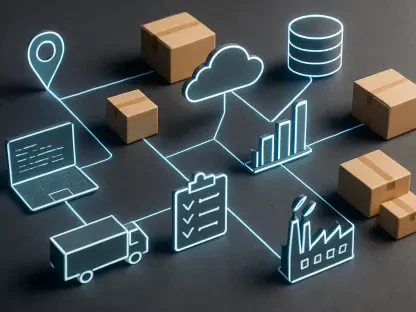
Historically, the journey of a product has been a logistical “black box,” with visibility limited to intermittent scans at major checkpoints like a port or distribution center. IoT sensors effectively shatter this opacity by providing a continuous, real-time stream of data that illuminates every stage of the supply chain. This newfound transparency is the bedrock upon which all other benefits are built, transforming logistics from a series of disconnected, siloed events into a single, cohesive, and fully visible process. When deployed across assets—from individual packages to shipping containers and transport vehicles—these compact devices create an interconnected monitoring network. This constant flow of information moves beyond simple location pings to offer a comprehensive view of an asset’s condition and environment, providing stakeholders with the granular detail needed to make informed, timely decisions and manage their operations with unprecedented precision.
The true power of this technology lies in its ability to empower logistics operators to move from a reactive model of damage control to a proactive one of risk mitigation. Modern IoT sensors do more than just track location; they are equipped to monitor a wide array of physical and atmospheric conditions, including temperature, humidity, shock, and vibration. This constant feedback loop allows companies to anticipate and prevent issues before they escalate into costly problems. For instance, a sudden spike in temperature within a refrigerated container carrying perishable foods or life-saving pharmaceuticals can trigger an immediate alert, allowing for intervention before the goods are compromised. Similarly, a sensor detecting a severe jolt could signify that a container has been dropped or is being forcibly breached, enabling a rapid security response. This capability to foresee and preemptively address disruptions is what truly defines the next generation of supply chain management.
From Theory to Tangible Value
The transformative potential of this technology is not theoretical; it has been proven in some of the most demanding logistical operations in recent history. A compelling example is DHL’s use of IoT sensors during the COVID-19 pandemic to manage the complex cold-chain logistics for over one billion vaccine doses delivered to 160 countries. This massive undertaking, executed amid unprecedented global instability, showcased the technology’s capacity to ensure the integrity of life-saving products under the most demanding conditions by monitoring temperature at every point in the journey. Beyond such specialized use cases, IoT creates a “heartbeat” for general cargo, providing a continuous stream of location and status data. This offers far more precise and predictable delivery timelines compared to traditional systems, reducing the incidence of lost or misrouted cargo and significantly improving overall operational efficiency and customer satisfaction.
The value of IoT extends far beyond parcel delivery into the industrial and agricultural sectors, where it addresses critical challenges of maintenance and waste. Companies like Caterpillar embed IoT sensors in their heavy machinery to actively monitor for subtle changes in vibration and temperature that serve as early indicators of wear and tear. This data allows managers to schedule maintenance proactively, before a component fails, thereby minimizing costly operational downtime and extending the lifespan of critical equipment. This same principle of detailed monitoring has a profound economic and humanitarian impact on the global food supply. With an estimated 1.4 billion tons of food wasted globally in 2020, much of it due to supply chain inefficiencies, the implementation of transparent, IoT-powered systems that ensure proper handling and environmental control offers a powerful tool to reduce spoilage and improve food security on a global scale.
Navigating the Complexities of Implementation
Despite the clear and compelling benefits, deploying IoT sensor networks on a global scale presents significant challenges that require strategic planning. Many established companies operate on older, legacy IT systems that were not designed to handle the massive influx of real-time data generated by thousands of sensors. Without a robust integration strategy, businesses risk creating “data silos,” where valuable information is isolated within specific departments and cannot be leveraged to generate the holistic operational insights needed for system-wide improvements. Furthermore, ensuring seamless and reliable connectivity for sensors as they move across international borders and through different modes of transport—from trucks and ships to planes—is a complex technical hurdle. Maintaining a consistent data link through areas with varying network coverage, including cellular, satellite, LPWAN, and Wi-Fi, is essential for the system to function effectively.
Alongside these technical hurdles, organizations must confront significant cybersecurity and financial considerations. As data-transmitting endpoints, each IoT sensor represents a potential entry point for malicious actors, making the entire network a target. Protecting this infrastructure from exploitation requires robust cybersecurity protocols, including end-to-end data encryption and strict authentication measures, especially when transporting high-value or regulated goods. Moreover, while the cost per sensor is declining, the initial investment in hardware, connectivity plans, and the corresponding data management platform for a global network can be substantial. Businesses must conduct a careful cost-benefit analysis, weighing this upfront expenditure against the long-term returns realized from reduced spoilage, prevented theft, and increased operational efficiency to justify the investment and ensure a scalable, sustainable deployment.
A New Paradigm of Strategic Visibility
The adoption of IoT sensor technology fundamentally reshaped the architecture of the global supply chain. By converting once-opaque logistical processes into transparent, accountable, and highly efficient data-driven operations, it provided an unprecedented level of strategic visibility. This newfound clarity empowered organizations with the real-time tracking, predictive analytics, and proactive intervention capabilities necessary to navigate an increasingly volatile global market. The ability to enhance decision-making and ensure the protection of goods throughout their journey became more than just an operational advantage; it was a critical component for building the dependable, efficient, and resilient global networks that modern commerce demanded. This shift marked the evolution of logistics from a cost center focused on movement to a strategic asset capable of delivering competitive advantage.