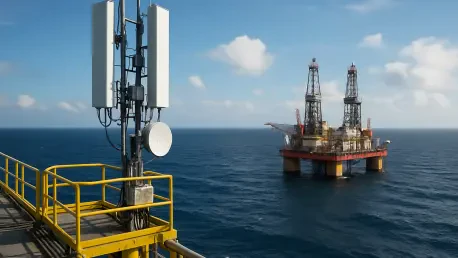

Imagine a world where the vast, isolated stretches of the North Sea and the Gulf of Mexico become hubs of cutting-edge digital innovation, where workers on remote oil rigs and wind farms are connected as seamlessly as those in urban offices. This vision is becoming reality through a groundbreaking partnership between Nokia and Tampnet, a leading maritime operator and private network provider. Their collaboration is set to transform offshore connectivity by rolling out 5G technology across a sprawling network of platforms, rigs, and vessels. This isn’t just about faster internet—it’s about enabling safer operations, boosting automation, and unlocking digital tools that were once unthinkable in such challenging environments. As industries like oil and gas push for greater efficiency and safety in remote locations, this deal signals a major leap forward, promising to redefine how maritime operations communicate and function in the harshest of conditions.
Transforming Offshore Networks with 5G Innovation
The heart of this partnership lies in Nokia’s state-of-the-art AirScale 5G radios, which are replacing older systems across Tampnet’s global operations. This ambitious upgrade spans over 120 active base stations with plans to cover up to 400 offshore sites, including floating production units, wind farms, and a diverse fleet of vessels. What sets this initiative apart is its focus on meeting the evolving demands of offshore industries, where reliable communication isn’t a luxury but a necessity. From enabling real-time data sharing for automation to ensuring worker safety through constant connectivity, 5G offers solutions that older technologies simply couldn’t match. Moreover, Tampnet’s early rollout on the Aker BP Edvard Grieg rig in the Norwegian continental shelf has already shown promising results, setting a benchmark for what’s possible. This move isn’t just a technical upgrade; it’s a strategic response to the growing need for robust digital infrastructure in some of the world’s most isolated workplaces, paving the way for a new era of operational efficiency.
Setting a New Standard in Maritime Telecommunications
Looking at the broader landscape, this collaboration stands out amid a rising trend of advanced mobile tech adoption in the maritime sector. Competitors like Telenor Maritime are also diving into LTE and 5G-ready solutions, particularly in regions like the Norwegian North Sea, but Tampnet’s global reach—extending to the U.S. coast—gives it a unique edge. Their network serves not just drilling rigs but also service vessels, fishing boats, and even yachts, ensuring connectivity for diverse users in harsh environments. Industry insights, including perspectives from experts at SNS Telecom & IT, highlight a clear consensus: high-speed, reliable communication is now mission-critical for offshore operations. This deal positioned Nokia as a frontrunner in delivering such solutions, while also reflecting a collective industry push toward digital transformation. As this partnership unfolded, it became a beacon of what’s achievable when technology meets the unique challenges of the sea, offering safer, smarter ways to operate across vast and often unpredictable waters.