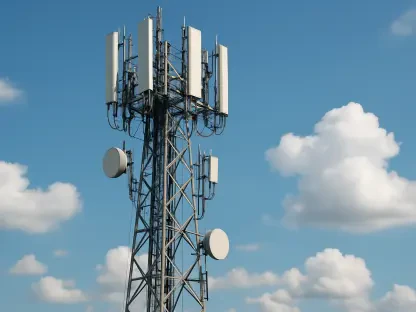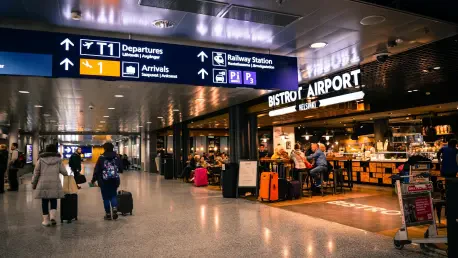

The familiar ritual for many air travelers of logging onto a free airport Wi-Fi network to save on mobile data may now be an outdated strategy for achieving the best internet performance. A comprehensive analysis of the 50 busiest airports in the United States reveals that cellular networks are now delivering significantly faster connectivity, fundamentally altering the digital landscape for passengers waiting to board their flights. This shift prompts a reevaluation of best practices for staying connected while on the go, as the convenience of free Wi-Fi is increasingly overshadowed by the superior speed and inherent security of a personal mobile data connection. The study, which collected data throughout the first half of 2025, presents a compelling argument that for most travelers, the fastest and most reliable internet experience in the terminal is already in their pocket. This development not only highlights the rapid advancements in cellular technology but also raises important questions about the future role and relevance of public Wi-Fi infrastructure in high-traffic transportation hubs.
The Cellular Advantage in Numbers
A Clear Performance Divide
The quantifiable difference in speed between the two connectivity options is staggering, painting a clear picture of cellular dominance within the airport environment. The report’s central finding indicates that the median download speed on cellular networks reached an impressive 219.24 Mbps, a figure that more than doubles the 101.39 Mbps median speed provided by airport Wi-Fi systems. This performance gap translates into a dramatically different user experience; for the business traveler, it means effortlessly downloading large presentation files or participating in a high-definition video conference without lag, while for the leisure traveler, it ensures smooth streaming of movies and rapid uploading of vacation photos. Beyond sheer speed, the use of a personal cellular network sidesteps the long-standing cybersecurity risks associated with public Wi-Fi, where unsecured connections can expose users to data theft and privacy breaches. This dual advantage of superior performance and enhanced security provides a powerful incentive for passengers to rely on their mobile data plans as their primary source of internet access.
The comprehensive scope of the analysis, covering 50 of the nation’s most transited airports, lends significant weight to the conclusion that cellular superiority is a widespread trend, not an isolated phenomenon. The data, meticulously gathered during the first six months of 2025, reflects the current state of a technological race where cellular infrastructure has decisively pulled ahead. This evolution is largely driven by the maturation of 5G networks, which are engineered to handle high user density and deliver fiber-like speeds wirelessly—capabilities that are perfectly suited to the crowded and demanding environment of an airport terminal. In contrast, many public Wi-Fi networks have not kept pace, often struggling under the load of thousands of simultaneous users. Consequently, the once-reliable free Wi-Fi hotspot has, in many major hubs, been relegated to a secondary, slower alternative for travelers who prioritize high-speed, dependable connectivity for work or entertainment before their flight.
Carrier Competition Heats Up
Within the competitive landscape of mobile providers, Verizon has emerged as the definitive leader for airport connectivity. The study crowned Verizon as the top performer, substantiating this claim with data showing its network was faster than the local Wi-Fi in an overwhelming 34 of the 50 airports surveyed. Reinforcing its dominant position, Verizon also delivered the fastest overall median download speeds among all carriers in 26 of those locations, nearly double its closest competitor. This commanding performance is not accidental; it reflects a strategic and sustained investment in network infrastructure, particularly in high-density, high-value locations like major international airports. For frequent flyers, this data provides a clear differentiator, positioning Verizon as the premium choice for those who cannot afford to compromise on internet speed and reliability while traveling. This market-leading performance underscores how targeted network enhancements can translate directly into a tangible competitive advantage, attracting and retaining customers who depend on seamless connectivity.
While Verizon claimed the top spot, the analysis also revealed a distinct hierarchy among the other major carriers, with T-Mobile securing a strong second-place position. T-Mobile’s network outperformed airport Wi-Fi in 32 of the 50 locations and boasted the fastest overall cellular speeds in 16 of them, demonstrating robust and highly competitive performance. This places the carrier well ahead of AT&T, which followed as a distant third. Although AT&T’s network was faster than Wi-Fi in 28 airports, it held the speed crown in only 8 locations, indicating a noticeable performance gap compared to its primary rivals in these specific environments. This stratification among providers highlights that while cellular service as a whole has surpassed airport Wi-Fi, the quality of that experience can vary significantly based on a traveler’s chosen carrier. These findings offer valuable insights for consumers, suggesting that the optimal choice for a mobile plan may depend on which carrier has prioritized network performance in the places they frequent most.
Unpacking the Wi-Fi Lag
The Burden of Outdated Infrastructure
The primary culprit behind the underperformance of airport Wi-Fi is the widespread prevalence of aging and inadequate technology. Data from the report reveals a critical infrastructure deficit, with a staggering 70% of the surveyed airports still operating on Wi-Fi 5 or even older, less efficient wireless standards. These legacy systems are ill-equipped to handle the demands of modern internet usage and the sheer volume of connected devices in a bustling terminal. According to Ookla analyst Kerry Baker, upgrading this infrastructure is a monumental task, far more complex and costly than a simple home router replacement. Such large-scale projects are tied to slow-moving capital budget cycles and intricate logistical planning, making it difficult for airports to keep pace with the blistering speed of technological advancement seen in the commercial cellular industry. This technological inertia creates a bottleneck, leaving passengers with a service that often feels sluggish and outdated compared to the advanced 5G networks readily available on their smartphones.
A secondary, yet significant, factor diminishing the urgency for airports to invest in ground-based Wi-Fi is the remarkable improvement of in-flight connectivity. The recent deployment of advanced satellite internet services, such as Starlink, on commercial aircraft has fundamentally changed the traveler’s digital experience. Passengers can now access high-speed internet from their seats, a luxury that was once unreliable or nonexistent. This newfound ability to stay productively connected during the flight has reduced the demand and perceived necessity for cutting-edge Wi-Fi performance inside the terminal. Travelers may be more tolerant of slower speeds while waiting at the gate, knowing that a fast and stable connection awaits them on board. This shift in passenger expectations has inadvertently created a disincentive for airport authorities to allocate the substantial financial and operational resources required for a comprehensive Wi-Fi network overhaul, further cementing cellular’s position as the superior on-the-ground option.
Exceptions to the Rule
Despite the overwhelming trend of cellular superiority, the analysis identified a handful of airports where public Wi-Fi has managed to maintain a competitive edge. At several key hubs, the free network proved to be the faster option, defying the national pattern. Travelers passing through Cincinnati/Northern Kentucky International, San Francisco International, Orlando International, and Hartsfield–Jackson Atlanta International found that the local Wi-Fi delivered better performance than cellular services. These locations serve as important exceptions, suggesting that targeted investment in modern Wi-Fi infrastructure can still yield a superior user experience. Furthermore, at Baltimore/Washington International Thurgood Marshall Airport, the performance between Wi-Fi and cellular was a statistical dead heat, demonstrating that in some cases, the two technologies can offer comparable levels of service. These outliers highlight that the connectivity landscape is not entirely uniform and that local infrastructure decisions play a crucial role in determining the best connection option.
The findings ultimately painted a new picture of the digital experience for the modern air traveler. It became clear that the long-held habit of automatically connecting to free airport Wi-Fi was no longer the most effective strategy for achieving optimal internet speeds. The comprehensive data presented a strong case for relying on personal mobile data in the vast majority of major U.S. airports, where cellular networks consistently offered a faster, more reliable, and more secure connection. This reality reflected how the rapid evolution and deployment of 5G technology had outpaced the slower, more bureaucratic upgrade cycles of public Wi-Fi systems. The result was a significant shift that empowered travelers with better connectivity options but also introduced a new need for awareness, as the best choice between Wi-Fi and cellular depended more than ever on the specific airport and mobile carrier.