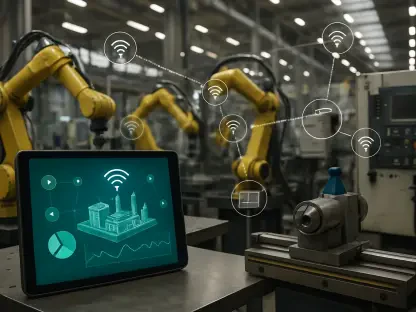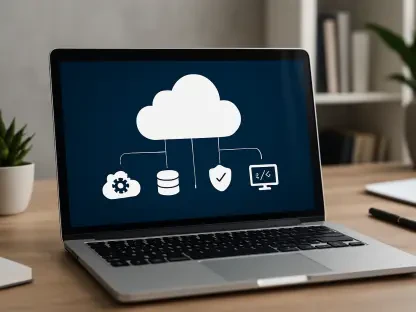

The seamless, intelligent world promised by 6G connectivity, where the metaverse and autonomous systems are everyday realities, hinges on a network infrastructure of unprecedented complexity. This next-generation network must be resilient, efficient, and intelligent enough to handle unimaginable data loads with near-zero latency, presenting a monumental challenge for operators. To navigate this complexity and unlock 6G’s full potential, a revolutionary approach to network design, management, and optimization is required. This is where digital twin technology transitions from a beneficial tool to an absolutely essential foundation. A digital twin is not merely a static model but a dynamic, high-fidelity virtual replica of the entire 6G ecosystem. This living simulation, powered by artificial intelligence and machine learning, is continuously synchronized with its real-world counterpart through a constant flow of data. It mirrors the physical network’s behaviors, unique characteristics, and operational states, creating a perfect environment to analyze scenarios, predict outcomes, and automate intelligent responses, ensuring the 6G vision becomes a stable and reliable reality.
Simulating the Future in a Risk-Free Sandbox
One of the most transformative capabilities a digital twin offers network operators is the ability to generate and analyze a multitude of hypothetical “what-if” scenarios in a completely isolated, risk-free virtual environment. By creating a comprehensive digital replica of the entire 6G network—spanning from the physical infrastructure of devices and towers to the intricate layers of network operations and software—this technology can simulate dynamic interactions and dependencies under countless conditions. This virtual sandbox allows engineers to rigorously test the network’s resilience against a sudden surge in traffic during a global event, model the impact of a new software deployment before it goes live, or understand the cascading effects of a critical hardware failure. All of this experimentation and analysis occurs without ever touching or endangering the live production network, providing an unparalleled level of safety and control. This capability is groundbreaking for network management, enabling a shift from reactive problem-solving to proactive, strategic planning for a more robust and reliable network.
This powerful simulation is fueled by a rich combination of historical data, real-time feeds from the live network, and even synthetically generated data that fills in any potential gaps, allowing the twin to model forward-looking scenarios with remarkable accuracy. Operators can measure Key Performance Indicators (KPIs) not just for the network’s current state but for a vast array of potential future states, gaining deep insights into how the network will behave under pressure. This foresight empowers teams to surface future performance trends, identify potential bottlenecks, and anticipate crises long before they occur. The ability to orchestrate and study complex scenarios in a controlled environment means that potential issues can be resolved before they impact a single user. This proactive approach fundamentally changes the nature of network maintenance, empowering operators to avert disruptions, optimize performance strategically, and ensure the “always-on” connectivity that 6G promises.
Fueling the AI-Native Network
There is a broad consensus within the industry that 6G will not just use AI but will be an “AI-native” network, meaning artificial intelligence will be deeply integrated into its very fabric. From the chipsets and hardware protocols to the highest levels of the software stack, AI will be the driving force behind a network that embodies principles of self-healing, self-optimizing, and self-organizing behavior. The ultimate goal is to create a truly intelligent infrastructure that operates in an intent-driven, autonomous fashion, capable of managing its own resources and adapting to changing conditions without human intervention. However, the success of this ambitious AI-native architecture is fundamentally dependent on one critical resource: the quality and richness of the data used to train its machine learning algorithms. This is precisely where the digital twin proves indispensable, acting as the primary data engine that fuels the intelligence of the entire 6G network.
The data output from a network digital twin is incredibly valuable for this purpose, providing a continuous stream of context-rich, high-fidelity information that far surpasses what could be collected from the live network alone. This data feed keeps the network’s embedded AI models constantly updated with the latest performance metrics and environmental conditions, ensuring they are always operating with the most accurate and relevant information. By training on this superior dataset, the AI can make more precise inferences and, consequently, sounder operational decisions. This is a non-negotiable requirement for enabling a self-driving network that can autonomously manage resources, route traffic efficiently, and heal itself from faults. The digital twin, therefore, serves as the cognitive foundation of 6G, guaranteeing that its automated systems are not only intelligent but also effective, reliable, and perfectly attuned to the real world they manage.
Driving Sustainability and Efficiency
A significant challenge associated with each successive generation of wireless technology has been its escalating energy consumption. With its promise of extreme speeds and its reliance on power-hungry artificial intelligence processes, 6G is expected to have substantial energy demands that could dwarf those of its predecessors. This trend not only increases operational costs for service providers but also adds to the network’s environmental impact and can place a considerable strain on aging power grid infrastructures. Addressing this issue is not just a matter of economic sense but also a critical component of responsible technological advancement. Digital twins offered a powerful and sophisticated solution for optimizing the power draw of 6G networks, providing the tools needed to build a more sustainable digital future. By creating a detailed virtual model of energy usage, operators gained the ability to balance high performance with environmental responsibility.
The implementation of this technology provided granular, real-time insights into traffic patterns and their corresponding energy usage, which allowed the digital twin to identify periods of peak and low demand across every part of the network. This deep understanding of network behavior enabled operators to dynamically optimize resource utilization with unprecedented precision. Furthermore, the predictive capabilities of the twin allowed operators to predetermine demand variations and proactively engineer the most energy-efficient network configurations ahead of time. This led to the deployment of sophisticated energy-saving strategies, such as dynamically turning network resources on and off based on the hour of the day and real-time traffic load. As a result, operators were able to minimize energy wastage, significantly reduce their overall carbon footprint, and promote a more sustainable and cost-effective network infrastructure for the 6G era.