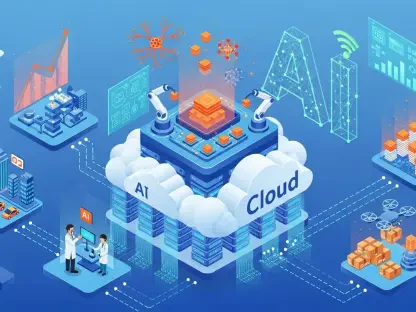

The relentless acceleration of artificial intelligence is fundamentally reshaping enterprise infrastructure, creating a level of operational complexity that traditional, human-driven management models can no longer sustainably handle. The AgenticOps model represents a significant advancement in the enterprise infrastructure management sector. This review will explore the evolution of this autonomous operations framework, its key features as integrated into Cisco’s portfolio, its performance goals, and the impact it is poised to have on networking, security, and observability. The purpose of this review is to provide a thorough understanding of the technology, its current capabilities, and its potential future development.
An Introduction to the AgenticOps Framework
Cisco’s AgenticOps model is architected around a foundational shift in operational philosophy, transitioning enterprise management from a reactive posture to a proactive, autonomous system. This framework is built on the concept of agentic AI, which involves intelligent systems that can independently orchestrate complex workflows, manage data exchanges, and make decisions without direct human intervention. The goal is to create an infrastructure that is not just connected, but self-aware and self-healing.
This evolution is a direct response to the escalating complexity introduced by the widespread adoption of AI. As organizations deploy countless AI agents that communicate and operate at machine speed, the underlying infrastructure must adapt. AgenticOps aims to address this challenge by unifying the traditionally siloed domains of networking, security, and observability into a single, cohesive management platform. By creating a unified system, the framework seeks to eliminate the friction, cost, and risk associated with managing disparate tools.
Key Features and Core Technology Integrations
Comprehensive Enhancements to the Security Portfolio
A central pillar of the AgenticOps integration involves substantial upgrades to Cisco’s security platforms, designed to deliver deep, AI-native visibility and intelligent control over modern threats. The evolution of Cisco AI Defense showcases this with features engineered for the unique demands of AI traffic. Its AI traffic optimization capabilities can now distinguish and prioritize communications between AI agents, using advanced techniques to ensure low-latency interactions even during traffic surges. Moreover, to address governance, the platform introduces an AI Bill of Materials, providing a centralized inventory of all AI assets for comprehensive supply-chain visibility.
Further security enhancements focus on proactive threat identification and policy enforcement within AI workflows. The system now supports the Model Context Protocol (MCP), enabling it to discover and inventory MCP servers to assess risk and apply centralized governance over models and datasets. Cisco has also expanded its adaptive security testing with advanced algorithmic red teaming, which uses sophisticated interaction scenarios to uncover vulnerabilities in models and agents based on frameworks from NIST, MITRE, and OWASP. This is complemented by an intent-aware inspection feature that analyzes the underlying purpose of an agent’s request, allowing it to block malicious intent that traditional security tools might miss.
Autonomous Operations in Core Networking Infrastructure
The AgenticOps model extends its autonomous capabilities deep into Cisco’s core networking platforms, transforming operations from the data center to the enterprise campus. For campus and branch networks, the framework enables autonomous troubleshooting agents that can conduct end-to-end investigations into user connectivity issues. These agents apply advanced reasoning to telemetry data, test multiple hypotheses, and execute precise, deterministic remediations to resolve problems without manual intervention.
Within the data center, the Cisco Nexus One platform now leverages AgenticOps for intelligent event correlation and early threat detection, providing prescriptive recommendations to optimize performance for both traditional and AI-driven workloads. Similarly, Cisco firewalls have been infused with proactive analysis capabilities that examine traffic patterns to recommend more robust zero-trust controls for sensitive applications. This is further enhanced by the Splunk Observability Cloud, which now offers AI agent monitoring to visualize complex workflows and help organizations mitigate common AI risks like model bias and data leakage.
The Strategic Vision Driving Industry Trends
The strategic vision underpinning AgenticOps reflects a fundamental reevaluation of the network’s role in the age of agentic AI. The network is no longer viewed as a mere conduit for data but as the foundational layer for establishing trust, guaranteeing performance, and securing a competitive advantage. In a world where autonomous agents communicate and transact at scale, the integrity and reliability of the underlying infrastructure become paramount. This perspective positions the network as the central nervous system of an AI-powered enterprise.
This vision also directly addresses a powerful industry trend: the consolidation of siloed management tools. For years, organizations have struggled with the friction, cost, and blind spots created by assembling disparate solutions for networking, security, and observability. AgenticOps champions a unified platform approach where these functions operate as a cohesive system. By leveraging system-wide awareness and cross-domain telemetry, the model aims to reposition infrastructure from a necessary cost center into a strategic asset that generates value by enabling scalable and secure AI initiatives.
Real-World Applications and Use Cases
In practical terms, the AgenticOps framework is being deployed across enterprise environments to solve tangible, high-stakes challenges introduced by AI. One critical use case is ensuring reliable, low-latency communication between AI agents, which is essential for applications in finance, manufacturing, and autonomous systems where split-second decisions are critical. The framework’s intelligent traffic management capabilities automatically identify and prioritize this sensitive traffic to maintain performance.
Another significant application is enforcing governance over how AI models and agents interact with corporate data and third-party tools. AgenticOps provides the visibility and control needed to implement policies that prevent data leakage and unauthorized actions, a crucial requirement for maintaining compliance and security. Furthermore, the model is used to automate the resolution of complex user connectivity issues, where its autonomous agents can diagnose and fix problems without human intervention. This end-to-end visibility into agent workflows helps organizations build trust in their AI models by mitigating risks like bias and hallucinations.
Challenges and Developmental Considerations
Despite its ambitious scope, the AgenticOps framework faces notable challenges on both technical and market fronts. The technical hurdles are significant, centering on the need to ensure the absolute reliability and precision of autonomous remediation. An incorrect automated action could have cascading negative impacts, making the development of foolproof reasoning and validation mechanisms a top priority. Demonstrating this level of dependability is essential for earning the trust of enterprise IT teams accustomed to manual oversight.
On the market side, customer adoption presents a considerable obstacle. Organizations with deep investments in existing, multi-vendor toolchains may be hesitant to embrace a unified platform, regardless of its theoretical benefits. Proving a clear and compelling return on investment is critical to overcoming this inertia. The phased rollout of certain advanced features, such as the full AgenticOps capabilities in Nexus One, indicates that this is a long-term developmental journey, and customers will need to align their adoption strategies with this evolving roadmap.
Future Outlook and Long-Term Impact
Looking ahead, the trajectory for AgenticOps points toward deeper, more sophisticated closed-loop automation. Future developments will likely focus on expanding the framework’s predictive capabilities, allowing it to anticipate potential issues and take preemptive action before performance is impacted. This evolution will move the model beyond prescriptive recommendations to fully autonomous operational management, where the infrastructure intelligently adapts to changing demands in real time.
The long-term impact of this model on the industry could be transformative. By providing a structured, intelligent foundation for automating complex operations, AgenticOps has the potential to help organizations scale their AI initiatives without the corresponding linear increase in human headcount or operational risk. This could fundamentally alter IT staffing models and skill requirements, placing a greater emphasis on strategic oversight rather than manual intervention. Ultimately, frameworks like AgenticOps may become the standard for managing the intricate technological landscape of the future.
Summary and Final Assessment
The AgenticOps framework emerged as a strategic and timely response to the profound operational complexity driven by artificial intelligence. Its core design addressed the critical need for a unified platform that could intelligently manage networking, security, and observability as a single, cohesive system rather than a collection of siloed tools. The integration of autonomous capabilities across Cisco’s portfolio, from security and SASE to core data center and campus networking, provided a compelling vision for the future of infrastructure management.
By focusing on proactive analysis, autonomous remediation, and deep, AI-native visibility, the model offered a structured foundation for automating intricate operations while maintaining essential governance and reliability. While facing challenges related to market adoption and the technical demands of ensuring flawless autonomous action, AgenticOps represented a decisive move toward an infrastructure that could scale intelligently. Its potential to enable organizations to expand AI initiatives without a proportional increase in risk or headcount positioned it as a significant development for modern enterprises navigating an increasingly autonomous world.