
The familiar hum of artificial intelligence operating in the background of digital life is quickly amplifying into a distinct voice at the collaboration table, signaling a fundamental shift in how teams will work together. For years, AI in meetings has been a passive assistant, dutifully transcribing words and setting reminders after the fact. Now, a consensus among industry analysts indicates a more profound transformation is underway. The technology is rapidly maturing from a subordinate tool that requires explicit commands into an autonomous agent that actively participates, contributes, and even executes tasks within the conversational flow of a meeting. This evolution promises to redefine the very nature of professional collaboration, turning passive observation into proactive partnership.
Beyond the Hype: Setting the Stage for AI’s New Role in Collaboration
The groundwork for AI’s expanded role has been laid throughout this year, with major technology firms demonstrating capabilities that once seemed like distant science fiction. If the current period represents a “moon landing” for collaborative AI—a successful proof of concept—then the coming year is poised to be the construction of the “moon base,” where these technologies become fully operational and integrated into daily workflows. This shift marks the point where organizations move beyond experimentation and begin building a permanent, reliant infrastructure upon this new technological frontier, embedding AI as a core component of team productivity rather than an optional add-on.
This transition from a passive tool to an active participant is more than a simple upgrade; it fundamentally redefines productivity. Previously, AI’s function was to capture and organize information for later human action. The emerging paradigm, however, embeds execution directly into the conversation. This change eliminates the administrative lag between discussion and action, compressing workflows and freeing human talent to focus on strategy, creativity, and complex problem-solving. Productivity is no longer measured solely by the efficiency of post-meeting tasks but by the seamless integration of decision-making and implementation in real time.
The imminent remaking of the modern meeting is not driven by a single innovation but by the convergence of several powerful trends. These include the rise of proactive, autonomous agents that function as teammates; the deployment of hyper-realistic digital avatars that can attend meetings on a user’s behalf; the essential development of robust security shields to defend against deception; the creation of intelligent environments that direct meetings like a cinematic experience; and the introduction of private coaching to enhance personal communication effectiveness. Together, these forces are forging a new landscape for collaboration that is more intelligent, secure, and dynamically engaging than ever before.
The Core Transformation: How AI Is Redefining Participation, Presence, and Security
The next wave of collaborative technology moves beyond incremental improvements to fundamentally reshape the core tenets of a meeting: who participates, how they are present, and the security that underpins their interactions. This transformation is not about better video quality or faster transcriptions; it is about introducing new forms of intelligence and identity into the collaborative space. The introduction of autonomous agents, digital stand-ins, and sophisticated security protocols collectively re-engineers the meeting from a simple communication channel into a dynamic and intelligent ecosystem where the lines between human and machine contribution begin to blur.
The Autonomous Agent: Your Newest, Most Efficient Team Member
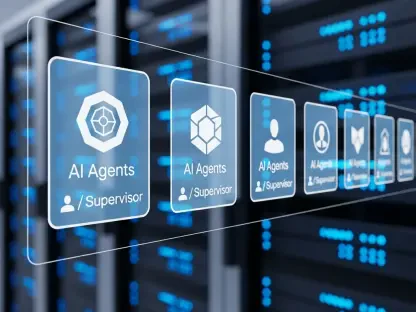
The most revolutionary development is the emergence of the agentic AI participant, an entity that operates without awaiting direct commands. Unlike previous AI assistants that responded to queries, this new generation of AI functions as a proactive teammate with comprehensive access to an organization’s knowledge base, including emails, documents, and internal chats. It joins meetings not as a passive recording device but as an active contributor, prepared to act on the flow of conversation with full context and autonomy.
This proactivity is already being demonstrated in platforms from industry leaders like Zoom and Microsoft, where AI agents are designed to eliminate post-meeting friction. For instance, when team members verbally agree on a follow-up, the agent does not just note it as an action item. It cross-references calendars, finds a mutually available time slot, and dispatches the invitation before the meeting concludes. Should a project ticket be mentioned, the agent can instantly access the project management system and update it with relevant notes, ensuring that conversational decisions are translated immediately into operational tasks. This seamless integration of work and discussion represents a monumental leap in efficiency.
By embedding execution directly into the conversation, these AI teammates deliver unprecedented productivity gains. The administrative burden that traditionally follows a meeting—compiling notes, assigning action items, scheduling next steps, and locating relevant files—is absorbed by the AI in real time. This allows human participants to remain fully engaged in high-value strategic thinking and creative brainstorming. The gap between decision and action effectively disappears, accelerating project timelines and transforming the meeting from a planning session into a work session.
The Digital Stand-In: Cloning Yourself for Unparalleled Presence
Addressing the persistent challenge of being in two places at once, the concept of the digital twin is moving swiftly from theory to practical application. This technology allows for the creation of a hyper-realistic AI avatar capable of attending meetings on a person’s behalf. These digital stand-ins can deliver scripted presentations, provide routine updates, and even field questions by accessing a pre-approved repository of information, effectively allowing an individual to maintain a presence in multiple concurrent discussions.
The viability of this technology was showcased earlier this year when Zoom CEO Eric Yuan used his own digital twin to deliver a corporate report, signaling its readiness for high-stakes executive applications. The primary use case is for leaders and managers to delegate their presence to lower-priority but still necessary meetings that conflict with more critical commitments, thereby preventing workflow bottlenecks. This capability to “clone” oneself is seen by proponents as a significant driver of organizational efficiency and scale.
However, the rise of synthetic representatives is a source of intense debate, forcing a difficult conversation that pits productivity against authenticity. Critics raise valid concerns about the erosion of trust and personal connection that underpins effective teamwork, arguing that interacting with a synthetic human devalues the collaborative experience. The phenomenon of the “uncanny valley”—the disquieting feeling produced by avatars that are nearly, but not perfectly, human—presents another significant hurdle. Despite this skepticism, the perceived productivity benefits are so compelling that development is proceeding rapidly.
The Unseen Guardian: Building a Foundation of Trust in a Synthetic World
The advent of realistic AI avatars and the pervasive threat of malicious deepfakes make robust identity verification an absolute necessity. Without a reliable method to confirm a participant’s authenticity, the foundation of trust in video communication would quickly crumble. Consequently, a non-negotiable security layer is emerging in the form of deepfake defense shields, designed to protect the integrity of every virtual interaction and ensure that users can confidently know who they are speaking with.
Major communication platforms are responding to this need by developing systems that provide real-time cryptographic verification for live video feeds. This technology functions much like the verified checkmarks on social media profiles but is applied dynamically to a person’s face during a meeting. Biometric watermarks, imperceptible to the human eye, would be embedded in the video stream, allowing the system to instantly flag any feed that has been synthetically generated or tampered with, providing a powerful defense against deception.
This security framework is critical for enabling the next era of collaboration, especially in high-stakes negotiations, financial discussions, and sensitive personnel matters. The user interface is expected to feature clear visual cues, such as distinct icons, that differentiate between a “verified human source” and an “authorized AI avatar.” This allows participants to make informed judgments about the nature of their interactions, providing the essential layer of trust required for a world where not every face on screen is human.
The Intelligent Environment: AI as a Director and a Coach
The meeting experience itself is being upgraded through AI that functions as both a cinematic director and a personal coach. Moving far beyond simple speaker-tracking, this new generation of in-room intelligence directs the visual flow of a meeting with the sophistication of a human filmmaker. Using “gaze attention” and “attention-based switching,” the AI analyzes non-verbal cues to understand the social dynamics of the room. If a speaker makes a point and glances at a colleague, the AI can intelligently cut to the colleague’s reaction or create a two-shot framing their interaction, making the experience more engaging for remote viewers.
Simultaneously, AI is being deployed to offer private, real-time sentiment coaching to individual participants. This feature acts as a confidential feedback mechanism, analyzing the vocal tones, speech patterns, and micro-expressions of other attendees to provide the speaker with a nuanced understanding of how their message is being received. It might appear as a private “mood monitor,” indicating if the audience seems engaged, confused, or disinterested, and can offer concrete tips like “you are speaking too quickly” or “the team may need clarification on that point.”
This dual role for AI—enhancing both the shared environment and individual performance—promises to make meetings more effective on multiple levels. The cinematic director elevates the quality of hybrid collaboration, making it easier for remote participants to read room dynamics and stay engaged. At the same time, the personal sentiment coach provides an unprecedented tool for professional development, allowing individuals to hone their communication and leadership skills in the context of their daily work.
From Theory to Practice: Integrating the AI Teammate into Your Workflow
Synthesizing these converging capabilities reveals the outline of a next-generation meeting experience. It is a space where autonomous agents execute tasks, digital avatars extend presence, security is algorithmically guaranteed, and the environment itself is intelligently managed to optimize engagement and communication. This is no longer a theoretical future but a practical reality that organizations must prepare to integrate into their core operational strategies to remain competitive.
Preparing teams for this new era of collaboration requires more than just a technology rollout; it demands a strategic imperative focused on cultural and operational readiness. Leaders must establish clear ethical guidelines for the use of AI agents and digital twins, addressing issues of transparency, accountability, and data privacy. Furthermore, training programs will be essential to help employees adapt their workflows and develop the skills needed to partner effectively with their new, non-human coworkers.
For organizations looking to adopt these advancements, a practical evaluation of communication platforms is key. The focus should be on systems that offer a cohesive and integrated suite of these new AI-driven capabilities. Priority should be given to platforms that not only provide innovative features like autonomous agents and intelligent coaching but also build them upon a foundation of robust, non-negotiable security, including cryptographic verification of participants. The goal is to find a solution that seamlessly blends human and machine intelligence to create a truly unified collaborative environment.
The Future of the Meeting Is a Conversation with Intelligence Itself
The trends examined throughout this analysis pointed toward a future where the distinction between human and artificial collaborators became increasingly blurred. The evolution of AI from a passive tool into an active teammate marked a fundamental turning point in the nature of professional work. This shift was not merely about technological advancement but about redefining the very structure of teamwork itself.
This transformation carried profound long-term implications for corporate culture, leadership, and team dynamics. The integration of autonomous agents challenged traditional management hierarchies and forced a reevaluation of how tasks were delegated and executed. Leaders found themselves managing hybrid teams of humans and AI, requiring new skills in both technological oversight and human-centric motivation. The meeting itself evolved from a forum for discussion into a nexus of real-time, intelligent execution.
The analysis concluded that the workplace was on the cusp of a new collaborative paradigm. The evidence suggested that our next great coworker might not be human. The central question that emerged was not if this change would happen, but how organizations would prepare for it. Are you ready to team up?