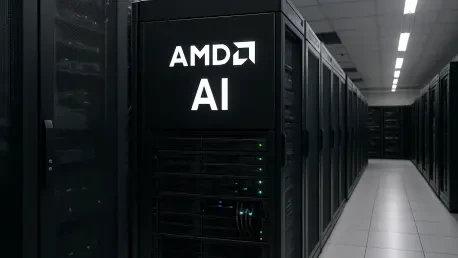

The shift from experimental pilot programs to hardened production environments marks a pivotal moment in how telecommunications operators approach the integration of intelligence into their networks. For years, the industry wrestled with the limitations of proprietary hardware that siloed data and restricted agility, but the emergence of AMD’s Telecom AI Infrastructure offers a roadmap for a different future. By focusing on virtualized, software-defined architectures, this technology seeks to replace rigid legacy systems with a flexible ecosystem capable of running complex AI workloads directly where they are needed most.
This evolution is not merely about adding faster processors; it represents a fundamental change in the Radio Access Network (RAN) philosophy. Traditional setups often struggled to balance the high-performance demands of Layer 1 signal processing with the efficiency required for edge deployments. AMD’s approach addresses this by bridging the gap between high-level cloud computing and the rugged reality of physical cell sites. This transition enables operators to move beyond simple automation and toward a truly autonomous network infrastructure that can learn and adapt in real time.
Bridging the Gap: From Pilot Programs to Production AI
Modernizing a global network requires more than just raw power; it requires a shift in how resources are allocated across the digital landscape. The current technological climate favors virtualized architectures that decouple software from the underlying hardware, allowing for a more modular and scalable approach to network management. AMD’s strategy leverages this shift, providing the foundational components necessary to transform the RAN into a software-defined environment where AI is an intrinsic feature rather than an afterthought.
The significance of this transition lies in its ability to democratize high-level computing across the entire network fabric. By moving away from specialized, single-purpose hardware, operators can reduce their long-term capital expenditures while gaining the ability to deploy updates and new features via software. This creates a more resilient infrastructure that can handle the increasing complexity of modern data traffic while maintaining the low latency required for next-generation communication services.
The Technical Pillars: AMD’s Telecom AI Strategy
High-Performance Hardware: EPYC 8005 and Instinct GPUs
At the heart of this infrastructure are the EPYC 8005 series processors, which are specifically engineered to thrive in the demanding conditions of the network edge. Unlike standard data center chips, these processors prioritize energy efficiency and high-density performance, making them ideal for virtual RAN workloads where space and power are at a premium. Their ability to manage compute-intensive tasks without excessive heat generation is critical for maintaining stability in decentralized environments.
Furthermore, the integration of Instinct GPUs provides the heavy lifting required for AI training and hosting. These units are designed to handle the massive parallel processing needs of generative AI, allowing operators to run sophisticated models without relying on centralized cloud resources. To ensure reliability in the field, these components are built to meet NEBS standards, ensuring they can withstand the vibrations, dust, and temperature fluctuations common in outdoor telecommunications cabinets.
Sophisticated Software Layers: ROCm and the Enterprise AI Suite
Hardware alone cannot solve the complexity of modern telecom; it requires a robust software layer to translate raw power into actionable intelligence. The ROCm open platform serves as this bridge, offering an open-source alternative to proprietary compute stacks. This openness is vital for operators who want to avoid vendor lock-in and require the flexibility to customize their AI frameworks to suit specific regional or technical requirements.
Complementing this is the Kubernetes-native Enterprise AI Suite, which brings a cloud-native approach to telecommunications DevOps. By utilizing containerization, the suite allows developers to deploy AI models with the same ease as standard microservices. This integration ensures that generative AI tools can be woven into existing workflows, providing a seamless transition from traditional network monitoring to advanced, AI-driven predictive maintenance and resource optimization.
Innovations in the Open Telco AI Ecosystem
The collaborative “Open Telco AI” initiative, championed by the GSMA and industry leaders like AT&T, signals a move toward specialized, domain-specific intelligence. While general-purpose language models are impressive, they often lack the technical depth required to interpret complex telecommunications standards or troubleshoot intricate signal interference issues. This initiative focuses on “telco-grade AI,” which is specifically tuned using industry-specific data to provide more accurate and relevant insights for network operators.
AMD’s role in this ecosystem is to provide the underlying compute fabric that makes these specialized models viable. By supporting open standards, the company enables a community-driven approach to AI development, where insights and improvements can be shared across the industry. This collective effort ensures that the AI tools being developed are not just powerful, but are also secure, transparent, and optimized for the unique regulatory and operational hurdles of the global telecom market.
Real-World Applications: Distributed Edge Intelligence
The practical impact of this technology is best seen in partnerships like the one with Samsung Electronics, which utilizes AMD hardware to power its “Network in a Server” (NIS) solution. This application effectively collapses traditional network functions into a more streamlined, software-defined package. By running AI-vRAN portfolios on flexible processors, Samsung can offer a scalable solution that adjusts its power consumption and processing capacity based on real-time network demand, significantly reducing operational waste.
These implementations demonstrate how distributed intelligence can solve the “bottleneck” problem inherent in centralized architectures. When AI processing happens at the edge, data does not need to travel back to a central hub for analysis, which drastically reduces latency and improves the user experience. Whether it is managing traffic in a crowded stadium or ensuring connectivity for autonomous vehicles, these real-world applications prove that software-defined networking is no longer a concept, but a functional reality.
Addressing Operational Hurdles: Deployment Obstacles
Despite the technological strides, moving toward an AI-integrated edge is not without its challenges. One of the most significant technical hurdles remains the efficient processing of Layer 1 workloads—the physical layer of the network—at the edge. These tasks require incredible precision and speed, and migrating them from dedicated hardware to general-purpose processors requires sophisticated software optimization to ensure that reliability remains at carrier-grade levels.
Moreover, the complexity of migrating from legacy systems cannot be overstated. Operators must navigate a patchwork of old and new technologies while adhering to strict regulatory requirements for security and uptime. Power efficiency also remains a constant concern, as adding AI capabilities to thousands of edge sites can lead to a significant increase in the overall energy footprint of the network. Ongoing development is currently focused on refining these efficiencies to ensure that the benefits of AI do not come at an unsustainable environmental or financial cost.
The Future: AI-Integrated Edge Networks
Looking ahead, the trajectory of distributed AI suggests a future where 5G and 6G infrastructures are entirely self-healing and self-optimizing. The long-term goal is to reach a state where the network can predict failures before they happen and automatically reconfigure itself to maintain service levels. Breakthroughs in automated network management will likely be driven by these specialized AI models, which will become more adept at navigating the complexities of high-frequency spectrum management and massive MIMO configurations.
Open-source frameworks will continue to play a primary role in shaping these future standards. By fostering a transparent development environment, the industry can ensure that the next generation of infrastructure is built on a foundation of interoperability and security. This will be particularly important as 6G begins to emerge, demanding even higher levels of intelligence and lower latencies than currently possible, pushing the boundaries of what distributed edge computing can achieve.
Final Assessment: AMD’s Strategic Impact
The analysis of AMD’s telecom strategy revealed a successful synthesis of high-density hardware and open-source software, creating a viable path for operators to modernize their networks. By moving away from proprietary silos and embracing a Kubernetes-native approach, the industry gained the flexibility needed to stay competitive in a data-driven world. The synergy between EPYC processors and the ROCm platform provided a credible alternative to existing market leaders, proving that open ecosystems can deliver the performance required for mission-critical telecommunications.
AMD played a defining role in shifting the telecom sector toward a more efficient and secure future. The move to “telco-grade AI” was a necessary step in evolving beyond general-purpose tools, and the company’s focus on thermal resilience and software flexibility addressed the practical realities of edge deployment. As networks continue to grow in complexity, the foundational work done to integrate intelligence at the hardware level provided a stable platform for the next decade of digital communication.