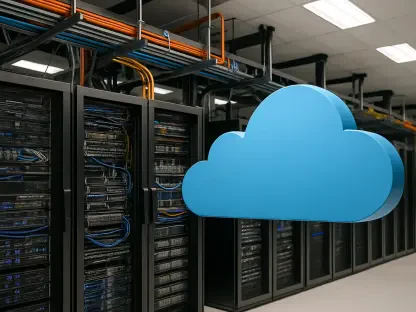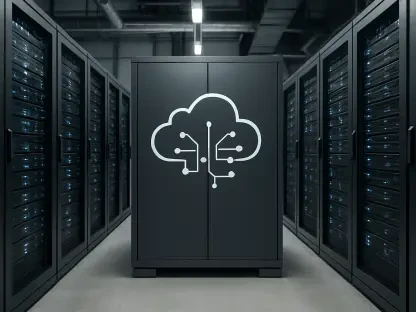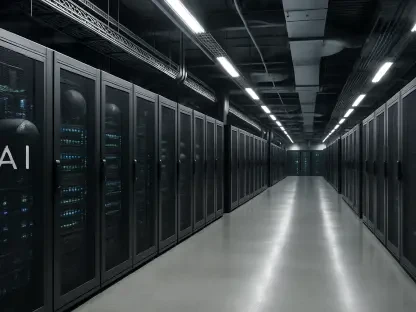

The persistent narrative that the physical data center is a relic of a bygone pre-cloud era has been thoroughly upended by the voracious infrastructure requirements of modern artificial intelligence. For years, the prevailing wisdom suggested that the migration to hyperscale cloud providers would eventually render local server rooms entirely extinct, yet the reality in the current landscape of 2026 reveals a much more nuanced architectural shift. Organizations are discovering that while the “legacy” model of data centers is indeed struggling to survive, the demand for high-performance, locally managed hardware has never been more intense. This evolution is driven by a critical need to balance extreme computational speed, data security, and the staggering energy demands of generative models. Rather than vanishing, the data center is being reborn as a specialized high-density hub, moving away from simple storage toward becoming the essential engine of the intelligent enterprise.
The Resilience of Physical Infrastructure
Operational Control and the Move Toward Repatriation
The initial enthusiasm for a “cloud-only” corporate strategy has recently been tempered by a pragmatic return to physical infrastructure, a phenomenon widely recognized as cloud repatriation. As digital operations scale, many executive leadership teams have discovered that the variable and often opaque pricing models of public cloud providers can lead to significant budget overruns, particularly for steady-state, high-intensity workloads. In the current fiscal environment, maintaining owned or leased hardware provides a level of cost predictability and granular control that the public cloud often lacks. By shifting predictable processes back to private environments, businesses are able to optimize their capital expenditures while avoiding the persistent “cloud tax” associated with data egress and continuous service fees. This trend is not a rejection of the cloud, but rather a maturation of the market where local hardware serves as the reliable foundation for core operations that require constant, high-volume processing.
Beyond the financial motivations, the legal and regulatory landscape of 2026 has made the physical data center a strategic necessity for global enterprises. Stricter data sovereignty laws across various jurisdictions now mandate that sensitive information remains within specific geographic borders, often requiring physical presence that standard cloud regions cannot always satisfy. For sectors such as healthcare, defense, and finance, the ability to walk into a facility and verify the physical security and location of a server is more than just a preference; it is a compliance requirement. Furthermore, the need for ultra-low latency in applications like high-frequency trading or real-time industrial automation demands that processing power be situated as close to the data source as possible. These physical constraints ensure that despite the proliferation of virtual services, the demand for well-managed, localized physical infrastructure remains a cornerstone of the modern technological ecosystem.
The Legacy Challenge: Power and Cooling Realities
While the concept of the data center remains vital, the traditional design of these facilities is facing a genuine crisis of obsolescence due to the requirements of modern AI clusters. Standard server racks designed in previous years were typically built to handle power densities of five to ten kilowatts, but the high-performance GPU arrays used today often require fifty to one hundred kilowatts per rack. This massive increase in power consumption has pushed many older facilities to their breaking point, as their existing electrical grids and backup systems are simply not equipped to handle such a concentrated load. Consequently, many “legacy” data centers are becoming functionally useless for modern AI tasks, forcing a significant number of organizations to either undergo expensive retrofitting or abandon their older sites in favor of next-generation builds that can sustain these heavy electrical draws.
The cooling of these high-density environments presents an even greater obstacle than the power supply itself. Traditional air-conditioning systems, which rely on moving large volumes of chilled air through raised floors, are increasingly ineffective at dissipating the concentrated heat generated by modern AI chips. In many cases, these older cooling methods are reaching their physical limits, leading to equipment throttling or frequent hardware failures. This “cooling wall” has become a primary driver of facility obsolescence, as it creates a bottleneck that prevents companies from deploying the latest computational hardware. As a result, the industry is seeing a sharp divide between “traditional” facilities that struggle to support basic enterprise applications and “modern” centers designed from the ground up to accommodate the thermal and electrical intensity of the generative era.
Adapting to the Artificial Intelligence Revolution
Modernization and the Integration of Smart Technologies
In a fascinating turn of events, the very artificial intelligence that has strained existing infrastructure is now providing the essential tools required to manage it more effectively. The rise of AIOps—artificial intelligence for IT operations—has transformed data center management from a reactive, manual process into a proactive and automated discipline. By deploying machine learning models to monitor thousands of sensors within a facility, operators can now predict hardware failures, such as fan malfunctions or power supply issues, before they actually occur. This predictive capability significantly reduces downtime and extends the lifespan of expensive equipment. Furthermore, AI-driven management systems are now capable of adjusting cooling and power distribution in real-time based on the immediate needs of the workload, ensuring that energy is never wasted on idle racks while preventing hotspots in high-activity areas.
The transition toward “self-healing” infrastructure is also allowing organizations to maintain complex private data centers with smaller, more specialized teams. Automation software can now handle the routine tasks of provisioning, updating, and load balancing across vast networks of servers, which was previously a labor-intensive endeavor. By integrating these smart technologies, companies are turning their data centers into dynamic environments that can automatically scale resources up or down depending on the demands of specific AI training runs or inference tasks. This level of intelligence within the physical layer has made on-premises and private deployments far more attractive than they were just a few years ago. Instead of shuttering their facilities, forward-thinking organizations are using their modernization budgets to install these AI-enhanced management layers, creating a highly efficient bridge between physical hardware and digital performance.
The Strategic Shift: Hybrid Architectures and Colocation
The modern approach to infrastructure has moved away from the binary choice of “cloud versus on-premises” toward a sophisticated hybrid model that utilizes the strengths of multiple environments. In 2026, the standard enterprise architecture involves a distributed network where sensitive data and low-latency applications reside in private facilities, while scalable and burstable workloads are sent to the public cloud. This “best of both worlds” strategy allows for maximum flexibility, enabling businesses to pivot quickly as market conditions change. The hybrid model acknowledges that no single environment is perfect for every task; instead, it creates a cohesive ecosystem where data flows seamlessly between local servers and global cloud nodes. This shift has redefined the role of the data center from a solitary fortress to a critical, interconnected node within a much larger, more diverse digital fabric.
To support this hybrid reality without the massive capital expenditure of building new facilities, many businesses are turning to specialized colocation providers. These third-party companies offer professional-grade space, power, and cooling, allowing enterprises to own their hardware while outsourcing the physical management of the building. Colocation centers are often better equipped than private corporate sites to handle the extreme power and cooling requirements of AI, as they can spread the costs of advanced infrastructure over multiple tenants. By moving into these specialized hubs, organizations gain access to high-speed fiber interconnections and advanced liquid cooling systems that would be prohibitively expensive to build independently. This trend has created a booming market for managed infrastructure, where the physical data center survives as a shared, high-performance utility that provides the necessary foundation for the next generation of AI-driven business models.
The Physical and Human Evolution of Data Systems
Breakthroughs in Cooling and Infrastructure Management
As the thermal demands of high-performance computing continue to escalate, the physical architecture of the data center is undergoing its most significant redesign in decades. Liquid cooling has moved from being a specialized solution for supercomputers to a mainstream requirement for any facility hosting modern AI chips. Direct-to-chip cooling, where coolant is circulated through plates directly attached to the processors, and immersion cooling, which involves submerging entire server blades in non-conductive liquid, are becoming the new standards. These technologies are significantly more efficient than air cooling, allowing for much higher rack densities and lower overall energy consumption. The adoption of liquid cooling is not just about temperature control; it is about reclaiming space and reducing the physical footprint of the data center, enabling more processing power to be packed into smaller, more efficient buildings.
Parallel to these cooling advancements, the networking infrastructure within data centers is being completely overhauled to handle the massive data throughput required by distributed AI training. Traditional Ethernet is being supplemented or replaced by specialized, high-bandwidth interconnects like InfiniBand or proprietary ultra-fast fabrics that minimize the delay between thousands of interconnected GPUs. This physical redesign also extends to the power grid integration, with many modern facilities now incorporating on-site renewable energy sources and large-scale battery storage to ensure stability. The data center of 2026 is no longer just a room full of computers; it is a highly integrated mechanical and electrical organism. This evolution ensures that physical infrastructure remains the only viable way to support the “brute force” calculations that underpin modern intelligence, proving that the hardware layer is as relevant as ever, provided it can handle the heat.
Talent Transformation: Navigating the Skills Gap
The rapid transformation of data center technology has fundamentally altered the skills required to manage modern infrastructure, leading to a significant shift in the IT workforce. The traditional “siloed” approach, where separate teams managed networking, storage, and security in isolation, has been replaced by a more integrated philosophy known as Infrastructure as Code (IaC). Today’s data center professionals must be as comfortable writing scripts and managing automation workflows as they are with physical hardware. This convergence means that the role of the “system administrator” has evolved into that of an “infrastructure engineer” who uses software to orchestrate the physical world. For many organizations, the challenge is no longer just about buying the right servers, but about finding or training talent that understands how to manage these automated, AI-driven environments effectively.
As automation takes over the repetitive tasks of hardware monitoring and patching, the human element of the data center has shifted toward high-level strategy and security integration. Security is no longer a perimeter defense but an automated, “zero-trust” architecture built into the very fabric of the data center management software. Professionals are now focused on fine-tuning the AI models that manage power loads and ensuring that the complex interactions between local and cloud resources remain seamless. This human-centric evolution is critical because, without a skilled workforce to manage these sophisticated systems, the most advanced hardware in the world remains underutilized. Companies that have prioritized upskilling their staff in automation and cloud-native technologies are finding that their physical data centers are becoming a major competitive advantage, rather than a legacy burden.
Strategic Planning for a High-Density Future
The landscape of 2026 proved that the data center was never destined for obsolescence, but rather for a profound and necessary metamorphosis. Organizations successfully moved beyond the simplistic view of the cloud as a total replacement for physical hardware, instead embracing a sophisticated model that valued the precision and control of localized assets. The transition toward high-density, liquid-cooled, and AI-managed facilities allowed enterprises to keep pace with the exponential growth of computational demands while maintaining fiscal and operational stability. It became clear that the facilities which thrived were those that prioritized flexibility and energy efficiency, integrating seamlessly into the global digital network.
Leadership teams across various industries recognized that infrastructure was a strategic asset that required proactive investment in both technology and human capital. By moving workloads strategically between the edge, the private data center, and the public cloud, businesses achieved a level of resilience that was previously unattainable. The obsolescence of the air-cooled server room was not the end of the data center, but the beginning of a more intelligent era of infrastructure management. Ultimately, the survival of the data center was secured by its ability to adapt to the specialized needs of the artificial intelligence revolution, remaining the indispensable foundation for all modern innovation.