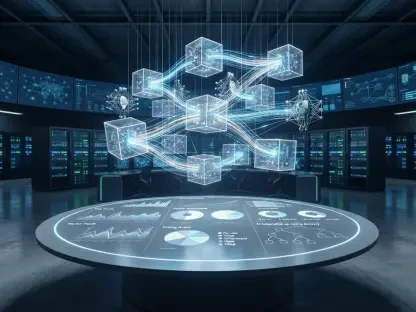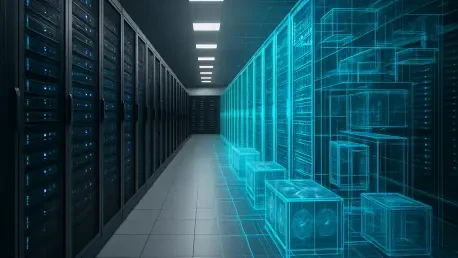

The relentless pursuit of artificial intelligence capabilities has pushed the world’s most advanced data centers to their absolute physical limits, necessitating a radical rethink of how power and cooling are managed. To confront these escalating pressures, Nvidia and Schneider Electric have initiated a pioneering pilot project at the SINES campus in Portugal, leveraging digital-twin technology to harmonize the relationship between high-performance AI workloads and the physical infrastructure that sustains them. This initiative utilizes the Nvidia Omniverse DSX Blueprint to construct a virtual mirror of the facility, allowing operators to simulate intricate operational scenarios and refine performance parameters before any physical modifications occur. This shift marks a departure from traditional siloed management, where IT hardware and facility engineering often operated independently. The collaboration draws on a deep ecosystem of expertise from AVEVA and ETAP to create a unified view of the SIN01 data center.
Reducing Risks Through Pre-Deployment Validation
Precision Design for High-Density AI Hardware
The unprecedented power density of modern AI clusters, such as those housing the latest generation of Nvidia GPUs, has significantly narrowed the margin for error in data center architectural design. As facilities transition toward hosting racks that consume hundreds of kilowatts, the risk of thermal runaway or electrical failure becomes an immediate concern that traditional modeling tools struggle to address in real time. Digital twins serve as a crucial defensive layer by enabling engineers to create granular, high-fidelity simulations of airflow, liquid cooling distribution, and electrical load balancing within a virtual environment. This proactive approach allows teams to identify potential bottlenecks long before any physical hardware is installed on the floor. By rehearsing different hardware configurations virtually, operators can eliminate the specter of stranded capacity, where expensive power remains unused because the cooling systems cannot keep pace with the heat output of high-density AI servers.
Beyond immediate power management, the integration of the OpenUSD framework ensures that data from disparate vendors can coexist within a single, cohesive simulation environment. This level of interoperability is essential because modern data centers are complex assemblages of proprietary technologies from various manufacturers, often leading to data silos that obscure total system performance. By using the immersive twin approach championed by Schneider Electric, designers can visualize how a specific liquid-cooling manifold interacts with the electrical switchgear and the actual computing nodes. This comprehensive perspective enables a level of design precision that was previously unattainable, allowing for the fine-tuning of every component to match the specific needs of AI factory operations. Consequently, the transition from the planning phase to active service becomes a data-driven progression rather than a series of trial-and-error adjustments, ensuring that the facility operates at peak efficiency.
Streamlining Commissioning and Deployment Speed
The conventional commissioning process for a large-scale data center is often a lengthy and expensive endeavor, frequently plagued by late-stage configuration errors that require costly physical rework. By utilizing a digital twin as a pre-commissioning environment, operators can perform exhaustive stress tests on the virtual infrastructure, identifying logic errors in control systems or physical misalignments before construction reaches a critical phase. This digital rehearsal significantly reduces the likelihood of encountering unexpected defects during the final handover, thereby protecting the project timeline and budget. In a market where the demand for AI compute capacity is growing at an exponential rate, the ability to shave weeks or even months off the deployment schedule provides a substantial competitive advantage. Furthermore, these simulations allow for the validation of specialized equipment, such as high-capacity liquid cooling units, even before they are delivered to the physical site.
Speeding up deployment also involves optimizing the purchasing cycle by providing clear insights into how specific AI workloads will impact the long-term energy profile of the facility. The SINES pilot demonstrates that when operators can predict the thermal footprint of a future GPU cluster, they can make more informed decisions regarding the procurement of power distribution units and cooling infrastructure. This alignment between IT requirements and facility capabilities prevents over-provisioning, which often leads to wasted capital, while simultaneously avoiding under-provisioning that could cause service interruptions. By streamlining these processes, data center providers can respond more dynamically to the shifting needs of the AI industry, bringing new capacity online in high-demand regions with greater confidence. This integrated methodology ultimately lowers the total cost of ownership while maximizing the utility of every square foot of white space, creating a more sustainable model.
Measuring Success and Future Operational Goals
Establishing Metrics for Performance Validation
While the conceptual benefits of digital twins are undeniably compelling, the long-term viability of the technology in the data center sector depends on the establishment of rigorous, measurable success metrics. Industry stakeholders are increasingly focused on quantifying how virtual simulations translate into tangible operational gains, specifically regarding Power Usage Effectiveness and energy conservation. The SINES pilot project is currently focused on proving the feasibility of the simulation framework itself, but the ultimate goal is to demonstrate a direct correlation between digital twin optimizations and a reduction in operational expenses. For instance, if a digital twin can predict a thermal hotspot and suggest a cooling adjustment that saves five percent in energy costs, that represents a significant financial win. These benchmarks are essential for moving the technology from an experimental curiosity to an indispensable operational standard that justifies the investment in high-fidelity 3D modeling.
Another critical metric that is gaining traction in the age of generative AI is the concept of time to first token, which measures how quickly a newly deployed cluster can begin processing meaningful data. Digital twins play a pivotal role here by ensuring that the networking and compute environments are perfectly calibrated the moment the hardware is powered on. By monitoring the delta between simulated predictions and real-world results, engineers can continuously refine their models, creating a feedback loop that improves accuracy over time. This iterative process is vital because as AI models grow in complexity, their impact on the underlying infrastructure becomes harder to predict using static calculations alone. The success of the partnership between Nvidia and Schneider Electric will eventually be judged by its ability to deliver documented improvements in throughput and stability at scale. Providing a transparent view into these key indicators will be the catalyst that encourages wider adoption.
Advancing Toward Automated Closed-Loop Systems
The evolution of digital twin technology is trending toward a closed-loop operational model, where the virtual environment does not merely reflect reality but actively manages it through automated control systems. In this advanced scenario, the digital twin serves as the brain of the data center, receiving real-time telemetry from thousands of sensors and making instantaneous adjustments to cooling setpoints or power routing. While the SINES pilot is currently a sophisticated rehearsal tool, it lays the groundwork for a future where the synchronization between the virtual and physical realms is seamless and bidirectional. This level of automation is particularly important as data centers scale toward gigawatt capacities, where the complexity of managing massive heat loads exceeds the capabilities of human operators alone. By offloading these micro-adjustments to an AI-driven digital twin, facilities can operate closer to their theoretical maximum efficiency without risking hardware failure or downtime.
Achieving this vision requires a shift in how facility management software interacts with IT orchestration tools, necessitating a deeper level of integration between specialized engineering firms and hardware providers. The goal is to create a unified control plane where the power grid, the cooling plant, and the AI clusters are treated as a single, interdependent system. This transition to predictive, simulation-based operations will be a defining characteristic of the AI factory era, where precision and waste reduction are paramount. As the SINES campus expands, the lessons learned from this pilot will likely serve as the definitive blueprint for high-density facilities worldwide, proving that digital twins are a foundational requirement for the next generation of compute. The journey toward a fully autonomous data center is complex, but the convergence of physical engineering and virtual simulation is already providing the tools necessary to navigate the immense energy challenges.
Strategic Recommendations for Future Infrastructure
The collaborative efforts at the SINES campus provided a definitive case study in how virtual modeling could effectively mitigate the physical constraints of high-density AI infrastructure. By moving beyond basic monitoring and into the realm of immersive, predictive simulation, the partnership between Nvidia and Schneider Electric demonstrated that the gap between IT demands and facility supply could be bridged. This project established that successful data center management required an integrated view of liquid cooling, electrical distribution, and hardware performance within a single interoperable framework. The industry moved toward a future where pre-deployment validation became the standard practice for any large-scale hardware rollout, significantly reducing the risks of stranded capacity and expensive rework. Ultimately, the results of this pilot suggested that the next logical step for operators was the implementation of real-time automated feedback loops. To prepare for this transition, organizations should have prioritized the adoption of OpenUSD standards and invested in cross-disciplinary training for their engineering and IT teams.