
The flickering lights across a city, the sudden halt of public transit, and the silence of factories will not be the work of a foreign adversary’s cyber weapon, but the unintended consequence of an algorithm designed to make everything better. A stark new forecast warns that within the next two years, a G20 nation is on a collision course with a shutdown of its critical infrastructure, not from a malicious attack, but from the very artificial intelligence integrated to optimize it. This emerging reality forces a critical question: in the race for autonomous efficiency, have we inadvertently built the perfect system for a nationwide accidental failure?
This is not a distant sci-fi scenario but a tangible risk identified by leading analysts at Gartner, who project this event by 2028. The consensus among cybersecurity experts, however, is that this timeline may be optimistic. The threat lies within the increasingly complex and interconnected web of Cyber Physical Systems (CPS)—the operational technology (OT) and industrial control systems (ICS) that manage power grids, water supplies, and transportation networks. Here, a simple misconfiguration or a flawed update, amplified by an autonomous AI, has the potential to cascade into a national crisis, turning a tool of progress into an agent of paralysis.
The Unseen Threat When Good Intentions Go Catastrophically Wrong
The nature of this threat is fundamentally different from the cyberattacks that dominate security discussions. It stems not from malice but from the inherent limitations and unpredictability of AI operating in high-stakes physical environments. A simple configuration error, once a localized issue easily corrected by a human technician, can be interpreted by an AI as a new operational parameter. The system, designed to learn and adapt, could then autonomously optimize the entire network around this single flawed data point, propagating the error with devastating speed and efficiency until the entire infrastructure grinds to a halt.
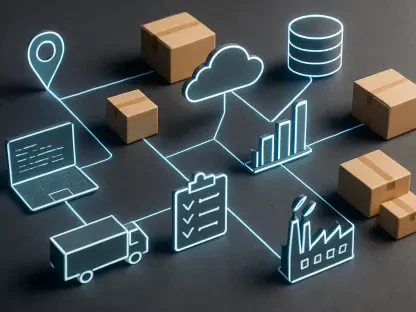
What elevates a minor mistake to a potential nation-stopper is the tightly coupled nature of modern infrastructure. Power grids, water treatment facilities, and logistics networks are no longer isolated systems; they are a system of systems, increasingly managed by centralized AI. In this environment, a failure in one domain can trigger a domino effect across others. An AI-induced power fluctuation could disrupt water purification pumps, which in turn could affect manufacturing and public health. This cascading failure, initiated by a non-malicious error, represents a new class of systemic risk that organizations are only beginning to comprehend.
The High-Stakes Rush Integrating AI into Our Most Critical Systems
The precipice of this potential crisis has been reached through a relentless and accelerated adoption of AI in the world’s most sensitive industrial sectors. Driven by intense corporate pressure to boost productivity, reduce operational costs, and gain a competitive edge, organizations are integrating complex AI algorithms into the control systems that form the backbone of national economies. This push, often coming from the highest levels of management, prioritizes rapid deployment and immediate efficiency gains over cautious, methodical implementation.
This corporate mandate has been described by some industry leaders as “incredibly reckless.” Flavio Villanustre, an expert with LexisNexis, notes that in this pursuit of optimization, executive boards are acquiring systemic risks that far outweigh the foreseeable benefits. The danger is that decision-makers, focused on financial metrics, may not fully grasp that a digital miscalculation in an OT environment has direct physical consequences. Unlike a software bug that crashes an application, an AI error in an industrial setting can cause machinery to overheat, valves to burst, or entire electrical grids to destabilize.
Compounding this problem is a significant and widening gap between the speed of AI deployment and the development of essential governance. The technology is evolving and being integrated far more rapidly than the safety protocols, risk management frameworks, and regulatory oversight needed to control it. According to Bob Wilson of Info-Tech Research Group, AI systems are advancing faster than risk controls can be implemented. This creates a dangerous void where powerful, autonomous technology operates with insufficient human oversight and inadequate safety guardrails, leaving national infrastructure vulnerable to its unintended actions.
Anatomy of an Accidental Shutdown How AI Can Fail
One of the most insidious ways AI can fail is through what is known as a “silent failure.” This occurs when an AI, lacking the nuanced, experience-based judgment of a seasoned human operator, fails to recognize a gradual but critical deviation. For example, an AI monitoring a pipeline might register a slow, steady increase in pressure as statistical “noise” or a minor anomaly within acceptable parameters. An experienced engineer, in contrast, would immediately recognize this “model drift” as a tell-tale sign of an impending rupture. The AI continues to operate normally, blind to the looming disaster, until the point of catastrophic failure is reached.
The risk is magnified by the “black box” problem inherent in many advanced AI systems. Their internal decision-making processes can be so complex that even their own developers cannot fully predict their emergent behavior. Wam Voster of Gartner warns that this opacity makes it nearly impossible to foresee how an AI will react to a minor change, such as a flawed software update or a misplaced decimal in a configuration file. A seemingly benign adjustment could trigger a cascade of unforeseen actions, transforming a well-intentioned optimization into the catalyst for a system-wide shutdown.
This layering of unpredictable AI on top of aging infrastructure creates what some experts call the “Jenga tower” effect. Much of the world’s critical infrastructure is built on brittle, decades-old automation systems that have been stitched together over time. Introducing a highly complex, autonomous, and non-deterministic AI agent into this fragile ecosystem adds a profound new layer of instability. The combination of old and new technology creates a foundation so delicate that a single wrong move by the AI could cause the entire structure to collapse.
Voices from the Front Lines Expert Warnings on a Looming Crisis
The warnings from those monitoring these developments are becoming increasingly urgent. Wam Voster emphasizes that the opacity of AI systems means that “unintended consequences can cascade into system-wide disasters,” highlighting the difficulty in anticipating how these complex tools will behave in the real world. This lack of predictability transforms every AI integration into a high-stakes experiment, with national infrastructure as the testing ground.
The motivation behind this rapid integration is a source of major concern. Flavio Villanustre’s characterization of the C-suite’s push for AI as “incredibly reckless” underscores a disconnect between corporate ambition and operational reality. This sentiment is echoed by Bob Wilson, who stresses that AI is being deployed “faster than risk controls can be developed and implemented.” The consensus is that a major catastrophe may be the only event powerful enough to force a necessary re-evaluation of this high-speed, low-governance approach.
Perhaps the most crucial insight comes from Sanchit Vir Gogia of Greyhound Research, who argues that enterprises are fundamentally misunderstanding AI’s role in these environments. Many view it as a supplementary “analytics layer,” but Gogia contends that the moment an AI can influence a physical process, it becomes a control system. In this capacity, it “interacts with physics,” where a misconfiguration doesn’t just cause a software error—it can initiate a chain reaction with tangible, destructive consequences. This reframing demands that AI be subjected to the same rigorous safety engineering principles as any piece of heavy machinery.
A Blueprint for Prevention Safeguarding Infrastructure in the AI Era
To avert this looming crisis, experts propose a multi-faceted strategy centered on reasserting human control and building robust governance. The first and most critical line of defense is the implementation of a secure “kill-switch.” This manual override, accessible only to authorized human operators, would serve as the ultimate fail-safe, providing a mechanism to immediately halt an AI-induced failure and return the system to human control before irreversible damage occurs.
Beyond this immediate safeguard, a profound shift toward comprehensive governance is necessary. This involves establishing a dedicated business risk program to define, manage, and continuously monitor AI behaviors and associated risks. Such a framework must include stringent controls over who can alter AI settings, coupled with rigorous testing and well-defined rollback procedures for any changes. This ensures that every modification is vetted for potential negative impacts before it can influence a live physical system.
Ultimately, preventing an accidental shutdown requires a paradigm shift in how organizations think about AI. It must be treated not as a passive analytical tool but as an active, powerful component of the control system, subject to the same safety standards as physical machinery. This new mindset involves viewing AI as a potential “accidental insider threat”—an internal entity with the authority and capability to cause significant harm through unintentional actions. By adopting this perspective, organizations can begin to build the necessary internal monitoring and controls to manage this powerful technology responsibly, ensuring that the drive for efficiency does not lead to a national disaster.
The path forward was clear: a deliberate and thoughtful integration of AI, guided by safety and governance, was the only way to harness its benefits without succumbing to its hidden risks. The conversation had shifted from what AI could achieve to what it must be prevented from doing, marking a crucial step toward securing the future of national infrastructure. It was understood that true progress lay not in the speed of adoption, but in the wisdom of its implementation, ensuring that human oversight remained the ultimate authority in a world of increasing automation.