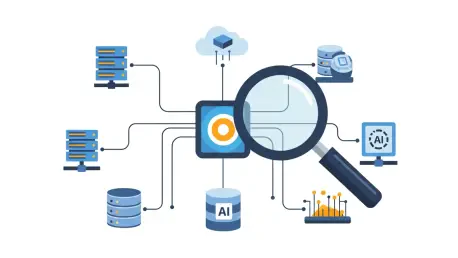

The rapid decentralization of enterprise software has reached a critical juncture where traditional monitoring frameworks are failing to provide the clarity required for modern operations. The shift from basic status checks toward sophisticated “operations hubs” reflects a fundamental change in how IT departments view their digital infrastructure in the current landscape. Instead of simply recording that a server is online, these platforms now integrate artificial intelligence to interpret vast streams of telemetry, turning noise into actionable insights. This evolution is necessitated by the rapid deployment of microservices and the integration of generative AI models, which create unpredictable patterns that traditional rules-based systems cannot detect. Consequently, the market has moved toward a unified approach that prioritizes comprehensive visibility across the entire stack, ensuring that every digital asset is accounted for within a centralized intelligence framework to maintain peak performance levels and user satisfaction.
Defining the 2024 Observability Market
Adapting to the Surge in AI-Driven Workloads
The primary catalyst for the current transformation in the observability market is the unprecedented surge in generative AI workloads that demand specific monitoring capabilities. As enterprises deploy large language models within their production environments, the traditional metrics of CPU usage and memory allocation are no longer sufficient to gauge true system health. Engineering teams must now focus on the behavior of complex digital agents that interact with cloud-native infrastructure in non-linear ways, requiring a deeper level of visibility into internal processes. To remain competitive, modern observability platforms have evolved to ingest and analyze diverse telemetry data, including granular logs and traces that provide context for these AI-driven operations. This shift allows organizations to optimize their digital assets in real time, ensuring that the underlying infrastructure can support the heavy computational demands of training and inference without sacrificing stability.
Managing the health of modern infrastructure also involves a transition toward monitoring the dynamic interactions between various cloud-native components rather than isolated hardware. The emphasis has shifted from simple server uptime to a holistic understanding of the entire application ecosystem, where the performance of an AI model might depend on the latency of a distributed database. This requires a sophisticated orchestration of telemetry that captures the nuances of containerized environments and serverless architectures, providing a clear picture of how data flows through the system. By prioritizing these complex interactions, enterprises can identify bottlenecks that were previously invisible, allowing for more efficient resource allocation across the board. The goal is to move beyond mere observation and toward a state of continuous optimization, where the platform identifies inefficiencies and suggests structural changes to the infrastructure to better accommodate the evolving needs.
The Shift from Data Collection to Operational Intelligence
The commoditization of data collection has fundamentally altered the competitive landscape, as the widespread adoption of open standards like OpenTelemetry has leveled the playing field. In this environment, the mere ability to gather metrics and logs is no longer a differentiating factor for vendors, as enterprises can now leverage standardized protocols to send data to any platform. Consequently, the true value of an observability tool now resides in its “operational intelligence,” which refers to its capacity to process and interpret that data to provide meaningful conclusions. Modern platforms are increasingly scrutinized based on their ability to filter out the irrelevant noise that often accompanies massive datasets, focusing instead on the signals that actually impact the user experience. This pivot ensures that IT teams are not overwhelmed by an endless stream of alerts, but are instead provided with a refined set of insights that highlight the most critical and urgent issues.
Transitioning from reactive troubleshooting to proactive management has become the hallmark of a high-functioning IT department in the current technological era. To achieve this, observability platforms are being integrated with advanced machine learning algorithms that can autonomously identify the root cause of a system failure with remarkable precision. Instead of requiring engineers to manually sift through logs during an outage, these intelligent systems can correlate events across different layers of the stack and suggest specific remediation steps. This level of automation not only reduces the mean time to resolution but also allows senior developers to focus on higher-value tasks rather than routine maintenance. The most successful organizations are those that embrace these autonomous capabilities, moving toward a “self-healing” infrastructure where the observability platform acts as an active participant in maintaining the reliability and security of the entire digital ecosystem.
Strategic Priorities and Market Dynamics
Monitoring the Specialized Metrics of Generative AI
As businesses integrate agentic systems into their core operations, the need for specialized metrics that track the efficiency and accuracy of large language models has grown. Traditional monitoring tools often fail to capture the specific variables that define the success of an AI implementation, such as token consumption rates and the quality of model responses. Organizations must now monitor these unique indicators to maintain a clear understanding of both the performance and the associated costs of their AI initiatives. For instance, tracking the latency of a retrieval-augmented generation pipeline is essential for ensuring that user queries are processed in a timely manner. Without this level of granular visibility, companies risk overspending on API calls or delivering poor user experiences due to unoptimized model configurations. Specialized AI observability has thus become a foundational requirement for any enterprise looking to scale its artificial intelligence deployments effectively.
Achieving a balance between model performance and operational expenditure requires a sophisticated approach to tracking internal AI variables that influence the bottom line. Beyond simple performance metrics, observability platforms must now provide insights into the qualitative aspects of AI behavior, such as detecting potential biases or model drift over time. This involves constant monitoring of the inputs and outputs of the models to ensure they remain aligned with business objectives and regulatory requirements. While the industry is still progressing toward full autonomy in these areas, the current capability to track these specific variables allows for a more disciplined approach to scaling. By establishing a rigorous monitoring framework, enterprises can identify when a model needs to be retrained or when a different prompt engineering strategy might yield better results. This data-driven approach is critical for maintaining the integrity of digital agents that represent the brand.
Navigating Vendor Consolidation and Market Tiers
The competitive landscape of the observability market is undergoing a significant shift toward consolidation as enterprises seek to eliminate the inefficiencies of using multiple siloed tools. Decision-makers are increasingly favoring platform-oriented vendors that can provide a “single pane of glass” view across the entire technology stack, from on-premises servers to cloud-native applications. This trend is driven by the need for better correlation between different data types, which is difficult to achieve when information is scattered across disparate systems. Major industry players are now being evaluated not just on their current feature sets, but on the credibility of their long-term roadmaps and their ability to execute on advanced automation strategies. As a result, the market is seeing a thinning of niche specialists as larger entities acquire smaller companies to fill gaps in their offerings. This consolidation aims to simplify the management of complex environments by providing a unified interface.
While the move toward unified platforms offers many benefits in terms of visibility and management, it also introduces the risk of vendor lock-in if not handled carefully. Organizations are increasingly demanding that their chosen observability providers support industry-standard protocols and open-source initiatives to maintain flexibility. This allows businesses to switch components of their stack without having to completely re-engineer their monitoring setup, preserving their investment in data pipelines. The leading vendors are those that successfully navigate this tension by offering powerful proprietary features while remaining committed to interoperability with other tools. By prioritizing platform flexibility, enterprises can leverage the latest innovations in AI-driven monitoring without becoming beholden to a single provider’s ecosystem. This strategic balance ensures that the organization can continue to evolve its IT strategy as new technologies emerge, maintaining a competitive edge in a digital landscape.
Managing Costs and Data Pipeline Governance
One of the most pressing challenges facing modern enterprises is the management of ballooning costs associated with the massive volumes of telemetry data generated by distributed systems. As organizations expand their digital footprint, the sheer amount of logs, metrics, and traces can lead to exponential increases in storage and processing fees. To combat this, buyers are looking for platforms that offer robust data pipeline governance, allowing them to distinguish between critical signals and irrelevant noise. This involves implementing intelligent filtering and aggregation techniques that reduce the volume of data sent to the cloud without sacrificing the ability to perform deep forensic analysis when needed. By optimizing these pipelines, companies can ensure that they are only paying for the data that actually contributes to operational intelligence. Effective cost management has thus become a central pillar of observability strategy, as businesses strive to maintain high levels of visibility within fixed budgets.
Bridging the gap between high-volume data collection and actionable insights requires a sophisticated approach to data management that prioritizes value over raw quantity. Successful observability platforms are those that provide clear and manageable cost structures, giving users more control over how their data is ingested and stored. This often involves the use of tiered storage models, where frequently accessed data is kept in high-performance environments while historical data is moved to more cost-effective archives. Additionally, the integration of AI can assist in this process by automatically identifying redundant data streams and suggesting ways to streamline the telemetry pipeline. By empowering IT teams to govern their own data usage, these platforms help organizations avoid the “observability tax” that often accompanies rapid digital transformation. This focus on economic efficiency ensures that the benefits of deep visibility are not outweighed by the financial burden of maintaining the necessary infrastructure.
Enhancing Operational Resilience Through Strategic Automation
The evolution of observability throughout 2024 demonstrated that static monitoring was no longer viable for enterprises managing the complexities of modern cloud-native ecosystems. Organizations successfully navigated this transition by prioritizing platforms that offered deep integration with AI-driven workloads and clear governance over telemetry costs. These strategic moves laid the groundwork for a more resilient infrastructure that could handle the unpredictable nature of large language models and distributed microservices. Looking ahead, the focus must shift toward refining these automated systems to achieve a state of true predictive maintenance. Decision-makers should evaluate their current vendors based on their ability to support open standards while delivering unique insights through advanced machine learning. Investing in data pipeline optimization will remain a critical priority to ensure that the search for visibility does not lead to unsustainable operational expenses in the coming cycles.