
A jolt to the ai-ops status quo
Deals that reset the balance of power rarely turn on slogans; they turn on who owns the data that machines learn from, the context that humans trust, and the workflow that fixes problems before they spread across cloud estates. A $3.35 billion bet on Chronosphere would signpost that shift, reframing observability not as dashboards and alerts but as the substrate that makes AI dependable and safe for operations and security alike. In market terms, it would be a pivot from selling tools to selling outcomes: uptime, risk reduction, and faster resolution, all fed by cleaner signals.
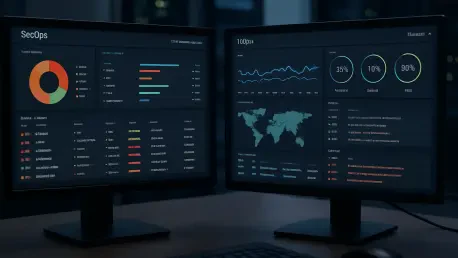
Yet the tension that this move addresses is painfully familiar: one incident, two war rooms, zero shared context. When a latency spike coincides with an access anomaly, SecOps hunts for threats while ITOps tunes autoscaling, and neither side shares the same ground truth. Budgets rise as telemetry piles up, but the lack of a normalized model turns signal into noise and delay into downtime. Unifying the data plane promises to collapse those gaps and make the same facts usable across teams.
The audacity shows up in the endgame: self-healing infrastructure guided by unified telemetry. Rather than polling after the fact, policy-aware agents could validate a fix against runtime evidence and apply it safely, shrinking blast radius and mean time to recover. The bold claim is not that AI finds more problems; it is that AI, fed with disciplined data, closes the loop.
Why this matters now
Cloud-native complexity has outpaced legacy operating models, and AI’s appetite for clean, contextual input has grown alongside it. Studies across large enterprises have shown that models trained on normalized telemetry cut false positives by 30% or more, while improving detection lead time by minutes that matter during incidents. Inconsistent schemas and missing lineage, by contrast, erode confidence and force humans to re-verify every recommendation.
Tool sprawl has also carried a stubborn cost. “Store everything” sounded prudent until egress, retention, and indexing fees turned into a tax on every investigation. Teams now favor pipelines that shape, filter, and route data before it hits expensive storage, retaining what helps explain cause and effect while discarding the vanity noise. The result is lower cost per gigabyte retained and higher signal fidelity for both detection and diagnosis.
Convergence is already under way as leaders measure shared outcomes across performance and security. Metrics like MTTR, risk-weighted backlog, and change failure rate are now reviewed in the same meetings, not siloed by department. A combined operating picture reduces handoffs, increases accountability, and aligns automation with the same policies, regardless of which team triggers it.
What Palo Alto is really buying—and building
The strategic intent looks larger than a monitoring add-on; it reads as a unified operating model anchored in a single data substrate. Breaking the historical SOC/NOC split requires more than connectors. It requires one normalized stream where the latency spike that trips a pager is the same evidence that surfaces an attack path, and where remediation can be justified by shared policy and runtime context.
Chronosphere’s technical base supports that thesis. Its lineage back to M3, forged in Uber’s hyperscale environment, favors predictable cost at staggering cardinality. That heritage shows up in high-volume, high-fanout telemetry where teams can bound spend without blunting visibility. Cloud-native design choices—horizontal scaling, tenant isolation, and fine-grained control—make it fit for microservices and ephemeral workloads.
The pipeline is the keystone. With Calyptia-derived ingestion, shaping, and filtering across metrics, logs, and traces, telemetry can be deduplicated, sampled, and enriched before storage, not after. Normalization provides schema control, lineage, and context that AI needs to rank risk credibly and propose fixes that pass audit. In effect, the pipeline feeds learning systems while trimming waste, turning cost avoidance and model quality into the same lever.
That data layer ties neatly into existing portfolios. Prisma Cloud gains runtime and service-level awareness that helps prioritize risks by blast radius and business impact. Cortex benefits from correlation on normalized data, aligning detections with end-to-end workflows that route to the right owner with the right evidence. Together, the aim is a shared context that serves both incident responders and security analysts.
Cortex AgentiX represents the path to autonomy. Policy-aware agents can detect, validate, and act—closing tickets with a human in the loop when required, or proceeding automatically where risk is low and rollback is certain. Over time, playbooks shift from predictive detection to self-healing runbooks that straddle SecOps and ITOps, moving routine toil from keyboards to code.
Signals from the field: what experts and the market are saying
The market has been tilting toward platforms over point tools for several cycles. As one executive put it, “Own the data layer, and you own the decision layer.” Vendors without a cost-aware pipeline strategy face consolidation pressure because customers want fewer ingestion paths, fewer schemas to reconcile, and fewer sources of truth to argue over during an outage.
AI’s dependency on disciplined telemetry has become a consensus point. “More data isn’t better—better data is better,” a common refrain, captures the shift from volume to quality. Normalized streams with clear lineage have become best practice, improving precision while enabling fair comparisons across models and policies. Teams now measure signal-to-noise ratio and false positive rate with the same rigor as cloud spend.
Autonomous operations are moving from aspirational to staged reality. Guardrails, explainability, and phased rollouts have proven essential to build trust. Organizations begin with recommendations, graduate to remediate-with-approval, and only then enable closed-loop automation in scoped domains. Along the way, audit trails and rollback guarantees anchor governance.
Anecdotes underscore the dual-use nature of shared signals. A latency spike in an east-west service exposed an over-permissive route that doubled as an attack path; fixing it cut response time and eliminated a lateral movement vector. In another case, a topology view enriched with runtime tags reduced the blast radius of a misconfiguration from dozens of services to a handful, turning a potential outage into a brief hiccup.
How to make it real: playbooks, integrations, and guardrails
Execution started at the data layer. Teams inventoried telemetry sources, mapped them to a common schema, and enforced pre-ingestion shaping and policy-driven retention to keep cost predictable. Lineage tracking, quality scoring, and access controls established trust so that AI-derived recommendations could be evaluated against the same facts by every stakeholder, from SREs to security engineers.
Unifying SOC and NOC moved through clear milestones. Shared queues and shared KPIs brought both groups into one cadence, while cross-functional runbooks blended performance and security workflows for common failure modes. Integration of Prisma Cloud and Cortex proceeded in phases: first normalization and correlation, then risk-prioritized actions, and finally closed-loop remediation with audit and rollback paths that satisfied governance.
Autonomy rolled out safely with constraints. Policies defined allowed actions, simulation sandboxes surfaced side effects, and human-in-the-loop steps preserved judgment where stakes were high. Over time, automation advanced from suggestive to assertive in low-risk areas, as metrics—signal-to-noise ratio, false positive rate, cost per gigabyte retained, time to detect, time to validate, time to remediate—proved improvement and justified broader scope.
In the end, the case for action had become straightforward: owning the data substrate enabled trustworthy AI and safer automation, and that combination compressed downtime and risk while cutting waste. Organizations that executed on this model had moved faster, argued less, and remediated with confidence; the path ahead rested on continuing to codify guardrails, keep schemas open and exportable to avoid lock-in, and treat governance not as a brake but as the design principle that made autonomy work.