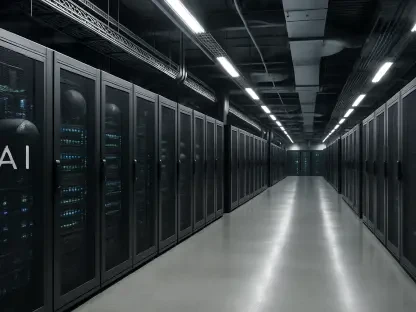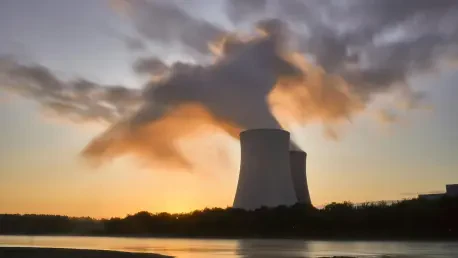

An urgent push to power the future of artificial intelligence has reportedly led United States nuclear regulators to quietly dismantle decades of safety and security protocols, creating a high-stakes gamble with environmental and public health. An extensive investigation has uncovered that the Department of Energy (DoE) is fast-tracking a new generation of experimental commercial nuclear reactors by secretly rewriting foundational rules. This initiative, heavily backed by billions of dollars from private equity and major technology corporations like Amazon, Google, and Meta, aims to meet the insatiable energy demands of AI data centers. However, the non-public revisions slash hundreds of pages of established requirements, fundamentally altering the principles that have governed nuclear power since its inception and raising profound questions about the true cost of technological progress.
The Secret Rewrite of Nuclear Safety
Dismantling Decades of Protections
The foundation of this controversy lies in the DoE’s sweeping and clandestine overhaul of nuclear safety regulations, an action driven by a goal to launch several experimental commercial reactors this year. According to documents obtained during the investigation, the department has issued more than a dozen new orders that systematically dilute or eliminate long-standing protections. One of the most significant changes involves the weakening of environmental safeguards. The absolute mandate to protect groundwater from radioactive contamination has been alarmingly downgraded from a “must” to a mere “consideration,” allowing companies to simply weigh the possibility of avoiding contamination rather than being legally bound to prevent it. Furthermore, the previous requirement to use the “best available technology” for protecting water supplies has been entirely erased from the new directives. This pattern of dilution continues with environmental protection rules, where the imperative to safeguard local ecosystems from radiation has been replaced with a vague suggestion to “minimize” impacts “if practical.” Legally binding terms like “prohibited” have been supplanted with softer, advisory language such as “should be,” effectively removing the teeth from regulations that once ensured stringent public and environmental safety. This shift represents a fundamental departure from the precautionary principles that have guided the nuclear industry for generations.
These regulatory changes are designed to accelerate the deployment of Small Modular Reactors (SMRs), a new class of nuclear technology seen by the tech industry as a key solution to their escalating energy needs. Unlike traditional, large-scale nuclear plants, SMRs are smaller, can be built in factories, and are promoted as being inherently safer. They are viewed as the perfect power source for the massive, energy-intensive AI data centers that are becoming the backbone of the modern economy. The allure of cheap, reliable, and carbon-free energy has attracted immense investment from venture capital and tech giants, who are eager to secure a stable power supply for their operations. However, the secretive process by which these safety rules are being rewritten casts a dark shadow over this technological promise. By circumventing public review and independent oversight, the DoE is creating a regulatory environment where speed and cost-effectiveness appear to take precedence over the rigorous safety culture that the nuclear industry has painstakingly built over the last half-century. The concern is that in the rush to power the next technological revolution, the essential guardrails designed to prevent a nuclear catastrophe are being quietly removed one by one.
A New, Lower Bar for Safety and Security
The scope of the regulatory rollback extends deep into the critical areas of facility security and the long-term management of hazardous materials. The comprehensive security protocols that have long governed nuclear sites have been severely truncated. In a striking example of this reductionism, a detailed security manual spanning over 500 pages was condensed into a mere 23-page order, converting complex, layered security requirements into a simplistic list of bullet points. This drastic simplification raises serious concerns about the physical protection of these new nuclear facilities against potential threats. Similarly, the guidelines for managing radioactive waste have been significantly shortened. A 59-page manual detailing the proper handling, packaging, and long-term monitoring of nuclear byproducts was reduced to a 25-page directive, which notably omits specific requirements that are crucial for preventing long-term environmental contamination and ensuring public safety for generations to come. These changes suggest a move toward a less prescriptive and more performance-based approach, which, while potentially offering flexibility, also introduces significant ambiguity and reduces the assurance of safety.
Perhaps the most troubling revision is the complete removal of the “As Low As Reasonably Achievable” (ALARA) principle from the new orders. For decades, ALARA has served as a cornerstone of nuclear safety culture, compelling operators not just to meet legal radiation exposure limits but to actively minimize doses whenever possible. Its abandonment signals a major philosophical shift, potentially allowing new reactors to be constructed with less concrete shielding and permitting workers to endure longer shifts with higher cumulative radiation doses, all in the name of reducing construction and operational costs. This erosion of safety standards is further compounded by a change in accident investigation protocols. The threshold for launching an official investigation into a radiation exposure incident has been doubled; previously, an inquiry was required when workers were exposed to two times the legal limit, but under the new rules, an investigation is only triggered at four times the legal dose. This higher bar for action means that potentially serious safety lapses or systemic issues might go unexamined, allowing unsafe conditions to persist and increasing the risk of more severe accidents in the future.
A High-Stakes Gamble for Industry and Society
Shifting the Risk to Businesses and the Public
Industry analysts have characterized the DoE’s actions as a “wholesale redrafting” of how enterprise and public risk will be allocated, effectively dismantling the historical pillars of independent oversight and layered governance that have defined nuclear safety. By granting itself the authority to approve these new rules internally, the DoE has sidestepped the rigorous, independent review process of the Nuclear Regulatory Commission (NRC). This creates a fundamental conflict of interest, as the same agency promoting the rapid development of SMRs is also setting its safety standards. For the enterprise leaders and CIOs looking to SMRs as a stable power source for their AI clusters, this shift means the reactors fueling their operations may be governed by unpublished, unaudited, and unchallengeable internal directives. This lack of external validation and transparency transfers an immense and poorly defined risk from the reactor operators to both the public and the corporate clients who will come to depend on this new power infrastructure. The traditional safety assurances backed by independent regulatory scrutiny are being replaced by a system where trust is placed solely in the developer and its government sponsor.
This new risk paradigm extends beyond the immediate threat of a radiation leak and into the core of operational reliability. With weakened standards for documentation and incident investigation, system anomalies and minor operational failures may not be properly recorded or addressed. This directly threatens the uptime guarantees and power supply predictability that are non-negotiable for energy-intensive AI and data center operations. An unreliable power source can be just as damaging to a business as a complete outage. Analysts describe this accumulation of unaddressed issues as a “debt instrument,” where risk builds silently and invisibly until a catastrophic failure occurs. Consequently, CIOs and corporate sustainability officers are now faced with the challenge of building their own risk frameworks from the ground up, demanding contractual and operational safeguards that may not be guaranteed under the DoE’s relaxed regulations. The move from independent NRC oversight to internal DoE authorization creates a fundamental misalignment where accountability is blurred, making it difficult for enterprise customers to assess the true resilience and safety of their energy supply.
Reputational Peril and Cautious Counterarguments
The technology giants backing these SMR projects are now facing significant reputational peril that could undermine their strategic goals. While SMRs were initially positioned as a key part of their environmental, social, and governance (ESG) strategy—providing a source of carbon-free energy to offset the massive footprint of their data centers—this advantage could be completely negated if the reactors they fund are perceived as unsafe. A single meltdown, a serious worker safety incident, or an environmental contamination event would inextricably link their globally recognized brands to a nuclear disaster. Such an event would not only be a public relations nightmare but would also compound the growing social pushback against data centers over their immense water and energy consumption. Instead of being hailed as environmental pioneers, these companies risk being seen as corporate entities that prioritized profits and technological advancement over public safety and environmental stewardship, potentially causing irreparable damage to consumer trust and brand loyalty. The gamble is that the promise of clean energy will not be overshadowed by the specter of nuclear risk.
In contrast, some experts offer a more nuanced perspective, acknowledging that a revision of nuclear regulations might be necessary for this new class of reactors. They argue that the existing rules, largely designed in the “post-Three Mile Island era” for massive, traditional light-water reactors, may be overly burdensome and ill-suited for the unique technological characteristics of SMRs. Proponents highlight key design differences that make SMRs inherently safer, such as their smaller size, reduced fuel load, and integral reactor designs that can self-contain accidents. Many SMR designs can also be air-cooled, which drastically reduces their water usage compared to conventional plants—a significant advantage in an era of increasing water scarcity. From this viewpoint, updating the regulatory framework to reflect these technological advancements is a logical step. However, even these cautious proponents express deep concern over the opaque process. Making such critical changes “behind closed doors” is inherently suspicious and prevents the necessary public and scientific scrutiny to determine if the new rules are appropriately tailored to SMR technology or are simply a reckless effort to cut corners. The ultimate question remains whether these changes thoughtfully account for the differences between old and new reactor designs or if they represent a dangerous erosion of safety for the sake of speed.