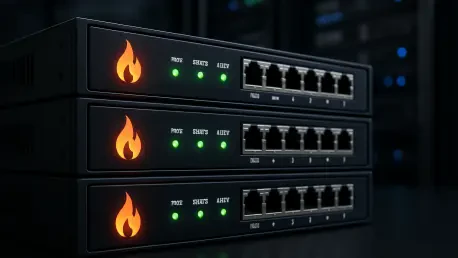

The global digital security landscape is undergoing a profound transformation, with the market for smart firewalls projected to surge from USD 9.51 billion to an impressive USD 17.14 billion by 2030, marking a significant compound annual growth rate of 10.32%. This rapid expansion reflects a fundamental shift in how organizations approach network defense. A smart firewall is not merely an incremental upgrade to its traditional predecessors; it represents a new class of security system engineered for the modern era of cyber warfare. By integrating advanced capabilities such as deep packet inspection, sophisticated intrusion detection systems, and the predictive power of machine learning, these platforms provide real-time analysis and proactive defense mechanisms against threats that are increasingly complex and evasive. This evolution is a direct response to a digital environment where perimeter-based security is no longer sufficient, compelling enterprises to seek out intelligent, adaptive solutions that can secure assets both inside and outside the traditional corporate network.
The Dual Forces Shaping Market Expansion
The Unrelenting Surge of Cyber Threats
The primary catalyst for the widespread adoption of smart firewalls is the relentless and ever-evolving nature of cyber threats that now confront organizations daily. Traditional security models, which often relied on static rule sets and signature-based detection, are proving increasingly inadequate against the sophisticated attack vectors deployed by modern adversaries. Advanced persistent threats (APTs), for instance, involve stealthy, long-term intrusions where attackers gain a foothold and move laterally across a network, often remaining undetected for months. Similarly, the explosion of ransomware has crippled businesses by encrypting critical data and demanding exorbitant ransoms, attacks that frequently bypass legacy defenses through social engineering or zero-day exploits. The sheer volume and complexity of targeted phishing campaigns further underscore the need for a more intelligent defense layer. These challenges have created an urgent imperative for security solutions that can offer adaptive, real-time threat detection and response, moving beyond simple block-and-allow rules to a more contextual and analytical approach to network integrity.
Smart firewalls directly address these modern challenges by employing a multi-layered, intelligent approach to threat mitigation that fundamentally differs from older technologies. At their core, these systems utilize deep packet inspection (DPI) to scrutinize not just the headers but the entire content of data packets, enabling the identification of malicious payloads or anomalous traffic patterns that would otherwise go unnoticed. This is augmented by integrated intrusion detection and prevention systems (IDPS) that actively monitor for suspicious activities indicative of a breach. The most transformative element, however, is the integration of machine learning and artificial intelligence. These algorithms continuously analyze network traffic, establish baseline behaviors, and can proactively identify novel or zero-day threats without relying on pre-existing signatures. This predictive capability allows the firewall to automatically adapt its security posture, isolating potential threats in real-time and providing security teams with actionable intelligence, thereby shifting the paradigm from a reactive to a proactive defense strategy.
Overcoming Implementation and Talent Hurdles
Despite the clear benefits, the path to implementing smart firewalls is not without significant obstacles, chief among them being the complexity of integration with existing enterprise infrastructure. Many organizations operate on a hybrid model, with a combination of on-premises legacy systems, private data centers, and multiple public cloud environments. Seamlessly integrating an advanced firewall solution across this disparate ecosystem is a formidable technical challenge that goes far beyond a simple deployment. It requires meticulous planning, deep architectural understanding, and specialized skills to ensure that security policies are consistently enforced without disrupting critical business operations. Misconfigurations during this process can create new vulnerabilities or performance bottlenecks, paradoxically weakening the very security posture the new technology was intended to strengthen. This integration complexity often extends deployment timelines and increases the total cost of ownership, making it a major consideration for IT leaders weighing the investment.
The technical challenges of integration are significantly exacerbated by a pervasive and critical shortage of qualified cybersecurity professionals. The demand for experts with skills in modern security architectures far outstrips the available supply, creating a pronounced talent gap that hinders organizational progress. A 2023 ISC2 study highlighted this crisis, revealing that a staggering 92% of cybersecurity professionals reported skills gaps within their own organizations. The areas of greatest concern were cloud security and the implementation of Zero Trust frameworks—the very domains where smart firewalls are most critical. This scarcity of expertise has direct consequences for businesses, leading to prolonged deployment cycles for new security technologies and placing an immense operational burden on already overstretched IT teams. Without the right talent to manage, configure, and monitor these sophisticated systems, organizations risk underutilizing their investment and leaving themselves exposed to the advanced threats they sought to defend against.
The Zero Trust Paradigm Shift
A New Foundation for Network Security
A dominant and transformative trend shaping the evolution of network security is the industry-wide pivot toward a Zero Trust Architecture. This security model represents a fundamental departure from the traditional “castle-and-moat” approach, which implicitly trusted any user or device once inside the network perimeter. In stark contrast, Zero Trust operates on the principle of “never trust, always verify,” requiring continuous and explicit verification for every single access request, regardless of its origin. This means that no user or device is trusted by default, even if it is connected to a corporate network. Core tenets of this framework include the principle of least privilege, ensuring that users are granted only the minimum level of access necessary to perform their duties, and micro-segmentation, which involves dividing the network into small, isolated zones to prevent the lateral movement of threats. This granular approach drastically reduces the attack surface and contains the impact of a potential breach, making it a far more resilient model for today’s distributed and dynamic IT environments.
Within this new security paradigm, smart firewalls are no longer just perimeter guards but have become essential and strategic enforcement points for Zero Trust policies. Their advanced capabilities are uniquely suited to implementing the granular, context-aware controls that this architecture demands. A smart firewall can continuously assess access requests by verifying user identity, checking device health and compliance, evaluating location, and analyzing the application being accessed. Based on this rich contextual data, it can enforce dynamic security policies that grant or deny access on a per-request basis. This functionality is critical for containing threats and preventing unauthorized lateral movement within the network. The strategic importance of this role is underscored by recent industry data; a Cloud Security Alliance report from January 2024 noted that approximately 80% of organizations had increased their budgets for Zero Trust initiatives in the preceding year, signaling a clear market consensus on the necessity of this approach and the critical role intelligent firewalls play within it.
The Symbiotic Relationship in Practice
The synergy between a Zero Trust framework and a smart firewall is most clearly illustrated in practical, real-world security scenarios that organizations face daily. Consider an employee attempting to access a sensitive financial application from a personal device while connected to an unsecured public Wi-Fi network. In a traditional security model, valid login credentials might have been sufficient to grant access. However, in a Zero Trust environment enforced by a smart firewall, the process is far more rigorous. The firewall would first trigger a multi-factor authentication challenge to verify the user’s identity. Simultaneously, it would assess the device’s security posture, checking for up-to-date antivirus software, an enabled device firewall, and the absence of malware. Seeing the request originates from an untrusted network, the firewall could either block access entirely or grant limited, read-only privileges based on pre-defined policies. This granular, context-aware decision-making ensures that even if credentials were compromised, the attacker’s ability to access critical systems and move laterally would be severely restricted.
Looking ahead, the symbiotic relationship between Zero Trust principles and smart firewall technology appears to be the most viable path forward for securing the increasingly decentralized and complex enterprise IT landscape. The concept of a single, defensible network perimeter is rapidly becoming obsolete, eroded by the proliferation of remote work, the adoption of multi-cloud architectures, and the explosion of Internet of Things (IoT) devices. In this new reality, security must be embedded everywhere, capable of protecting data and applications regardless of their location. The combination of a Zero Trust philosophy, which provides the strategic framework, and smart firewalls, which provide the intelligent enforcement mechanism, creates a dynamic and adaptive security fabric. This integrated approach is essential for protecting modern digital ecosystems, ensuring that security policies can be consistently applied across all users, devices, and environments, thereby building a more resilient and future-proof defense against the sophisticated threats of tomorrow.
A Strategic Alignment for Future Defense
The industry’s rapid adoption of advanced security measures painted a clear picture of the evolving cyber defense landscape. It became evident that the convergence of Zero Trust principles with the capabilities of smart firewalls was not merely a technological trend but a strategic necessity for survival in a hostile digital environment. Organizations that successfully navigated the complexities of integration and addressed the critical skills gap found themselves in a superior defensive position. Their investment in a security architecture that continuously verified trust and enforced granular policies at every level of the network proved to be a decisive factor. This strategic alignment demonstrated a mature understanding that security was no longer about building impenetrable walls but about creating an intelligent, resilient, and adaptive ecosystem prepared for the threats that lay ahead.