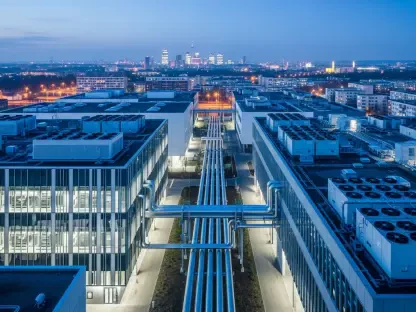

The rapid expansion of digital infrastructure across North America has reached a critical tipping point where the thirst for electricity now outpaces the physical capacity of the power grid to deliver it. This is no longer just a concern for hardware engineers; it is a structural crisis that is reshaping how companies approach technology investments. While demand for data processing continues to climb, the physical reality of limited utility connections is forcing a radical reconsideration of what it means to build a digital future. The era of assuming an endless supply of electrons has officially ended, replaced by a complex race for energy sovereignty.
The 2030 Power Wall: Why Data Centers Are Running Out of Juice
The current market presents a startling paradox where record-shattering demand for digital services exists alongside a 5.5% decline in new construction capacity. This contraction is not due to a lack of interest or investment capital, but rather the hard reality of physical limitations. For the first time in years, the pipeline of facilities under construction has shrunk because the infrastructure required to support them simply cannot be built fast enough. Project timelines that used to be measured in months are now stretching into years, primarily because the electrical grid is struggling to keep pace with the sheer volume of proposed projects.
A significant shift in reality has occurred as grid capacity in primary markets is already effectively “booked out” through the year 2030. Developers who once prioritized real estate and fiber proximity now find that those factors are secondary to the availability of a high-voltage substation. This transition marks the end of the real estate-first era and the dawn of a power-first development strategy. In this new landscape, the most valuable asset a developer can possess is not a prime piece of land, but an approved interconnect agreement with a local utility provider.
From Abundance to Scarcity: The State of the Digital Grid
The massive surge in demand from hyperscale providers like Amazon, Google, and Microsoft has pushed the primary market supply to a staggering 9,432 MW while simultaneously breaking the elasticity of the supply chain. These giants are consuming capacity at a rate that leaves little room for traditional enterprise players. This concentration of consumption has caused vacancy rates to collapse to a record low of 1.4% in major hubs. When availability reaches such levels, the market effectively ceases to function in a traditional sense, leaving many businesses with no viable options for expansion in their preferred regions.
This ripple effect has fundamentally changed the bottleneck of the industry. Land availability and capital were once the primary hurdles for new builds, but they have been replaced by the availability of utility power. The shortage of transformer equipment and the long lead times for grid upgrades have created a situation where even fully funded projects remain dormant for years. Enterprises are now discovering that their digital transformation goals are directly tethered to the bureaucratic and physical speed of electrical utility companies, a realization that is forcing many to rethink their multi-year growth strategies.
The Triple Threat: AI, Infrastructure, and Rising Costs
Artificial intelligence is the primary engine driving this insatiable appetite for energy, but it is important to distinguish between training and inference workloads. Training these massive models requires enormous concentrated bursts of power, often in single locations, while inference demands a more distributed approach to maintain low latency for users. Both require a new type of infrastructure designed to handle the “electrical envelope” of modern AI hardware. High-density racks that consume five to ten times the power of traditional servers have become the new standard, necessitating the use of advanced liquid cooling systems to manage the extreme heat generated during processing.
These constraints have exacted a heavy financial toll on the entire ecosystem. Rental rates for data center space have seen a sharp increase, with small providers facing a 6.5% hike and large-scale requirements experiencing a 12.5% jump. These costs are projected to outpace general inflation for at least the next two to five years, making data center space one of the most expensive components of the corporate budget. As a result, the geographic migration of the industry is accelerating, with developers moving away from traditional Tier 1 hubs toward rural locations where land and power are more accessible.
However, moving to remote regions introduces a secondary challenge: a severe labor shortage. Finding the specialized workforce needed to operate these high-tech campuses—specifically high-voltage electricians and mechanical engineers—is proving difficult in areas far from major urban centers. This human capital constraint adds another layer of complexity to the already difficult task of expanding digital footprints. Companies are now forced to consider not only where the power is, but also where the people are who can maintain the sophisticated equipment required for modern computing.
Expert Insights and Industrial Innovations
Industry experts are closely monitoring the transition toward on-site power generation solutions as a way to bypass the congested traditional grid. Research indicates a significant uptick in the use of natural gas turbines, hydrogen fuel cells, and large-scale solar arrays paired with battery storage. By generating electricity on-site, data center operators can gain more control over their timelines and reduce their dependence on aging utility infrastructure. These innovations are no longer experimental; they are becoming essential components of a modern developer’s toolkit to ensure operational resilience in an era of scarcity.
The long-term outlook for the industry increasingly includes the integration of Small Modular Reactors (SMRs). These compact nuclear units are viewed as a potential stabilizing force for massive energy loads in the mid-2030s, offering a carbon-free and consistent source of power that matches the 24/7 requirements of data centers. While the technology is still maturing, the sheer scale of the energy crisis is accelerating the regulatory and financial support needed to bring these reactors to market. This move toward nuclear energy represents the most radical step yet in the data center industry’s journey toward energy independence.
Municipal partnerships have also become a critical factor in the development process. Developers must balance the promise of high property tax revenue and construction jobs against community concerns over massive water and electricity consumption. Successful projects are those that can demonstrate a clear benefit to the local population, such as funding for local infrastructure or the implementation of circular economy practices like heat recycling. Navigating these local politics has become a core competency for data center executives, who must act as diplomats as much as they do as builders.
Navigating the Shortage: Strategic Frameworks for Enterprises
In this environment of structural scarcity, enterprises must adopt a ruthless planning approach to survive. The days of securing colocation space on a month-to-month or even year-to-year basis are long gone. Companies are now moving to secure long-term expansion rights years in advance, often paying premiums just to hold space that they may not even need for several quarters. In a market where 90% of under-construction capacity is already pre-committed to the largest tech firms, smaller enterprises must be aggressive and decisive to avoid being completely shut out of the most desirable markets.
Optimizing the infrastructure mix has also led to a trend known as “public cloud reversal.” Some organizations are moving specific workloads back to private, on-premises facilities or highly specialized colocation sites to avoid the annual 5% price escalators common in new cloud and colocation contracts. By diversifying their locations and including emerging secondary markets, businesses can balance their latency requirements against the rising costs of Tier 1 real estate. This strategic flexibility is becoming a key differentiator between companies that can scale their digital operations and those that are hampered by rising overhead.
Finally, budgeting has shifted from a “cost per square foot” model to an energy-centric “cost per megawatt” model. Financial officers must now account for the rising costs of grid upgrades and the premiums associated with green energy integration. As the digital and physical worlds continue to collide, the ability to manage energy consumption and procurement has become a fundamental pillar of corporate strategy. The organizations that successfully navigated these hurdles were those that viewed power not as a utility bill, but as a strategic asset that required careful cultivation and long-term investment. This proactive stance allowed them to maintain growth even as the broader market struggled against the physical limits of the electrical grid.