
In a state where agriculture is the largest industry and severe weather can materialize with devastating speed, access to precise, real-time environmental data is not a luxury but a critical necessity for economic stability and public safety. Ohio has historically operated with a significant deficiency in its weather observation infrastructure, relying on a fragmented and outdated patchwork of monitoring stations that leaves vast areas in a data deficit. This situation creates dangerous gaps in knowledge, hampering everything from a farmer’s decision on when to plant crops to an emergency manager’s ability to track a hazardous chemical plume. Recognizing this vulnerability, the state has embarked on a forward-thinking initiative to build the Ohio Mesonet, a sophisticated, statewide network of advanced weather stations designed to provide the high-resolution data needed to navigate the challenges of a rapidly changing climate and protect its citizens and industries. This new system represents a fundamental shift from a reactive to a proactive stance on weather preparedness.
Addressing a Critical Infrastructure Deficit
The Patchwork Problem
Ohio’s long-standing approach to weather monitoring has been a composite of disparate sources, lacking the cohesion and technological sophistication required for modern forecasting. The system has traditionally depended on a combination of stations operated by the National Weather Service, automated instruments at airports, and data provided by private citizens. This amalgamation of sources results in inconsistent data quality and a lack of standardization, making it difficult to create a comprehensive and reliable picture of statewide weather conditions. Compounding this issue is the steady decline in the number of human weather observers over time, which has widened the observational gaps. These data deserts are particularly pronounced in the northwest and southeast corners of the state, areas that coincidentally suffer from gaps in radar coverage, leaving them doubly vulnerable. Without a dense, standardized network, forecasters and decision-makers are often forced to make critical judgments based on incomplete or extrapolated information, a risky proposition when lives and livelihoods are on the line.
The inadequacy of Ohio’s infrastructure becomes starkly evident when compared to neighboring states that have already invested heavily in modern monitoring networks. While Ohio currently has only nine advanced mesonet stations, most of which were constructed within the last year, states like Kentucky and Wisconsin each boast robust networks of around 80 such stations. This vast disparity creates a significant data imbalance, providing those states with a much denser and more reliable stream of environmental information. For meteorologists at the National Weather Service, this means they can generate more accurate and timely forecasts for Kentucky and Wisconsin, particularly for localized, high-impact events like severe thunderstorms and tornadoes. For Ohio, the lack of a comparable system translates into a competitive disadvantage for its agricultural sector and a tangible risk to public safety. The state is essentially trying to navigate 21st-century weather challenges with a 20th-century information system, a gap the Ohio Mesonet is designed to close decisively.
A High-Tech Solution Takes Root
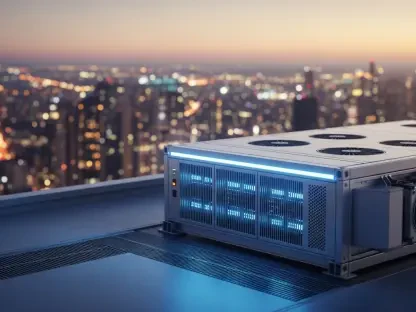
The cornerstone of the Ohio Mesonet initiative is the deployment of a new generation of sophisticated weather monitoring towers, exemplified by a recently installed 35-foot tower in Clark County. These are not simple weather vanes; they are comprehensive environmental observatories designed to capture a detailed, multi-layered snapshot of atmospheric conditions in real time. Each station is equipped with an array of sensors that measure a wide variety of parameters at multiple levels above the ground. Key measurements include wind speed and direction, solar radiation, temperature, and humidity, all captured at various heights. This tiered data collection is crucial, as it allows meteorologists to understand the vertical profile of the atmosphere, providing insights into atmospheric stability and the potential for severe weather development. The data is transmitted continuously, feeding into forecasting models and providing an invaluable resource for a wide range of users, from state climatologists to local emergency responders, who require the most current and precise information available.
Beyond standard atmospheric readings, the Ohio Mesonet stations are engineered to monitor a suite of specialized conditions that are particularly vital for the state’s key industries and environmental management. These towers measure factors such as leaf wetness, which helps farmers and agronomists predict the risk of fungal diseases on crops, and a highly accurate precipitation gauge provides precise rainfall totals. Perhaps most critically, the stations are equipped with sensors that extend underground to monitor soil temperature and moisture content at different depths. This subsurface data is a game-changer for Ohio’s agricultural community, the state’s largest industry. Precise soil temperature readings, for example, allow farmers to determine the optimal window for planting seeds, ensuring better germination rates and healthier crops. By providing a holistic view of the environment—from below the ground to high in the air—the mesonet delivers a level of detailed, actionable intelligence that was previously unattainable in the state.
A Statewide Impact on Safety and Economy
Revolutionizing Ohio’s Largest Industry
For Ohio’s agricultural sector, the real-time, hyperlocal data provided by the Ohio Mesonet is transformative. Farmers can move beyond generalized forecasts and make critical operational decisions based on the precise conditions in their own fields. A prime example is the determination of the ideal time for planting. Many seeds, such as corn, require a consistent soil temperature of 50 degrees Fahrenheit for successful germination. With access to data from a nearby mesonet station, a farmer can wait for that exact threshold to be met, rather than relying on guesswork or regional averages, thereby maximizing crop yields from the very start. Similarly, the effectiveness of herbicides can be highly dependent on wind speed and other atmospheric conditions. The detailed data stream from the mesonet enables farmers to choose the perfect time to apply treatments, ensuring their efficacy while minimizing the risk of drift and environmental impact. This level of precision agriculture leads to more efficient use of resources, reduced costs, and more sustainable farming practices.
The value of the Ohio Mesonet extends beyond day-to-day operations, offering farmers an essential tool for navigating the increasing volatility of a changing climate. As noted by state climatologist Aaron Wilson, Ohio’s weather is increasingly characterized by “rapid oscillations between extremely wet and extremely dry” conditions. These weather extremes pose a significant threat to crop health and farm profitability. The comprehensive data from the mesonet, including soil moisture levels and detailed precipitation reports, equips farmers with the information they need to manage these challenges more effectively. They can make more informed decisions about irrigation during sudden droughts or take proactive measures to mitigate waterlogging during periods of excessive rainfall. In an era of climatic uncertainty, the mesonet provides a crucial layer of intelligence, empowering Ohio’s largest industry to become more resilient and adaptive, securing its productivity and economic contribution for the future.
Enhancing Public Preparedness
The benefits of the Ohio Mesonet extend far beyond the farm, promising a significant enhancement of public safety across the state. The high-quality, high-resolution data streams directly into the forecasting models used by the National Weather Service. This improved data input allows meteorologists to issue more accurate and timely warnings for severe weather events, including life-threatening phenomena like tornadoes. The experience in states with established mesonets, such as Wisconsin, has demonstrated that a denser observation network directly correlates with better forecasting of storm initiation and evolution, providing communities with more lead time to take shelter. This capability is not just a matter of convenience; it is a critical factor in saving lives and reducing property damage. A more robust mesonet gives Ohio’s public safety officials the advanced warning they need to activate emergency plans, alert the public, and position resources effectively before a storm hits.
The network’s utility in emergency response was underscored by incidents like the 2023 train derailment in East Palestine. In the aftermath of such an event, a critical task for emergency managers is to track the atmospheric movement of hazardous materials to guide evacuation orders and response efforts. A denser mesonet would have provided immediate, localized data on wind speed and direction at multiple atmospheric levels, enabling more precise modeling of the toxic plume’s trajectory. This information is invaluable for protecting first responders and the public. Ultimately, the data from the Ohio Mesonet serves a broad spectrum of the population, from construction workers planning their projects around weather conditions to commuters seeking a safe journey home. The overarching goal is to establish a station in each of Ohio’s 88 counties. While dependent on future funding, this comprehensive system would create a foundational tool for statewide preparedness, ensuring Ohio is ready for its evolving weather future.
Charting a Course for a Weather-Ready Future
The establishment and planned expansion of the Ohio Mesonet marked a pivotal investment in the state’s resilience. The initial deployment of advanced monitoring stations quickly demonstrated the immense value of granular, real-time environmental data. The project moved beyond theoretical benefits and provided tangible, actionable intelligence that empowered key sectors of the economy and enhanced public safety protocols. The ultimate vision, which aimed to place a mesonet station in each of Ohio’s 88 counties, represented a commitment to creating one of the most comprehensive and sophisticated statewide weather monitoring systems in the nation. This completed network promised to eliminate the data deserts that had long plagued certain regions, ensuring that every community, from rural farmlands to urban centers, had access to the same high-quality information. The initiative was recognized not merely as a technological upgrade, but as the creation of a foundational infrastructure for a weather-ready future, equipping Ohio with the tools it needed to proactively manage environmental risks and seize economic opportunities in a changing world.