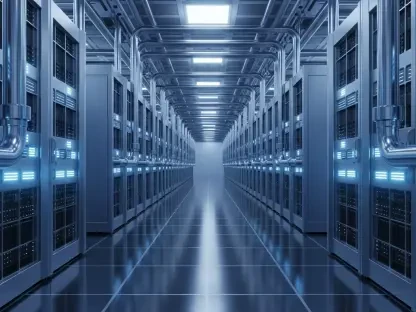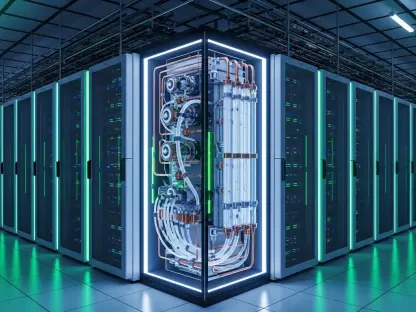

The ambitious proposal to relocate vast data processing infrastructures into Earth’s orbit presents a fascinating, if not fantastical, solution to our planet’s escalating computational demands. This review will explore the evolution of this idea, its key theoretical components, performance challenges, and the potential impact it could have on global data processing. The purpose of this review is to provide a thorough understanding of the proposal, its current feasibility, and its potential for future development.
An Introduction to the Orbital Data Center Concept
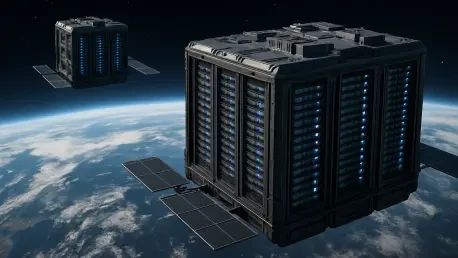
The concept of an orbital data center stems from a straightforward, yet audacious, vision: launch a massive network of servers into space. This idea, most notably linked to Elon Musk’s proposal for one million such satellites, aims to address the growing terrestrial constraints on data infrastructure. By moving these facilities off-world, proponents imagine a future free from earthly limitations on physical space and energy consumption, powered by abundant solar energy.
This network would theoretically function as the backbone for next-generation global services, particularly those requiring immense processing power. The core premise is that an orbital constellation could offer unparalleled connectivity and computational resources, creating a truly global, high-performance computing grid. However, translating this vision from a high-level concept into a workable engineering reality reveals a cascade of formidable obstacles.
Analysis of Critical Feasibility Challenges
While the vision is compelling, the practical execution faces a series of fundamental, and perhaps insurmountable, technical hurdles. The unique environment of space, often perceived as an advantage, introduces complex problems that have no simple terrestrial equivalents. These challenges span thermal management, hardware upkeep, and the very safety of near-Earth orbit, casting significant doubt on the project’s viability.
The Unsolvable Problem of Heat Dissipation
On Earth, data centers rely on air and liquid cooling systems, using conduction and convection to transfer massive heat loads away from processors. In the vacuum of space, these highly effective methods are useless. The only mechanism for shedding heat is thermal radiation, a far less efficient process. Consequently, preventing the servers from overheating and failing becomes an immense engineering challenge, requiring enormous radiator panels that would add significant mass and complexity to each satellite.
This thermal bottleneck is not a minor issue but a primary limiting factor. Without a revolutionary breakthrough in heat-dissipation technology or the development of processors that operate at near-zero thermal output, the sheer heat generated by a dense array of servers would be catastrophic. The physics of the situation suggests that a space-based data center, as currently conceived, would struggle to manage its own thermal waste, severely capping its performance potential.
Hardware Maintenance and Reliability in a Harsh Environment
The logistical challenge of maintaining and repairing hardware in orbit is staggering. Unlike terrestrial data centers where technicians can physically replace failed components, orbital repairs are impractical and prohibitively expensive. Dispatching service missions for routine maintenance on a constellation of a million satellites is simply not a feasible operational model. Therefore, each unit would need to be designed with unprecedented levels of reliability and redundancy.
Furthermore, the space environment itself is exceptionally hostile to sensitive electronics. Constant exposure to cosmic radiation, extreme temperature fluctuations between sunlight and shadow, and the persistent threat of micrometeoroid impacts would dramatically shorten the lifespan of components. This harsh reality means that hardware failure rates would be significantly higher than on Earth, directly conflicting with the need for a hands-off, ultra-reliable system.
Orbital Congestion and Catastrophic Collision Risk
Introducing one million new satellites would dangerously intensify the already significant problem of orbital congestion. Earth’s orbit is a finite resource, and such a dense constellation would dramatically increase the probability of collisions. The consequences of even a single collision could be devastating, setting off a chain reaction known as the Kessler syndrome.
As highlighted by aerospace experts like former NASA engineer John Crassidis, a cascading series of collisions would generate a massive field of high-velocity debris. This debris would threaten not only the data center constellation itself but all other operational satellites, from communication and navigation systems to vital scientific instruments. In a worst-case scenario, such an event could render vast portions of near-Earth orbit unusable for generations.
The Terrestrial Demand Driving an Orbital Vision
The push for such an extreme solution is rooted in a very real terrestrial problem: the insatiable global demand for data processing. The exponential growth of digital services, cloud computing, and connected devices has placed immense strain on our planet’s infrastructure. Data centers are resource-intensive, consuming vast amounts of land, electricity, and water for cooling, raising significant environmental and logistical concerns.
This escalating demand creates a powerful incentive to explore radical alternatives. The concept of moving data infrastructure into space is, at its core, an attempt to sidestep these earthly limitations. Proponents argue that by tapping into the constant solar power available in orbit and escaping the confines of land-based real estate, an off-world solution could offer a path to seemingly limitless computational growth.
Proposed Application Powering a Global AI Infrastructure
The most prominent application envisioned for orbital data centers is powering a global artificial intelligence infrastructure. The development and operation of advanced AI models require computational power on a scale that is beginning to challenge the capacity of our existing energy grids and data facilities. Training a single large-scale AI can consume as much electricity as a small city, a demand that is only set to increase.
By situating the necessary high-performance computing resources in space, this orbital network could theoretically provide the on-demand processing power required for next-generation AI without further burdening Earth’s resources. This would support a future where complex AI systems manage global logistics, conduct scientific research, and drive autonomous systems, all powered by a dedicated off-world computational grid.
Expert Consensus and Overarching Limitations
Despite the allure of this vision, the consensus among aerospace and computer engineers is overwhelmingly skeptical. The proposal is widely viewed as fundamentally impractical with current or near-future technology. The combination of unresolved challenges—from thermal management in a vacuum to the impossibility of physical maintenance—presents a wall of engineering problems without clear solutions.
The core limitations are not incremental hurdles but foundational physical and logistical barriers. Experts consistently point to the issues of heat dissipation, hardware reliability in a hostile environment, and the catastrophic risk of orbital collisions as the primary reasons why this concept remains firmly in the realm of science fiction. The scale of the proposal exacerbates every one of these problems, turning difficult engineering tasks into seemingly impossible ones.
Future Outlook The Viability of Data in Space
While the notion of a million-satellite data center network appears unfeasible, the underlying idea of processing data in space is not entirely without merit. A more plausible future might involve smaller, highly specialized computational platforms in orbit. These could serve niche applications, such as processing satellite imagery on-board to reduce data transmission back to Earth or supporting deep-space missions that require autonomous decision-making.
For any form of large-scale orbital computing to become viable, fundamental breakthroughs would be required. This includes the development of ultra-efficient, low-heat processors, revolutionary advances in radiator technology, and the deployment of sophisticated autonomous robotic systems capable of performing complex repairs in orbit. Until such technologies mature, the prospect of data centers in space will remain a distant, speculative concept.
Final Assessment and Conclusion
The analysis of space-based data centers revealed a concept caught between visionary ambition and overwhelming practical constraints. The proposal sought to address the escalating terrestrial demand for data processing by moving infrastructure off-world, but it collided with fundamental laws of physics and logistics. The challenges of heat dissipation, hardware maintenance, and orbital safety proved to be insurmountable with today’s technology. The expert community’s consensus underscored that while the problem it aimed to solve was real, the proposed solution was not a viable path forward. This review determined that future efforts should focus on more grounded, incremental innovations for managing data on Earth, rather than pursuing an orbital architecture that remains beyond our current technological grasp.