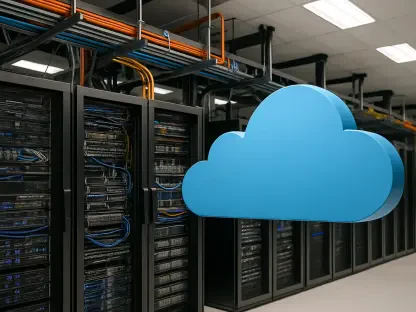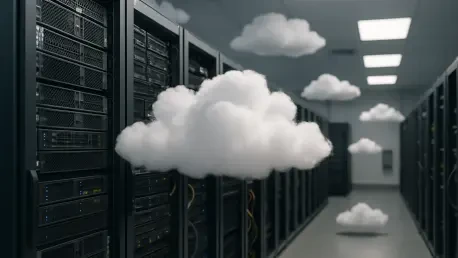

The long-standing tug-of-war between the boundless agility of the public cloud and the steadfast control of on-premises infrastructure has defined IT strategy for over a decade, leaving enterprises in a state of perpetual compromise. This article explores the rise of a third option—consumption-based infrastructure—that promises the best of both worlds by delivering a cloud-like service experience directly within an organization’s own data center. This analysis will dissect the mechanics, market impact, and future trajectory of this transformative trend, using HPE GreenLake as a primary case study to illustrate how the IT landscape is being fundamentally reshaped.
The Ascent of On-Premises as-a-Service
Market Dynamics and Growth Statistics
The movement toward delivering on-premises infrastructure through an as-a-service model is no longer an emerging concept but a validated and rapidly accelerating market trend. This shift is substantiated by the strategic convergence of major industry players who have all launched competitive offerings. The presence of comprehensive platforms like Dell APEX, Cisco Plus, and NetApp Keystone signals a collective acknowledgment that the future of enterprise IT procurement is service-oriented. These competing solutions, while distinct in their specifics, share a common goal: to abstract the complexity of hardware management and offer IT resources with cloud-like financial and operational flexibility.
This market validation is powerfully underscored by real-world adoption data. Industry leaders are reporting significant traction, with platforms like HPE GreenLake emerging as a dominant force. Recognized by Gartner as a Leader in Infrastructure Platform Consumption Services, the platform’s success is quantifiable, serving a vast and growing customer base of over 44,000 organizations and generating substantial, recurring revenue. Such figures are not merely vanity metrics; they are definitive proof that a large segment of the market is actively choosing to procure and manage on-premises technology through a consumption model, confirming its viability and appeal.
At its core, this trend reflects a profound evolution in how businesses approach IT finance. The traditional model, built on large, upfront capital expenditures (CapEx), often resulted in cycles of overprovisioning and underutilization, creating a significant barrier to adopting new technologies. In contrast, the as-a-service approach champions predictable operational expenses (OpEx), allowing organizations to pay for technology as they use it. This financial recalibration democratizes access to advanced infrastructure, enabling even small and medium-sized enterprises to leverage state-of-the-art compute, storage, and networking capabilities without the prohibitive initial investment.
The HPE GreenLake Model in Practice
The fundamental concept behind HPE GreenLake is the delivery of a public cloud experience—characterized by pay-per-use billing, effortless scalability, and comprehensive managed services—on infrastructure that resides securely within the customer’s own physical environment. This could be a traditional data center, a colocation facility, or even at the distributed edge. It resolves the classic hybrid cloud dilemma by bringing the operational model of the cloud to the workloads that cannot or should not migrate, whether for reasons of data sovereignty, regulatory compliance, security protocols, or performance-sensitive latency requirements.
The operational mechanics of the solution are a sophisticated integration of hardware, software, and services. The foundation is built upon HPE’s robust hardware portfolio, including hyper-converged platforms like SimpliVity, composable infrastructure such as Synergy, and high-performance storage systems like Alletra. This physical layer is governed by a unified software management plane, HPE GreenLake Central, which provides a single, intuitive portal for monitoring usage, managing costs, and provisioning resources across the entire hybrid estate. This ecosystem is then wrapped in end-to-end professional services, where HPE experts handle everything from initial deployment and configuration to ongoing monitoring, maintenance, and optimization, thereby offloading a significant operational burden from the customer’s internal IT team.
The economic engine of this model is its consumption-based pricing structure, which is designed to eliminate the financial waste of traditional IT procurement. Customers pay a monthly fee calculated on metered usage, with metrics tailored to the specific workload, such as per-virtual-machine, per-container, or per-gigabyte of storage consumed. To facilitate the cloud-like agility, HPE installs a pre-provisioned buffer of extra capacity on-site. This buffer allows the organization to scale resources almost instantaneously to meet fluctuating business demands without enduring lengthy procurement cycles. Crucially, billing for these additional resources is only initiated once they are actively consumed, ensuring that payment is always aligned with actual value delivered.
Insights from Industry Leaders and Analysts
The industry consensus, heavily reinforced by analysis from leading research firms like Gartner, is that consumption-based models provide an effective and practical solution to the core challenges of modern hybrid IT. These platforms directly address the needs of enterprises struggling to balance innovation with governance. For a significant portion of workloads that must remain on-premises, this model offers a sustainable path forward, blending the operational efficiency and financial predictability of the cloud with the security, control, and performance guarantees of dedicated infrastructure. Analysts view this not as a niche solution but as a mainstream strategy for data center modernization.
The widespread convergence of major hardware vendors on this “as-a-service” model is a clear indicator of a fundamental shift in vendor strategy, driven by evolving customer expectations. The “as-a-service-ification” of the data center is a direct and strategic response to enterprise demand for greater business agility, simplified operational management, and more flexible financial arrangements. This alignment signals a deep-seated belief among technology leaders that the future of enterprise IT is inherently service-oriented, where value is measured not by the ownership of physical assets but by the seamless delivery of outcomes and capabilities.
Future Outlook and Strategic Implications
Looking ahead, the consumption-based model is poised to become the de-facto standard for enterprise data center modernization initiatives. Its influence is projected to expand beyond core infrastructure, encompassing an ever-wider range of complex, high-value workloads. This includes resource-intensive applications in artificial intelligence and machine learning (AI/ML), high-performance computing (HPC), and the increasingly critical domain of distributed edge environments. As these technologies become more central to business strategy, the ability to deploy and scale them with financial and operational efficiency will be paramount, making the as-a-service model an even more compelling proposition.
One of the most significant benefits driving this trend is superior financial efficiency. By converting massive capital expenditures into manageable operational expenses, businesses can avoid the long-standing problem of overprovisioning and significantly reduce their Total Cost of Ownership (TCO). This financial model preserves capital for other strategic investments and aligns IT spending directly with business consumption. Furthermore, the operational simplicity offered by these platforms is a powerful catalyst for transformation. Offloading the day-to-day burdens of infrastructure management—such as patching, monitoring, and lifecycle support—frees internal IT teams from routine maintenance, allowing them to redirect their expertise toward high-impact, value-added initiatives that drive innovation and competitive advantage.
This model also delivers a crucial competitive edge through enhanced agility. In a digital economy where speed is paramount, the ability to scale resources almost instantly to meet dynamic market demands or internal development needs is a game-changer. The on-site capacity buffer eliminates the procurement delays inherent in traditional hardware acquisition, allowing businesses to seize opportunities and respond to challenges with unprecedented speed. Simultaneously, the model preserves the essential elements of control and compliance. By keeping sensitive data and critical systems within the organization’s own physical or logical perimeter, it provides the security and governance that public cloud services cannot always guarantee, satisfying stringent regulatory and data sovereignty requirements.
However, adopting a consumption-based model requires a careful evaluation of its inherent challenges. A critical consideration is the long-term cost analysis; while the pay-per-use model is attractive for its initial flexibility, the cumulative subscription fees over a multi-year contract term may ultimately exceed the cost of an outright capital purchase. Organizations must conduct a thorough financial assessment to determine the true TCO for their specific use case. Another fundamental trade-off is the lack of asset ownership. At the conclusion of the service agreement, the organization is left with no physical hardware to retain, sell, or repurpose, which contrasts sharply with the traditional procurement model where owned assets retain some residual value.
Moreover, this approach inherently creates a strong dependence on a single vendor for service delivery, technical support, and the future technology roadmap. This can limit an organization’s flexibility and negotiating power over time, making a thorough evaluation of the vendor’s stability, service quality, and long-term vision an essential part of the due diligence process. Finally, security and compliance considerations remain paramount. The model requires granting third-party vendor personnel a degree of access to on-premises systems for management and monitoring. While vendors have robust security protocols, this requirement may conflict with particularly stringent internal security policies or regulatory mandates, necessitating careful review and potential adjustments to governance frameworks.
Conclusion: Embracing the Future of IT Procurement
The rise of consumption-based infrastructure, powerfully exemplified by platforms like HPE GreenLake, represented a pivotal evolution in the delivery and procurement of enterprise IT. This model successfully merged the sought-after financial and operational benefits of the public cloud with the non-negotiable security and control of an on-premises data center. It provided a pragmatic and compelling solution to the central dilemma that had defined hybrid IT strategy for years.
Ultimately, this trend proved to be far more than a clever pricing strategy; it was a strategic response to the relentless demands of digital transformation. It empowered a diverse range of organizations, including small and medium-sized enterprises that previously lacked the capital for major infrastructure overhauls, to modernize their technology foundations and innovate at a faster pace. The shift in focus from owning hardware to consuming outcomes fundamentally altered the relationship between businesses and their technology.
As organizations navigated the increasing complexities of a truly hybrid world, the evaluation of consumption-based models was no longer an optional exercise but a critical and necessary step. For those that embraced it, this approach became instrumental in building a more agile, financially efficient, and resilient IT foundation, positioning them to thrive in the competitive landscape of the future.