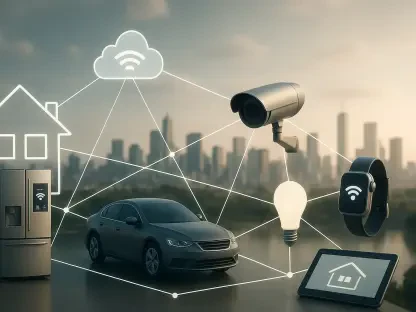

The rapid transformation of traditional manufacturing plants into hyper-connected smart facilities has fundamentally altered the defensive requirements of the industrial perimeter, moving security far beyond the simple locking of doors. As global industries move deeper into 2026, the proliferation of the Industrial Internet of Things (IIoT) has created a landscape where millions of interconnected devices manage everything from power grids to assembly lines. While this connectivity serves as the engine for unprecedented productivity and efficiency, it simultaneously expands the attack surface, leaving critical infrastructure susceptible to sophisticated digital and physical breaches. The necessity for a more robust security paradigm is driven by the reality that a significant portion of these connected devices often lack native security protocols, making them potential entry points for malicious actors. Consequently, modern industrial security has evolved into a proactive, data-driven ecosystem where physical access control systems (ACS) are no longer isolated silos but are fully integrated components of the broader operational technology framework, allowing for real-time responses to emerging threats.
Engineering a Resilient Architectural Backbone
The integration of advanced access control within an industrial environment relies on a sophisticated five-layer architecture designed to ensure that data flows seamlessly from the factory floor to centralized management platforms. At the foundation sits the device layer, which encompasses a diverse array of physical hardware including biometric scanners, smart card readers, and an extensive network of industrial sensors that monitor environmental variables like machine vibration, ambient temperature, and personnel movement. This physical layer does more than just identify a credential; it serves as the eyes and ears of the facility, gathering raw data that informs the entire security posture. By linking these devices to the edge layer, organizations can process critical information locally, which is essential in high-stakes industrial settings where every millisecond counts. This localized processing allows the system to make instantaneous decisions regarding entry permissions, ensuring that safety protocols are strictly enforced even if the connection to a distant central server is momentarily interrupted, thereby maintaining continuous protection across the entire site.
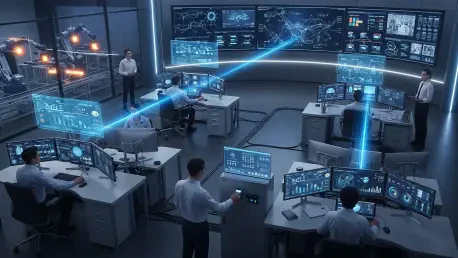
As information ascends through the network and application layers, it is protected by high-level encryption and specialized communication protocols that prevent unauthorized interception or tampering. These layers are responsible for aggregating disparate data streams into a centralized dashboard, often referred to as a single pane of glass, which provides security managers with a comprehensive view of the facility’s status at any given moment. This high-level visibility allows for the coordination of automated responses across different departments, such as triggering an immediate lockdown if a breach is detected in a sensitive area. At the pinnacle of this structure is the cloud and artificial intelligence layer, where massive datasets are stored and analyzed using machine learning algorithms to identify subtle anomalies that might escape human observation. For instance, AI can detect if a single access credential is being used in two geographically distant buildings simultaneously, providing an early warning of a potential security compromise or a misplaced badge before an actual incident occurs.
Integrating Environmental Awareness into Entry Systems
One of the most transformative aspects of merging access control with the IIoT is the shift from static, rule-based permissions to dynamic, context-aware decision-making. In a traditional industrial setting, a technician might possess a badge that grants them round-the-clock access to a specific turbine room regardless of the operational conditions inside. However, in a modern integrated system, that access becomes contingent upon real-time data provided by environmental sensors and machine health monitors. If these sensors detect a hazardous chemical leak, a sudden spike in high-voltage activity, or a machine overheating to dangerous levels, the access control system can automatically and instantly revoke entry permissions for all non-emergency personnel. This level of automation effectively removes the human lag that often exacerbates industrial accidents, ensuring that workers are never inadvertently placed in harm’s way due to a lack of communication or delayed manual intervention.
To achieve this level of synchronization, industrial facilities are increasingly utilizing digital twins and open application programming interfaces (APIs) to bridge the gap between physical hardware and digital intelligence. Digital twins act as virtual replicas of the entire plant, allowing security and safety teams to simulate various emergency scenarios and predict how personnel will move through the space under different conditions. By feeding real-time access data into these virtual models, operators can identify potential bottlenecks or safety risks before they manifest in the physical world. Furthermore, the use of open APIs allows the security software to communicate directly with human resources databases and production schedules, ensuring that a worker’s access levels are automatically adjusted based on their current shift assignment or the expiration of their safety certifications. This creates a seamless, automated link between administrative management and physical site safety, ensuring that only the right people are in the right places at the right times.
Strategic Directions for Autonomous Industrial Protection
The strategic advantages of converging access control with industrial automation extended far beyond simple security, offering tangible improvements in operational uptime and regulatory compliance. By preventing unauthorized or untrained individuals from interacting with sensitive machinery, organizations significantly reduced the likelihood of accidental downtime caused by human error. Moreover, the integrated nature of these systems provided an unalterable, comprehensive digital log of every entry and exit, which simplified the process of meeting rigorous safety audits and industry regulations. Despite these clear benefits, the transition required navigating the complexities of legacy infrastructure, as many older plants operated with hardware that was never intended for network connectivity. Addressing this challenge often involved the strategic use of middleware and the adoption of a Zero Trust security philosophy, where no user or device was granted access without continuous, multi-factor verification throughout their entire time on the premises.
Looking forward, the continued evolution of 5G connectivity and the eventual rise of fully autonomous security systems promised to further redefine the industrial landscape. The high bandwidth and low latency of 5G provided the necessary infrastructure for even larger, more complex IoT networks, allowing for the real-time processing of massive data streams across vast industrial complexes. Organizations that successfully synthesized physical and digital security protocols found that they were better equipped to handle the overlapping threats of the modern era, where a cyber-attack on a control system could be met with an immediate physical lockdown of the affected server room. Ultimately, the industry moved toward a model where security was treated as a foundational element of the automation stack, protecting both human life and industrial productivity. This transition proved that the integration of access control and IIoT was not merely a technological upgrade but a vital necessity for maintaining safety and efficiency in an increasingly interconnected and volatile global market.