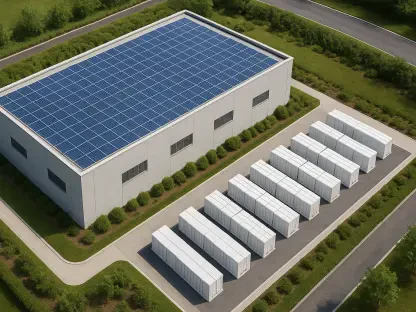

As the demand for real-time artificial intelligence processing outstrips the capabilities of centralized cloud hubs, the technology industry is witnessing a dramatic pivot toward decentralized, high-performance computing located at the network’s very edge. This shift is not merely a technical adjustment but a fundamental reconfiguration of how data is processed, stored, and utilized in regions that have historically been overlooked by major digital infrastructure providers. The emergence of specialized providers capable of deploying ruggedized, high-density environments in remote locations has created a new frontier for industries ranging from precision agriculture to rural healthcare. For companies that previously focused on industrial monitoring, this evolution represents an opportunity to leverage existing engineering expertise to solve the pressing challenges of the modern AI era. By addressing the massive latency and bandwidth constraints inherent in long-distance data transmission, these firms are positioning themselves as the backbone of a more equitable and efficient global digital economy.
Engineering the Transition to Specialized Computing
Technical Specifications of Modular Environments
The move toward localized AI requires a departure from traditional data center architecture, necessitating the development of modular edge data centers that can operate in harsh or isolated conditions. These facilities are built using a patented, clean-room-engineered design that prioritizes both rapid deployment and exceptional operational efficiency without relying on the massive footprints typical of hyperscale facilities. One of the most significant engineering achievements in this space is the ability to support high-density workloads, often exceeding 100 kilowatts per cabinet, without the traditional requirement for intensive water-cooling systems. This technical breakthrough allows for the installation of advanced GPU hardware in environments where water resources are scarce or infrastructure is limited to standard on-grid power. By achieving SOC 2 Type II compliance, these modular units provide the enterprise-grade security and reliability necessary for sensitive government and commercial operations.
Building on these technical foundations, the physical implementation of these units involves a rigorous focus on durability and scalability to ensure long-term performance in Tier 3 and Tier 4 markets. Because these facilities are often located far from primary technical hubs, they must be designed for remote management and high uptime with minimal physical intervention from specialized personnel. This approach relies on integrated monitoring systems that oversee every aspect of the thermal environment and power distribution, ensuring that the high-performance GPUs used for AI training and inference remain within optimal operating parameters. The result is a highly adaptable infrastructure model that can be transported and activated in a fraction of the time required for traditional construction. This speed of deployment is critical for organizations that need to scale their computational power quickly to meet the sudden demands of localized AI applications, particularly in sectors where every millisecond of latency can impact the final outcome.
Operational Milestones and Regional Integration
The practical application of this modular strategy is best observed through recent deployments in localized American markets, such as the new installations currently operating in Hereford and Waco, Texas. These facilities represent a significant departure from the trend of building massive server farms in established tech corridors, choosing instead to serve a broad range of local government entities and school districts directly. By placing high-performance compute resources within the communities they serve, these data centers allow for the processing of vast datasets—such as high-resolution video feeds or real-time sensor data—without the need to transmit that information to a distant urban center. This localized approach not only reduces the strain on regional fiber networks but also provides a level of data sovereignty and speed that was previously unavailable to municipal leaders and local educational institutions seeking to modernize their digital services.
This integration into regional ecosystems facilitates the growth of specialized local industries that require immediate data processing to remain competitive in a globalized market. For example, local utilities and manufacturing plants can utilize these nearby GPU resources to run complex predictive maintenance algorithms that prevent equipment failure and optimize resource allocation in real time. The presence of these edge facilities acts as a catalyst for economic development, attracting talent and investment to areas that were once considered digital deserts. By utilizing a model that relies solely on on-grid power, these installations can be positioned in a variety of industrial and commercial zones, making them a versatile tool for city planners. The success of these initial deployments demonstrates that high-performance computing is no longer the exclusive domain of major metropolitan areas, but a decentralized utility that can be deployed wherever a need for advanced intelligence arises.
Financial Trajectory and Operational Scaling
Transitioning to Recurring Revenue Models
The transformation of a legacy technology firm into a modern infrastructure provider is reflected most clearly in the adoption of a recurring revenue model centered on GPU-as-a-Service offerings. This shift away from one-time hardware sales toward a subscription-based hosting and compute model provides a more predictable and scalable financial foundation for long-term growth. Currently, the commitment to this strategy is evidenced by a substantial GPUaaS contract valued at approximately $176 million, which underscores the high market demand for specialized compute power. With a current backlog of $14 million, the transition is already demonstrating tangible results as the organization moves to fulfill existing orders while simultaneously expanding its capacity. This model allows the company to capture ongoing value from its infrastructure investments, ensuring that each megawatt of deployed capacity contributes to a steady stream of income that supports further research and development.
To sustain this aggressive growth, management has established clear performance targets for the current fiscal year, aiming for a total revenue exceeding $50 million. This ambitious goal is supported by a planned $30 million capital expenditure phase, which is dedicated to expanding the physical footprint of the modular data center network. The objective is to reach a total deployment of 25 megawatts of capacity, a threshold that would solidify the firm’s position as a significant player in the edge computing landscape. Achieving positive adjusted EBITDA by the second half of the year remains a primary focus, as it would signal the financial maturity of the edge AI business unit. By carefully managing the rollout of new facilities and maximizing the utilization rates of existing GPU assets, the organization aims to prove that the modular infrastructure model is not only technically viable but also highly profitable in an increasingly competitive and data-driven marketplace.
Future Considerations for Edge Deployment
While the technical and financial indicators remain strong, the long-term success of decentralized AI infrastructure will depend on the ability to manage the operational complexities of a distributed network. Unlike centralized facilities, a network of modular edge data centers requires a sophisticated logistics and maintenance strategy that can address issues across hundreds of miles and various jurisdictions. Practitioners must consider the trade-offs involved in remote power provisioning and the potential for localized outages that could affect specific nodes of the network. The ability to maintain high utilization rates for GPU assets is also a critical factor, as empty racks represent a significant lost opportunity in a capital-intensive industry. Therefore, the strategic selection of deployment sites becomes as important as the technology itself, requiring deep market analysis to identify areas with the highest potential for immediate and sustained demand for AI services.
In the final assessment, the transition toward localized high-performance computing proved to be a necessary evolution for firms looking to stay relevant in the age of pervasive artificial intelligence. Industry leaders recognized that the decentralization of compute power was the only sustainable way to address the growing digital divide and the technical limitations of centralized clouds. Organizations that successfully adopted modular, clean-room-engineered designs were able to provide critical services to telemedicine, manufacturing, and municipal government sectors in rural areas. Moving forward, the focus shifted toward optimizing the unit economics of each deployment and ensuring that the infrastructure could scale without a proportional increase in operational overhead. Stakeholders were advised to monitor the conversion of project backlogs into recognized revenue as a primary indicator of long-term stability. The ultimate legacy of this shift was the creation of a more resilient and distributed digital landscape that empowered local communities with the same advanced tools once reserved for the world’s largest tech conglomerates.