
The relentless acceleration of generative artificial intelligence has pushed the modern data center beyond its traditional thermal and electrical limits, forcing a total reimagining of infrastructure. As large language models grow in complexity, the hardware required to sustain them demands a surge in power density that the existing grid was never designed to handle. This shift necessitates a move away from passive consumption toward active, intelligent resource orchestration. This guide examines the essential pillars of modern energy management, focusing on data-driven forecasting, independent power generation, and the critical synchronization of hardware operations with facility cooling systems.
Proactive adaptation is no longer an optional sustainability goal but a requirement for maintaining operational uptime in a market where electricity availability is the ultimate bottleneck. By integrating predictive analytics and decentralized power sources, operators can shield themselves from the volatility of the national grid. The integration of high-density computing clusters requires a cultural shift, bringing together the worlds of server administration and physical plant engineering to ensure that every watt is accounted for and every thermal spike is managed efficiently.
The Evolution of Energy Management in the AI Era
The transition to AI-centric computing has rendered the steady-state energy models of the past decade largely obsolete. In the previous era of cloud computing, power draws were relatively predictable and distributed across vast server farms, allowing for standardized cooling and power distribution. In contrast, the current environment features high-density racks that consume significantly more power than standard hardware. This concentration of heat and energy creates a localized intensity that requires a more granular and responsive management approach.
Operators must now navigate a landscape where the computational demand of a single AI training cluster can rival the energy consumption of a small city. Traditional utility relationships have changed, as providers struggle to scale infrastructure fast enough to keep pace with hyperscale expansions. Consequently, the focus has shifted toward building intelligent facilities that can modulate their energy draw in real-time, leveraging every available efficiency to prevent thermal throttling or costly electrical overages.
The Imperative for Adopting Modern Power Best Practices
Adopting modern power management strategies is the only way to mitigate the risks associated with the skyrocketing costs of electricity and the increasing strain on national power grids. Many regions currently experience connection delays for new facilities, meaning that the ability to maximize the capacity of existing sites is a major competitive advantage. Without a sophisticated energy strategy, organizations face the prospect of stranded capacity, where they have the physical space and hardware but lack the power to turn it all on.
Sustainability initiatives also serve as a critical safeguard against the volatile energy markets of 2026. Investing in efficiency is no longer just about environmental stewardship; it is about financial survival in an era of fluctuating fuel prices and carbon-related regulations. Companies that fail to optimize their power usage effectiveness risk being priced out of the market by more agile competitors who have successfully lowered their operational overhead through advanced energy orchestration.
Core Strategies for Resilient and Sustainable Data Operations
The foundation of a resilient operation lies in the integration of advanced monitoring technology with a management culture that prioritizes long-term stability. Operators should begin by establishing a baseline that accounts for the unique fluctuations of AI workloads, which can see sudden and massive spikes in power demand. This involves deploying a layer of software that bridges the gap between the server BIOS and the facility’s power distribution units.
A robust framework also requires a shift in how organizations view their relationship with the power grid. Instead of being passive recipients of energy, data centers are increasingly becoming active participants in grid stability through demand-response programs and on-site generation. This holistic approach ensures that the facility remains operational even during peak demand periods or grid instability, protecting the massive capital investment represented by AI hardware.
Leveraging Predictive Modeling and Standardized Metrics
Modern energy management relies heavily on sophisticated modeling to forecast energy needs based on the specific density of AI workloads. By using site-specific data and historical consumption patterns, managers can simulate various scenarios to determine how changes in chip architecture or software optimization will impact the total power draw. This allows for more precise planning of future expansions and ensures that cooling capacity is always aligned with the actual heat output of the servers.
Metrics like Power Usage Effectiveness and Water Usage Effectiveness have evolved from simple reporting tools into essential benchmarks for performance optimization. While PUE remains the industry standard, forward-thinking operators are now looking at more specialized data, such as carbon intensity per compute cycle. These standardized metrics allow for a transparent evaluation of efficiency across different sites, enabling the identification of underperforming assets that require hardware refreshes or facility upgrades.
Case Study: Optimizing Utility Contracts Through Performance Forecasting
One prominent operator demonstrated the value of this approach by utilizing detailed site data to negotiate more favorable power purchase agreements. By presenting utilities with accurate forecasts of their minimum and maximum loads, they secured stable pricing structures that protected them from the price surges of 2026. This level of transparency built trust with the utility providers, who were then more willing to prioritize the data center’s needs during grid maintenance schedules.
The success of this strategy rested on the ability to quantify how specific AI training cycles impacted the local grid at different times of day. By demonstrating a capacity to shift non-critical workloads to off-peak hours, the operator avoided expensive demand charges that would have otherwise eroded their profit margins. This proactive financial management proved that technical data, when presented strategically, can be a powerful tool for reducing long-term operational costs.
Investing in On-Site Microgrids and Renewable Infrastructure
To truly control their energy destiny, many organizations are investing in on-site microgrids that can operate independently of the local utility. These systems often combine solar arrays, wind turbines, and large-scale battery storage to provide a constant and reliable power source. By generating a portion of their own energy, data centers reduce their reliance on an aging grid and protect themselves against the rising costs of traditional power generation.
Renewable energy credits play a significant role in this strategy, allowing facilities to offset their carbon footprint while supporting the growth of clean energy infrastructure. However, the most successful operators are those who move beyond mere credits and invest in physical on-site generation. This not only improves sustainability but also enhances security, as on-site power is less vulnerable to the types of large-scale outages that can be caused by extreme weather or cyberattacks on public utilities.
Real-World Application: Hyperscaler Independence via Decentralized Power
A major technology firm recently implemented a decentralized power model that utilized on-site natural gas generators and massive battery banks to achieve a high degree of independence. This setup allowed them to maintain full operational capacity during a severe regional power shortage that forced other local industries to scale back. By managing their own power supply, they avoided the reputational and financial damage associated with unexpected downtime.
This move toward energy independence also improved the firm’s standing with the local community. By reducing their peak demand on the public grid, they helped lower the overall energy prices for residents and small businesses in the area. This application showed that becoming an energy producer, rather than just a consumer, can transform a data center into a stabilizing force for the regional infrastructure.
Bridging the Gap Between IT and Facilities Management
The historical divide between IT staff and facilities experts has become a significant barrier to efficiency in the AI era. IT teams understand the power requirements of the hardware, while facilities teams understand the thermodynamics of the building. Success now requires these two groups to work in a unified data environment, where server-level telemetry is shared with HVAC controls to create a more responsive cooling environment.
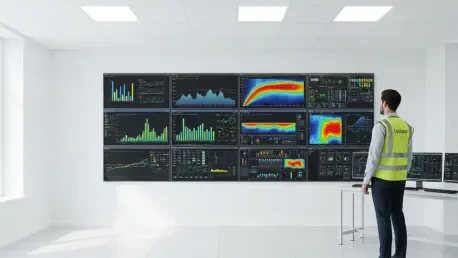
Implementing precision cooling requires this collaborative approach to identify exactly where heat is being generated. When IT and facilities teams share a common dashboard, they can adjust airflow and coolant levels in real-time based on the actual load of the AI clusters. This synergy reduces the wasted energy traditionally spent on over-cooling entire rooms when only a few specific racks are running hot.
Implementation Spotlight: Thermal Precision in High-Density AI Clusters
In a recent deployment, a collaborative team of engineers identified that traditional air-cooling methods were insufficient for their latest AI training clusters. By working together, they designed a liquid cooling system that brought chilled plates directly into contact with the highest-heat components. This level of thermal precision allowed them to pack racks much tighter than before, significantly increasing the computational power per square foot.
The results of this implementation were immediate, as the total energy load required for cooling dropped by nearly forty percent. This success was only possible because the IT team provided the facilities group with early access to the hardware specifications, allowing them to prepare the plumbing and electrical infrastructure before the servers even arrived. This spotlighted the fact that early communication is the most effective tool for managing the extreme heat of modern AI.
Future-Proofing Data Infrastructure: Final Evaluation
Industry leaders recognized that energy management moved from a secondary operational expense to the primary strategic driver of enterprise value. Organizations that succeeded focused on long-term operational savings over immediate capital expenditure. Decisions regarding liquid cooling and hardware virtualization were prioritized to handle the intensity of dense AI clusters. Those who adopted microgrids found that they secured their operational future against market volatility. Future considerations suggested a move toward complete energy autonomy as the only path for sustainable hyperscale growth.
Practical steps involved the phased retirement of legacy cooling systems and the adoption of AI-driven orchestration software to manage energy draws. Operators discovered that the initial costs of microgrid adoption were offset by the reliability they gained during times of grid stress. The most resilient facilities were those that integrated these energy strategies into their core business planning. As the demand for AI continues to rise, the ability to manage energy with precision will remain the defining factor for success in the data center industry.