
While the rolling hills and quiet woodlands of Western Kentucky suggest a timeless way of life, a significant technological transformation is currently unfolding beneath the soil and across the local power poles as high-speed connectivity reaches the most remote areas. Cornerstone Connectivity, the telecommunications provider formerly known as West Kentucky Rural Telephone, recently unveiled a comprehensive infrastructure project that promises to fundamentally change the digital landscape of southeast Carlisle County. This initiative, which was officially announced at the organization’s headquarters in Mayfield, utilizes a substantial $1.3 million grant from the U.S. Department of Agriculture to deliver robust fiber-optic internet to residents who have long struggled with inadequate service. This capital infusion represents far more than a routine utility upgrade; it is a strategic effort to bridge the widening digital divide that frequently leaves rural American communities behind their urban counterparts. By committing to this massive installation across five square miles of previously underserved territory, the project seeks to integrate local households and businesses into the global digital economy. This expansion ensures that geographic isolation is no longer a disqualifying factor for economic opportunity or educational success, marking a pivotal moment for a region that has historically relied on agricultural tradition while looking toward a modernized, high-tech future where every citizen has the tools to thrive in a connected world.
Enhancing Quality of Life and Economic Growth
Empowering Residents: The Impact on Health and Education
The transition to high-speed fiber broadband has rapidly shifted from a modern convenience to an essential pillar of community health and individual development in the rural South. Federal and state officials have increasingly emphasized that closing the digital divide is a prerequisite for providing citizens with access to critical resources such as virtual classrooms and life-saving telemedicine services. In many parts of Carlisle County, the lack of a stable connection once meant that students had to travel miles to find a Wi-Fi signal just to complete basic assignments, while elderly residents faced significant logistical hurdles to consult with medical specialists in distant cities. By establishing a reliable, high-capacity connection directly to the home, this project allows families to maintain vital social ties and access government services that were previously difficult to navigate from remote enclaves. The arrival of fiber-optic technology effectively removes these barriers, fostering an environment where wellness and learning are accessible to all, regardless of their proximity to a major metropolitan hub. This social infrastructure is becoming just as important as paved roads, as it provides the necessary foundation for a resilient community that can adapt to the evolving demands of the mid-2020s landscape.
Retaining Local Talent: Combatting the Regional Brain Drain
Economic stability in Western Kentucky is increasingly dependent on the region’s ability to modernize its core infrastructure to prevent a mass exodus of the younger generation. Congressman James Comer has highlighted the importance of providing the same technological amenities found in large urban centers to ensure that counties like Carlisle and Graves can retain their most talented and educated residents. This phenomenon, often referred to as “brain drain,” occurs when young professionals feel compelled to move to cities with better connectivity and career prospects, leaving rural areas with a dwindling workforce and a stagnant economy. However, as the region begins to position itself as a viable hub for large-scale tech investments, including burgeoning regional data centers, the availability of local broadband becomes a primary catalyst for entrepreneurship and professional growth. By creating a landscape where a software developer or a digital marketer can work as effectively from a farmhouse as they can from a high-rise office, the community is actively building a sustainable economic future. This shift not only keeps families together but also attracts new residents who are seeking a high quality of life without sacrificing the speed and reliability of modern digital tools.
Revolutionizing the Agricultural Sector
High-Tech Farming: The Integration of Precision Technology
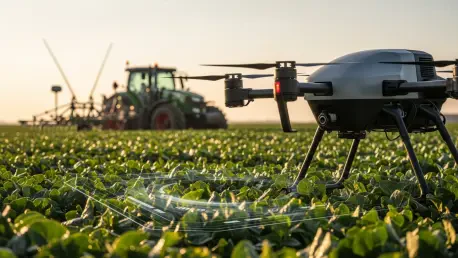
The agricultural industry, which serves as the lifeblood of the Kentucky economy, is moving away from traditional manual methods in favor of a sophisticated, data-driven model that requires constant connectivity. Agriculture Commissioner Jonathan Shell has pointed out that modern farming now relies heavily on precision technology, including tractors equipped with GPS-guided steering and automated sensors that manage climate control in large-scale poultry operations. These advanced tools allow farmers to monitor volatile global commodity markets in real-time and manage their growing environments with a level of precision that was impossible just a few years ago. Without a robust fiber-optic backbone, these technologies cannot reach their full potential, as the high volumes of data generated by modern sensors require more bandwidth than older satellite or DSL connections can provide. This project provides the necessary pipeline for that data, significantly increasing the overall productivity and yield of local farms while reducing the waste of resources like fuel and fertilizer. As farming becomes more of a technical profession than a manual one, the presence of high-speed internet ensures that Kentucky’s agricultural sector remains competitive on the world stage, allowing local producers to maximize their efficiency and profitability.
Durable Infrastructure: The Science of Future-Proof Fiber
To support this rapid technological evolution, the current project involves the installation of 22 miles of fiber-optic cable that has been engineered to be “future-proof” for decades to come. Unlike the aging copper systems that were designed primarily for voice communication, these fiber-optic lines utilize incredibly thin glass strands to transmit data using pulses of light, which allows for nearly unlimited scalability as consumer and industrial bandwidth demands increase. Furthermore, the decision to bury these cables deep underground serves as a critical protection strategy against the unpredictable weather patterns that can often disrupt overhead lines in the rural South. This underground deployment ensures that 15 local farms and dozens of residences will have a durable, uninterrupted connection that can withstand severe storms and falling branches. This commitment to high-quality materials and installation methods reflects a long-term investment in the region’s physical assets, moving beyond temporary fixes to create a permanent solution for the connectivity challenges of the past. By building a network that operates at the speed of light, Cornerstone Connectivity is providing the region with a technical foundation that will not require frequent or costly overhauls as the digital world continues to expand and demand even higher speeds.
Implementing a Collaborative Vision
Strategic Rollout: Timelines and Technical Execution
The comprehensive rollout of this new fiber infrastructure is a $1.5 million venture that is currently progressing through its intensive pre-construction phase. While the USDA grant was officially processed during the latter half of 2025, the actual physical installation and network integration are expected to span approximately one calendar year. This aggressive timeline was established to provide a near-term solution for long-standing connectivity issues, though the project managers remain mindful of variables such as seasonal weather conditions and the ongoing stability of the global fiber-optic supply chain. The pre-construction period involves detailed mapping of the terrain and securing the necessary easements to lay cable across private and public lands, a process that requires close coordination between engineers and local property owners. This meticulous planning phase is crucial for ensuring that the eventual construction proceeds smoothly and that the network is optimized for the highest possible performance once it goes live. By maintaining a transparent schedule and communicating regularly with the community, the project leads are building trust and anticipation for a service that will fundamentally change how the residents of southeast Carlisle County interact with the world around them.
Regional Synergy: The Power of Cooperative Partnerships
Success in these large-scale rural expansion efforts relies heavily on a robust partnership model between federal funding agencies, state policy advocates, and local execution teams. This collaborative approach has already been successfully replicated in neighboring Marshall and Calloway counties, focusing on reaching “dead zones” that national, for-profit providers often overlook due to the high cost of rural deployment. By leveraging federal dollars through local cooperatives that are deeply invested in the welfare of their own communities, Western Kentucky is effectively building the essential infrastructure of the 21st century. The regional leaders finalized these strategies with the understanding that isolated successes were not enough; they identified that a unified front was necessary to ensure the entire region remained competitive in an increasingly globalized market. They prioritized the development of shared resources and technical expertise, which allowed smaller counties to benefit from the lessons learned during larger installations. This unified effort demonstrated that when local organizations worked in tandem with federal support, they achieved a level of coverage that transformed the economic outlook for thousands of households. The participants concluded that this model served as a definitive blueprint for future rural development projects across the nation.