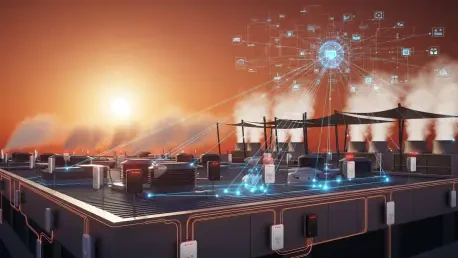

The transition from climate theory to immediate crisis management has become an unavoidable reality as record-breaking thermal events reshape the global operating landscape for essential services. During recent high-profile environmental summits, the physical heat outside the conference halls often mirrored the urgency of the discussions held within, signaling that the focus must move from long-term prevention to active mitigation. To maintain the integrity of vital systems during these extreme temperature spikes, engineers are increasingly deploying the Internet of Things as a primary defensive shield for aging infrastructure. This digital layer allows legacy assets, which were never designed for a world of frequent triple-digit temperatures, to adapt to conditions where a moderate baseline no longer exists. By integrating a network of connected sensors, developers are turning static concrete and steel into reactive, data-driven entities capable of signaling distress before a catastrophic failure occurs in the public eye.
Strengthening Energy Grids Against Thermal Failures
Extreme heat creates a dangerous feedback loop for power providers by simultaneously spiking consumer demand for cooling while physically degrading the components needed to deliver that electricity. Transformers and distribution lines lose efficiency as they struggle to dissipate the heat they generate, a phenomenon that often leads to localized equipment failure or cascading blackouts during peak hours. Modern IoT-enabled smart grids address this vulnerability by embedding thermal sensors and intelligent monitoring units directly into the high-voltage hardware of the transmission network. These devices provide operators with granular, real-time visibility into the health of specific nodes, allowing them to proactively shift loads or implement temporary cooling measures before a critical threshold is reached. By identifying exactly which components are under the most thermal stress, utility companies can prevent the types of widespread outages that previously crippled entire metropolitan regions.
The decentralization of the energy architecture is proving to be a cornerstone of modern thermal resilience as the world moves away from a fragile, single-point-of-failure model. Distributed Energy Resources, including residential solar arrays, commercial battery storage, and localized wind turbines, create semi-autonomous microgrids that can decouple from the main utility during a crisis. IoT controllers manage these assets by balancing local supply and demand with millisecond precision, ensuring that critical facilities like hospitals and cooling centers remain powered even if a primary substation fails due to overheating. This shift toward a honeycomb grid structure means that localized failures remain contained, preventing a singular thermal event from disrupting the lives of millions. Furthermore, these smart systems optimize the discharge of stored energy during the hottest parts of the day, reducing the overall strain on the aging central infrastructure and extending the life of existing equipment.
Enhancing Transportation Safety through Real-Time Data
Rail networks face a persistent physical threat during heatwaves because the steel tracks can expand and buckle under intense direct sunlight, creating lethal hazards for high-speed transit. Historically, the only defense against this phenomenon was the implementation of broad, region-wide speed restrictions that caused massive delays and disrupted global supply chains for days at a time. Today, the deployment of IoT sensors attached directly to the rail webs provides physical temperature data every fifteen minutes, allowing railway engineers to see exactly where the risk of track deformation is highest. This precision enables transit authorities to maintain normal speeds across most of the network while enforcing safety protocols only in the specific sections where the sun’s intensity is reaching a critical level. By moving away from guesswork and toward hard data, logistics companies can keep goods moving efficiently even as the external environment becomes increasingly volatile.
Data-driven strategies are also revolutionizing the way municipal authorities manage water resources, which face the dual threat of increased demand and rapid evaporation during prolonged heatwaves. Smart water networks utilize a combination of underground acoustic sensors and pressure monitors to establish a digital baseline for normal operations, which is then analyzed by artificial intelligence. These systems are capable of detecting minute leaks that would otherwise remain hidden for months, allowing utility crews to fix problems before they escalate into major pipe bursts under the stress of thermal expansion. By eliminating the invisible loss of millions of gallons of treated water, cities can preserve their dwindling reservoirs during periods of extreme drought and high heat. Moreover, the integration of real-time flow data allows for the dynamic adjustment of water pressure throughout the city, ensuring that essential services receive adequate supply while minimizing the risk of infrastructure fatigue.
Optimizing Resource Use and Preventing Disasters
Precision irrigation serves as a prime example of how the Internet of Things can transition municipal and agricultural land management away from wasteful, timer-based schedules. Traditional systems often operate regardless of actual environmental needs, wasting vast quantities of water on soil that is already saturated or, conversely, failing to protect vegetation during a sudden heat spike. By utilizing specialized soil moisture probes and integrating real-time local weather forecasts, IoT controllers ensure that water is only delivered in the exact quantities required for plant survival. Case studies from early adopters in drought-prone regions indicate that this targeted approach can reduce municipal water consumption by nearly forty percent while simultaneously lowering the costs associated with manual maintenance. Additionally, the reduction in unnecessary watering trips decreases the carbon footprint of municipal vehicle fleets, addressing one of the underlying contributors to rising temperatures.
The threat of catastrophic wildfires intensifies significantly during extended heatwaves, necessitating a response time that far exceeds the capabilities of traditional satellite imagery or human observation towers. Ultra-early detection systems now utilize solar-powered gas sensors that are designed to sniff out the unique chemical signatures of the smoldering phase, often detecting a fire long before visible smoke emerges. These devices are connected through mesh gateway systems that transmit critical alerts even in remote wilderness areas where cellular coverage is nonexistent or has been compromised by the heat. This technological advance allows emergency services to intervene while a fire is still manageable, preventing the kind of large-scale environmental and infrastructural destruction that has become tragically common. By establishing a digital perimeter around vulnerable communities and critical assets, the Internet of Things provides a vital early warning system that bridges the gap between a small spark and an uncontrollable disaster.
Implementing Long-Term Solutions for Climate Resilience
The primary obstacle to widespread infrastructure protection is no longer the lack of technological innovation, but rather the speed and scale of deployment across highly fragmented global networks. While individual pilot programs have demonstrated the efficacy of digital twins and sensor integration, the next phase of progress requires a concerted effort toward the standardization of communication protocols and data security. Governments and private developers must collaborate to ensure that different IoT devices can interact seamlessly, creating a unified nervous system that spans across energy, water, and transportation sectors. This interoperability is essential for the creation of a truly resilient smart city where data from a heat-stressed energy grid can automatically trigger cooling responses in the transportation sector or water conservation protocols in public parks. Investing in these cross-sector standards will be the deciding factor in whether modern infrastructure survives the thermal challenges of the coming decade.
The shift toward a climate-resilient future required a fundamental departure from reactive repair cycles toward a model of proactive, sensor-driven asset management. Leaders who prioritized the rapid scaling of the Internet of Things successfully insulated their critical services from the most severe impacts of thermal volatility. These early adopters focused on establishing robust data governance frameworks and securing the necessary capital to retrofit existing legacy systems with modern intelligence. By treating digital connectivity as a basic utility on par with water or electricity, they ensured that their communities remained functional during the hottest periods of the year. The lessons learned from these implementations provided a clear roadmap for other regions to follow, emphasizing that the time for hesitation had passed. Those who took immediate action to integrate predictive analytics and decentralized power systems ultimately saved billions in recovery costs while safeguarding the public health of their citizens.